
Design of business strategy:
Initial idea brainstorms:
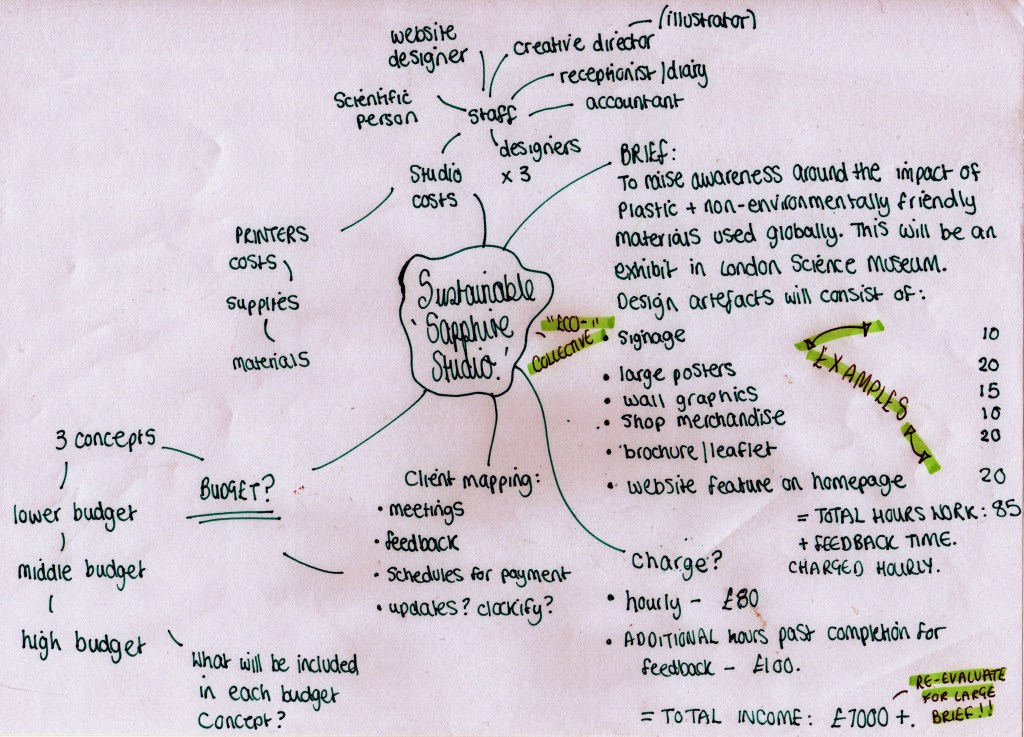
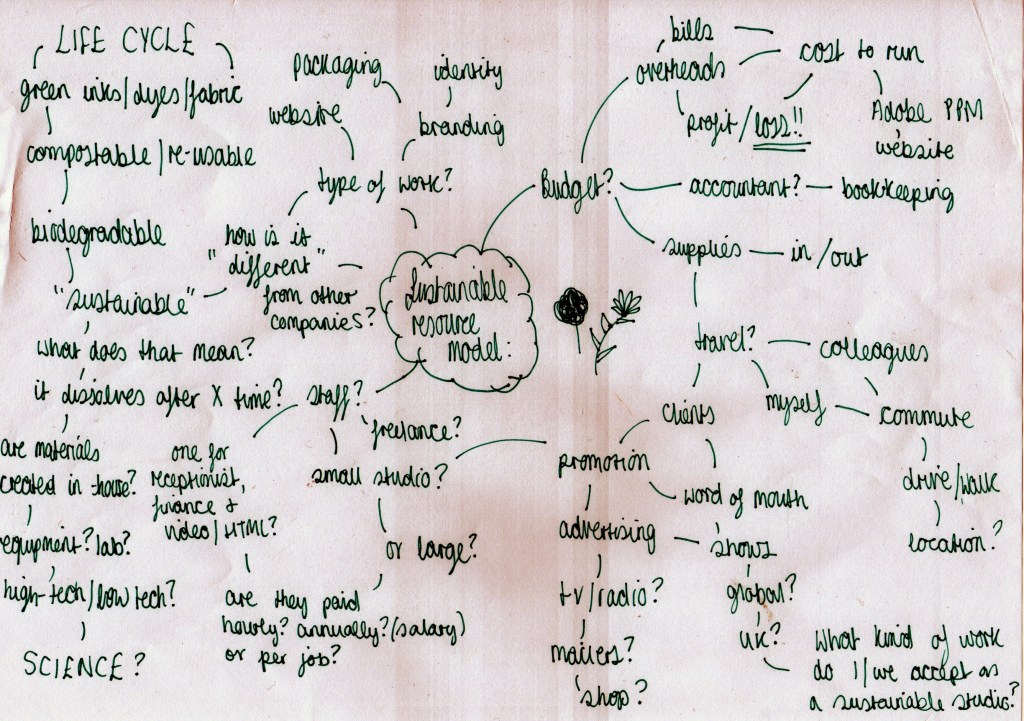
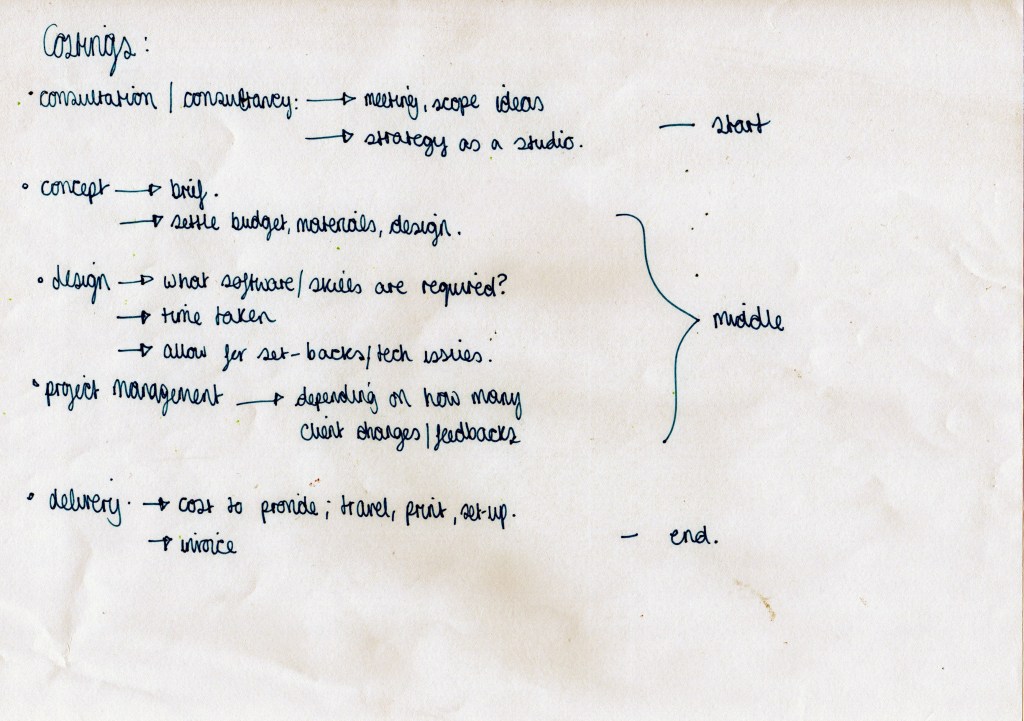
Taken elements of the above and made digitised:
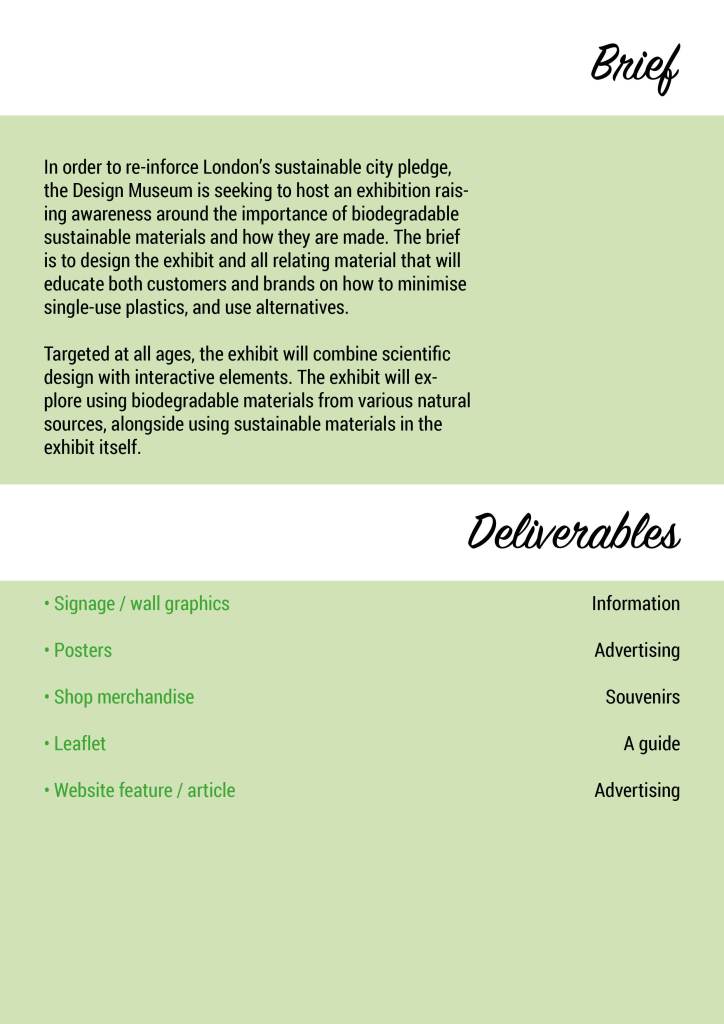
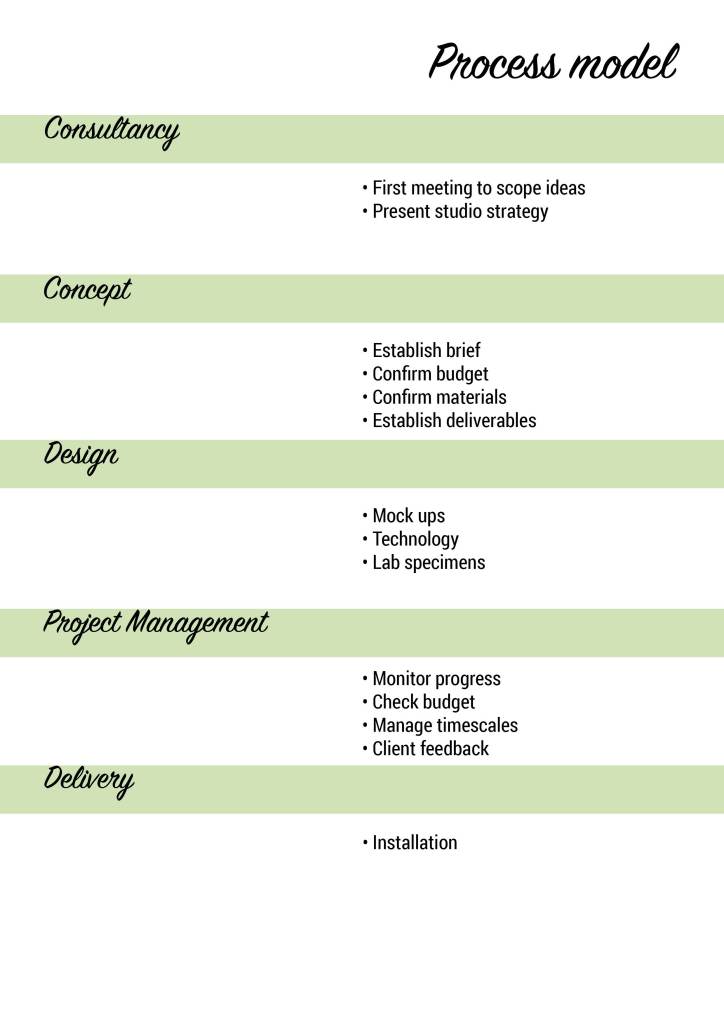
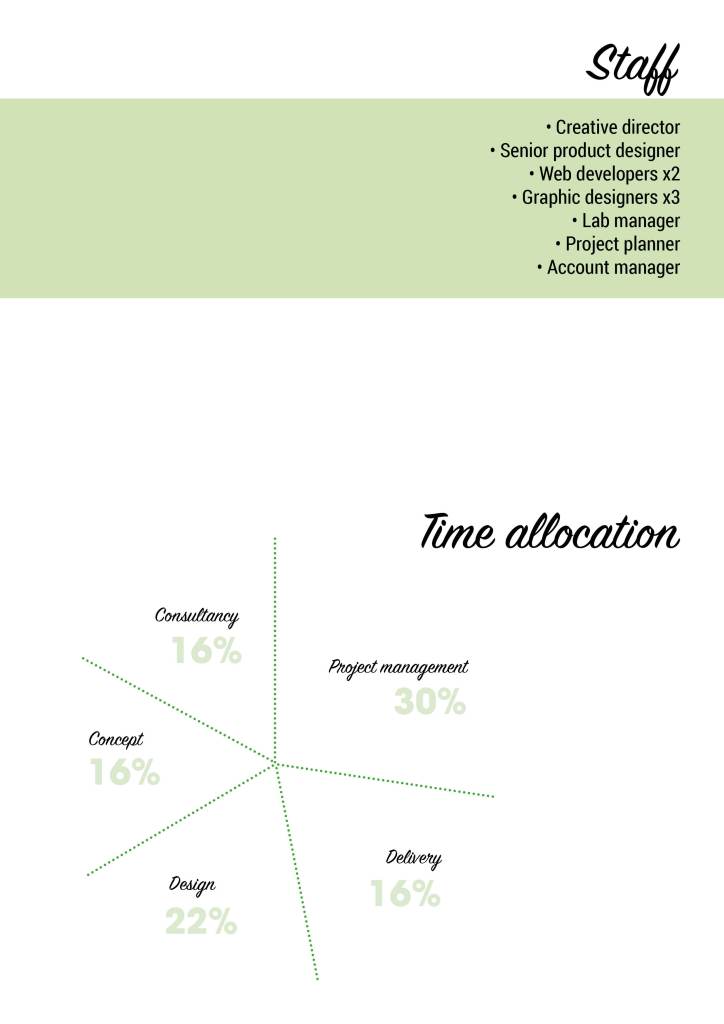



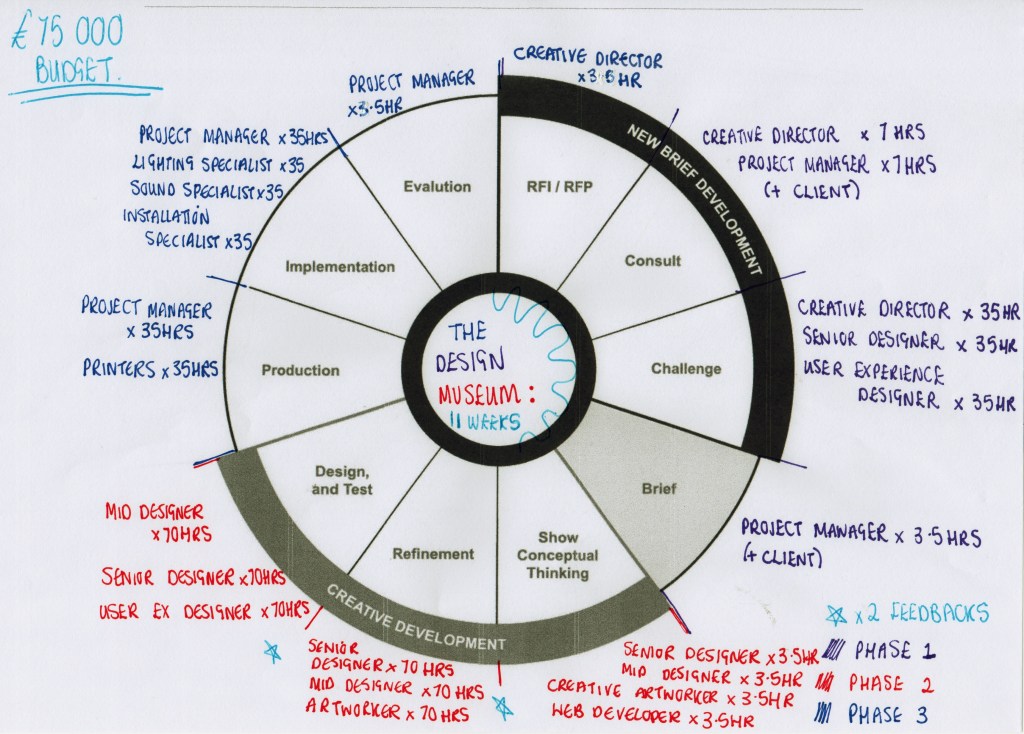
Further development of budget plan as I needed to figure out an example of how I could present the three phases to the client (design museum) and equally plan the time between all of my staff:
Concept business plan layout – client perspective:

Cover page 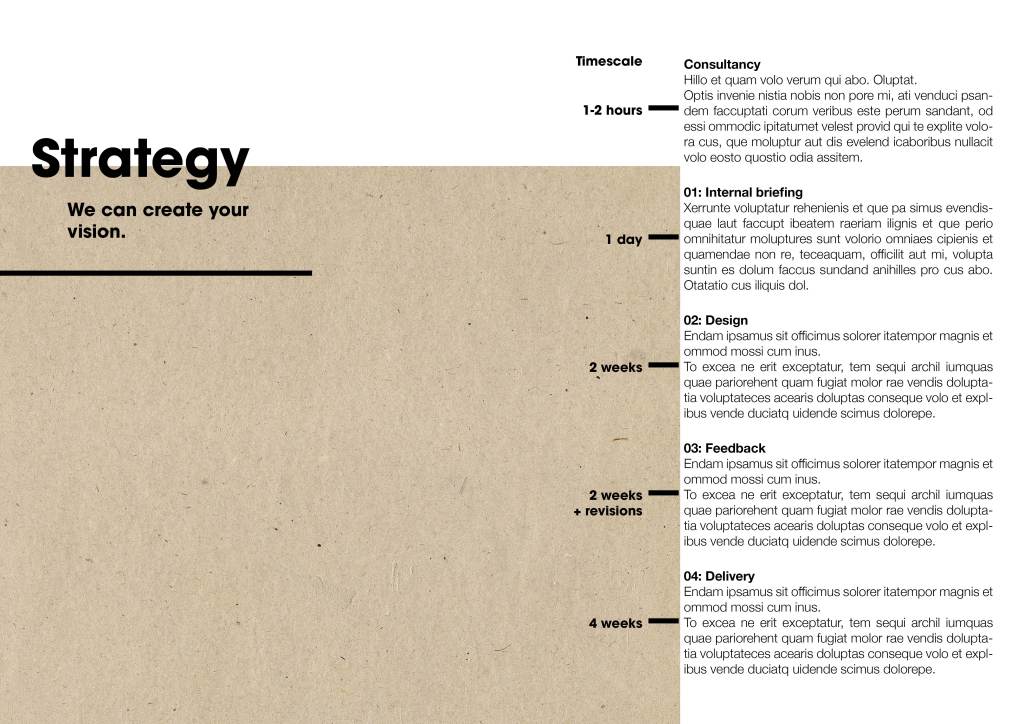
2-3rd pages 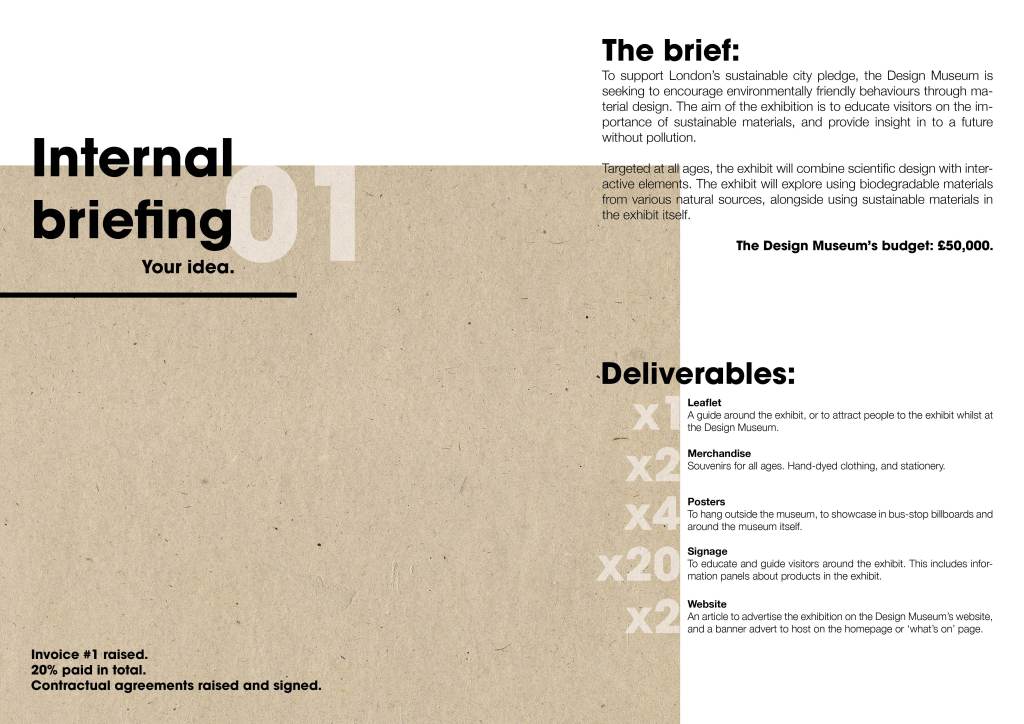
4-5th pages 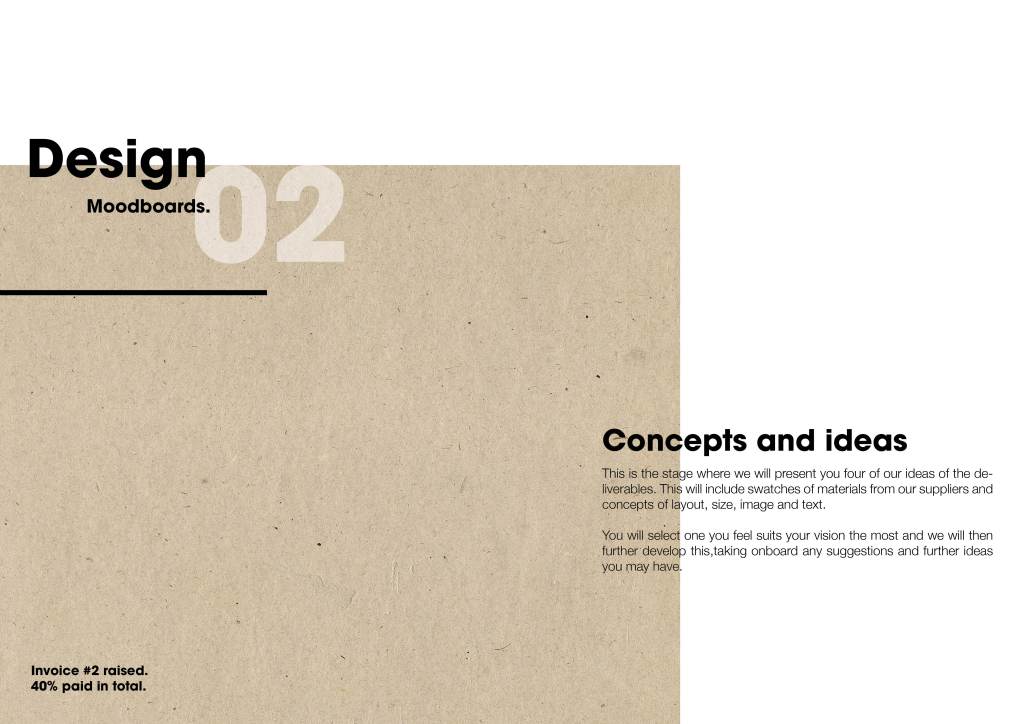
6-7th pages 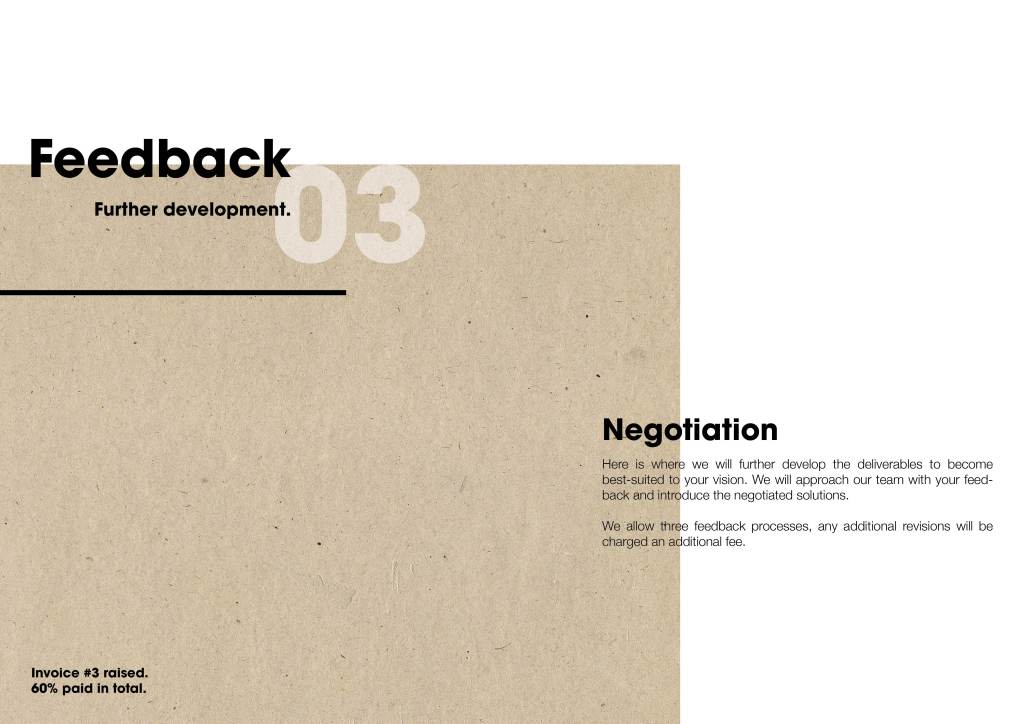
8-9th pages 
10-11th pages
I wanted to draw up a design that would almost be like a brochure that my studio would give the client to take home, to think about. I wanted to highlight a process; however it’s vague and doesn’t mention anything about my design process as it’s been designed with the client in mind.
What do I like about it?
• I do like the cardboard concept as it brings a bit more of a rustic, organic feel to the layout.
• The invoicing at monthly stages – I feel this is important to keep my business running each month.
Tutorial with Richard because I’m stuck:
I needed to sort out why my design wasn’t working. Richard gave a breakdown of an example design process, for instance ‘the rule of threes’ when creating concepts, which has helped me think clearly about what I needed to now start thinking about:
• What is my business? A small studio/large studio/freelance/collective? This was something I have not thought about clear enough and in order to create a business plan this is a basic requirement.
• Do I need to hire freelance specialists for this type of project?
• Think of signage as ‘way-finding’ instead. More and more museums are leaving the experience up to the visitor and therefore are more engaging – the visitor only needs to see what they want to see.
• When creating concepts, think of a rule of threes –
1. create one concept directly on brief
2. create one concept slightly outside of the lines of the brief
3. create one concept completely abstract from the brief, be risky
 jesswhatley.design.blog