
Challenge
Part 1
- Research three user-centred design processes or tools that can be used to discover a core need or problem e.g. customer journey maps, service safaris, a day in the life, cultural probe, double diamond.
- Select one process and write a short 100-word description to illustrate how it can be used to discover an insight or challenge.
Ideas wall shared links:
https://servicedesigntools.org/tools
1. User Journey Mapping (process)
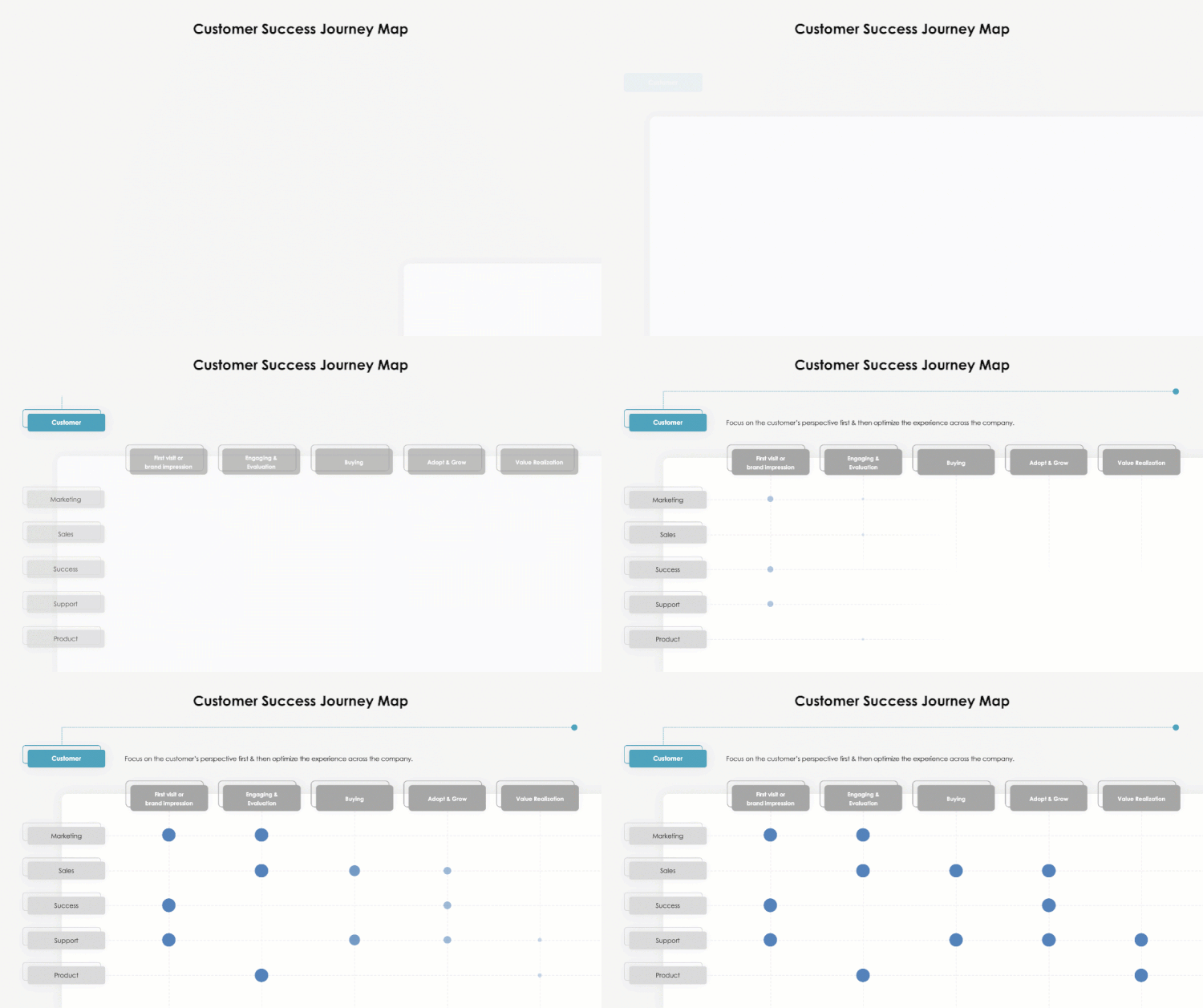
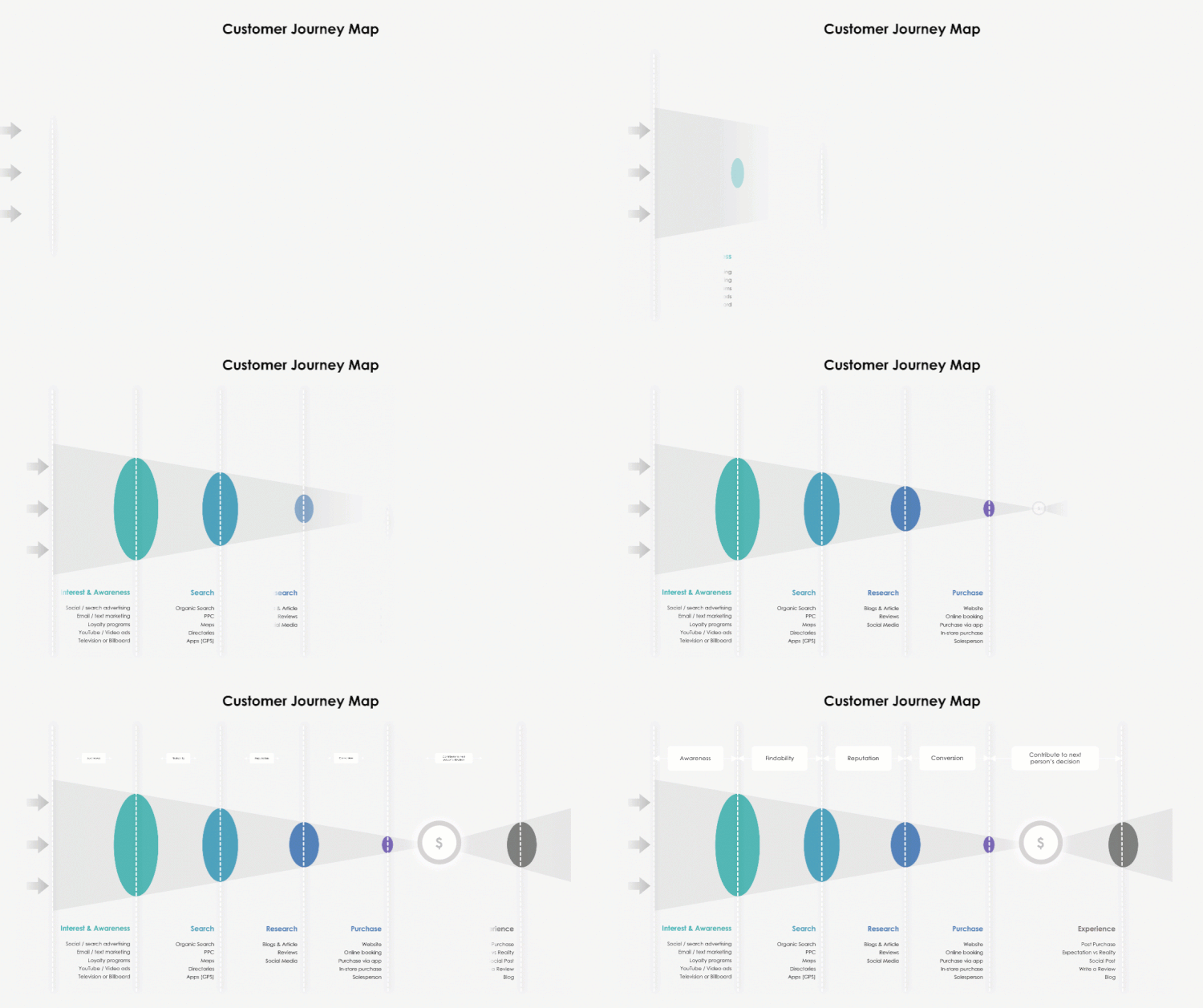
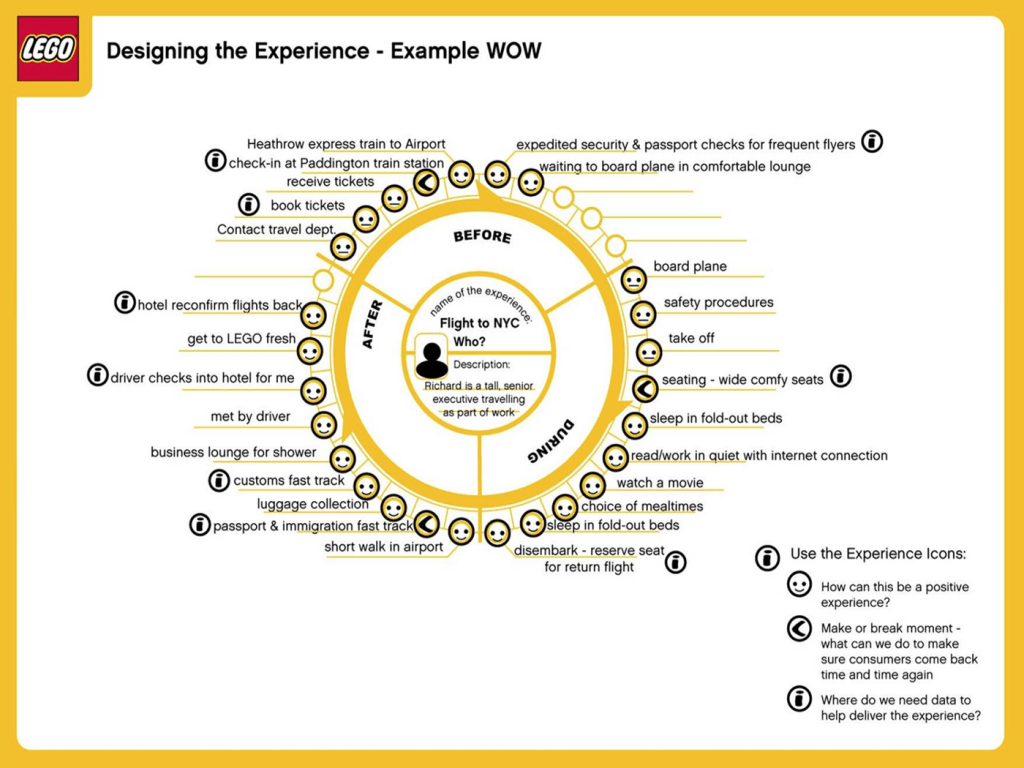
This example highlights the ‘mood’ by using emoji’s which quickly identifies which areas in the user journey will require assistance or needs room for improvement. 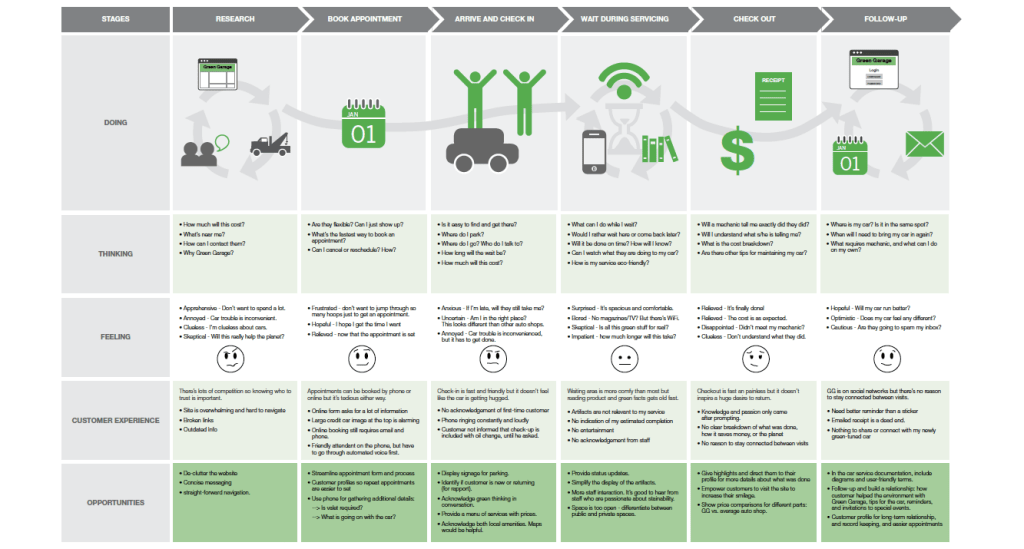
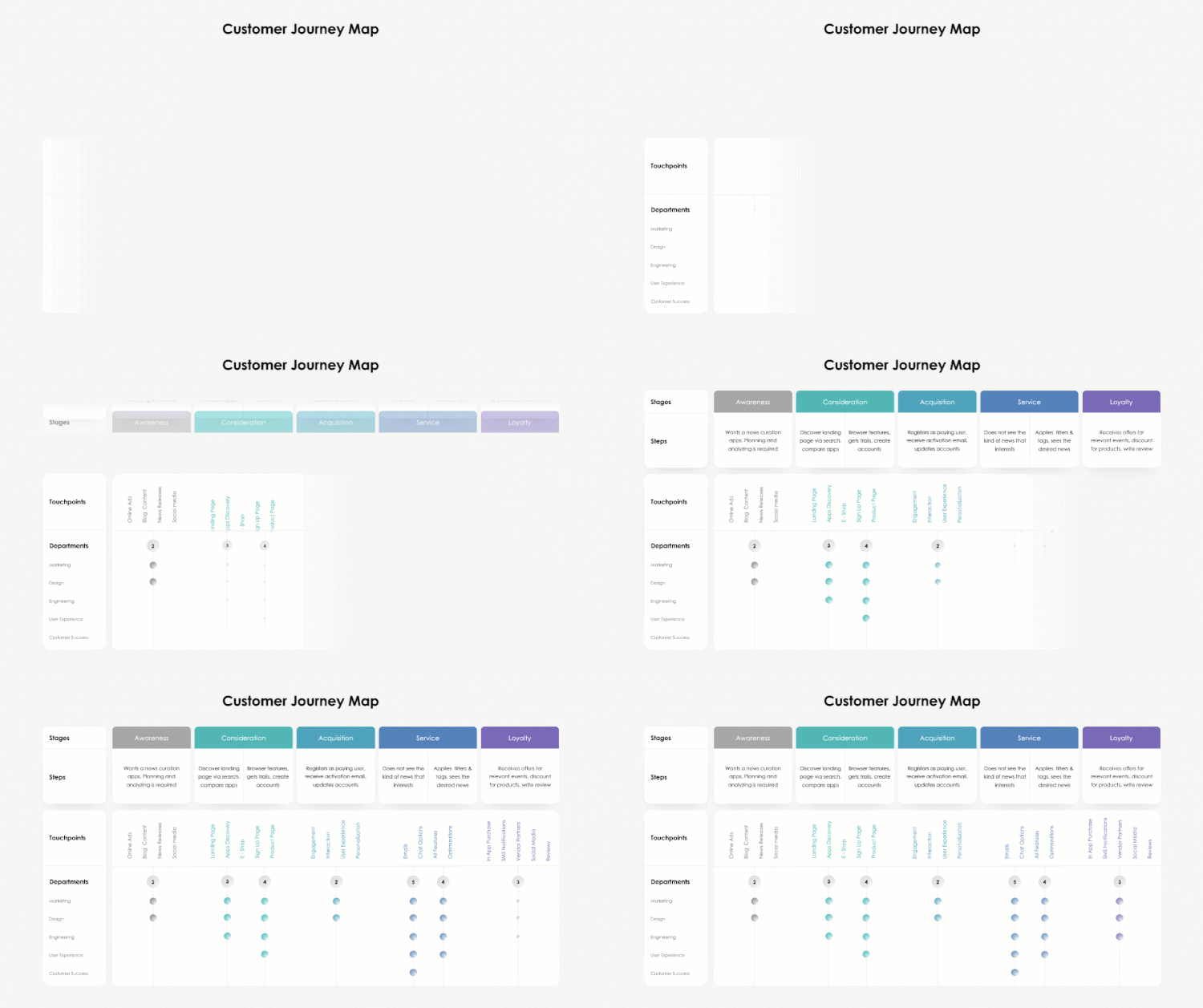
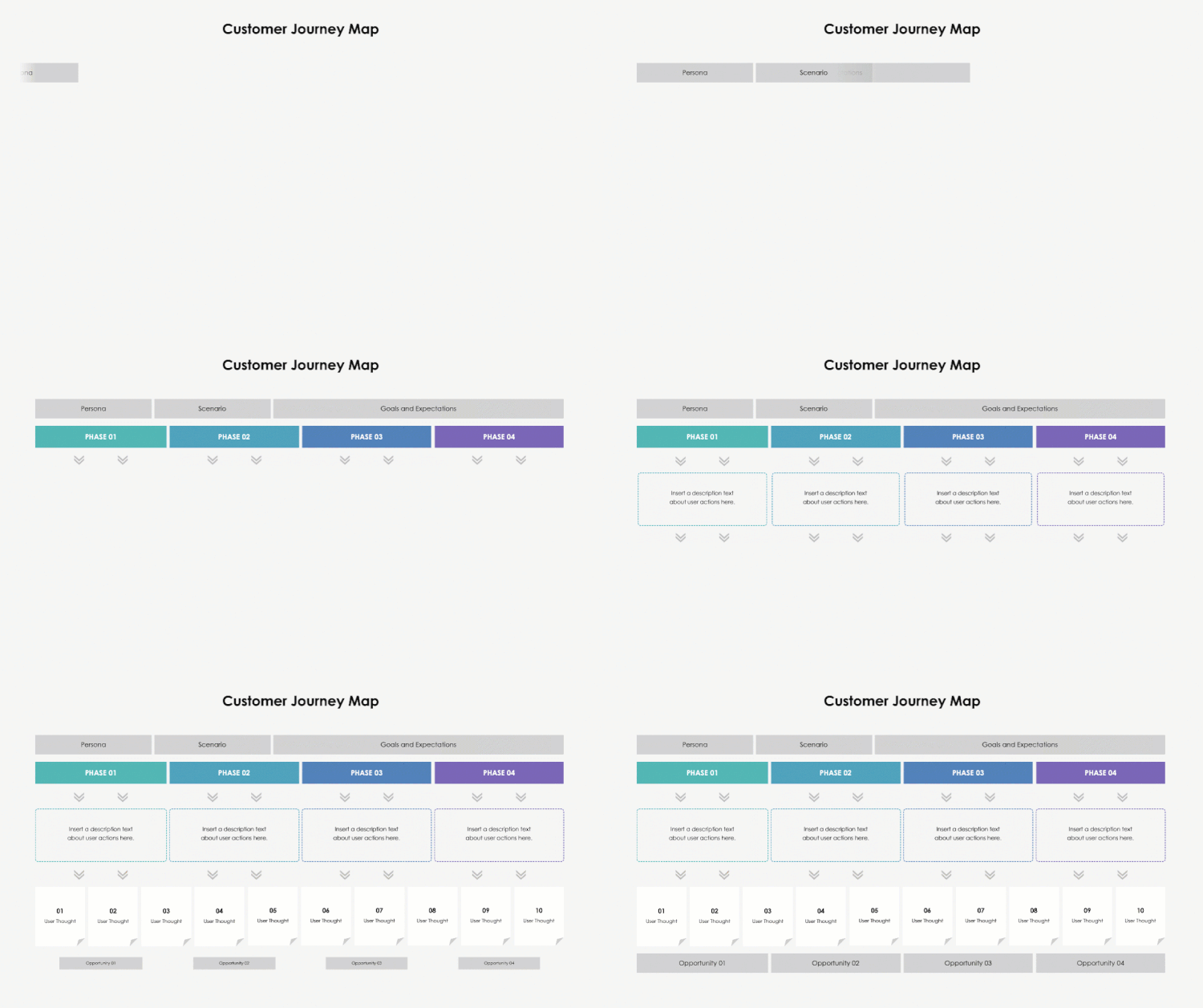
Column and row charts are a simplified way to identify the user experience through thoughts, feelings and opportunities at each stage of the journey. 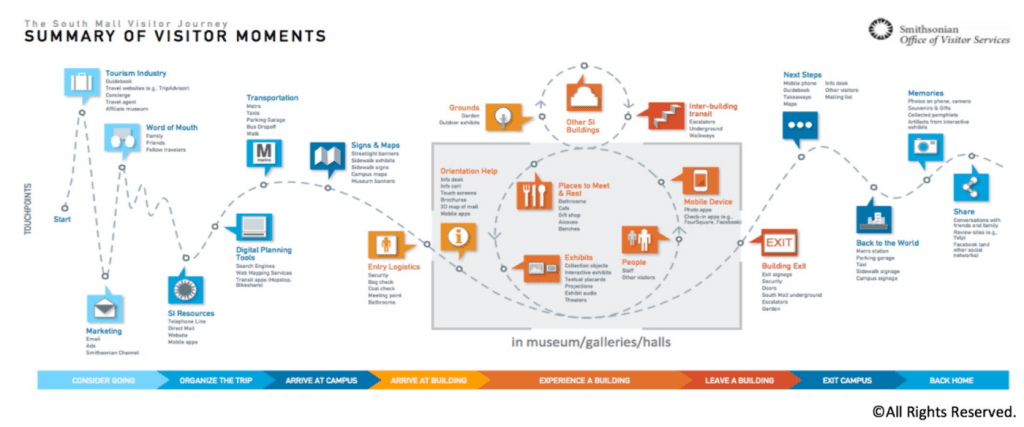
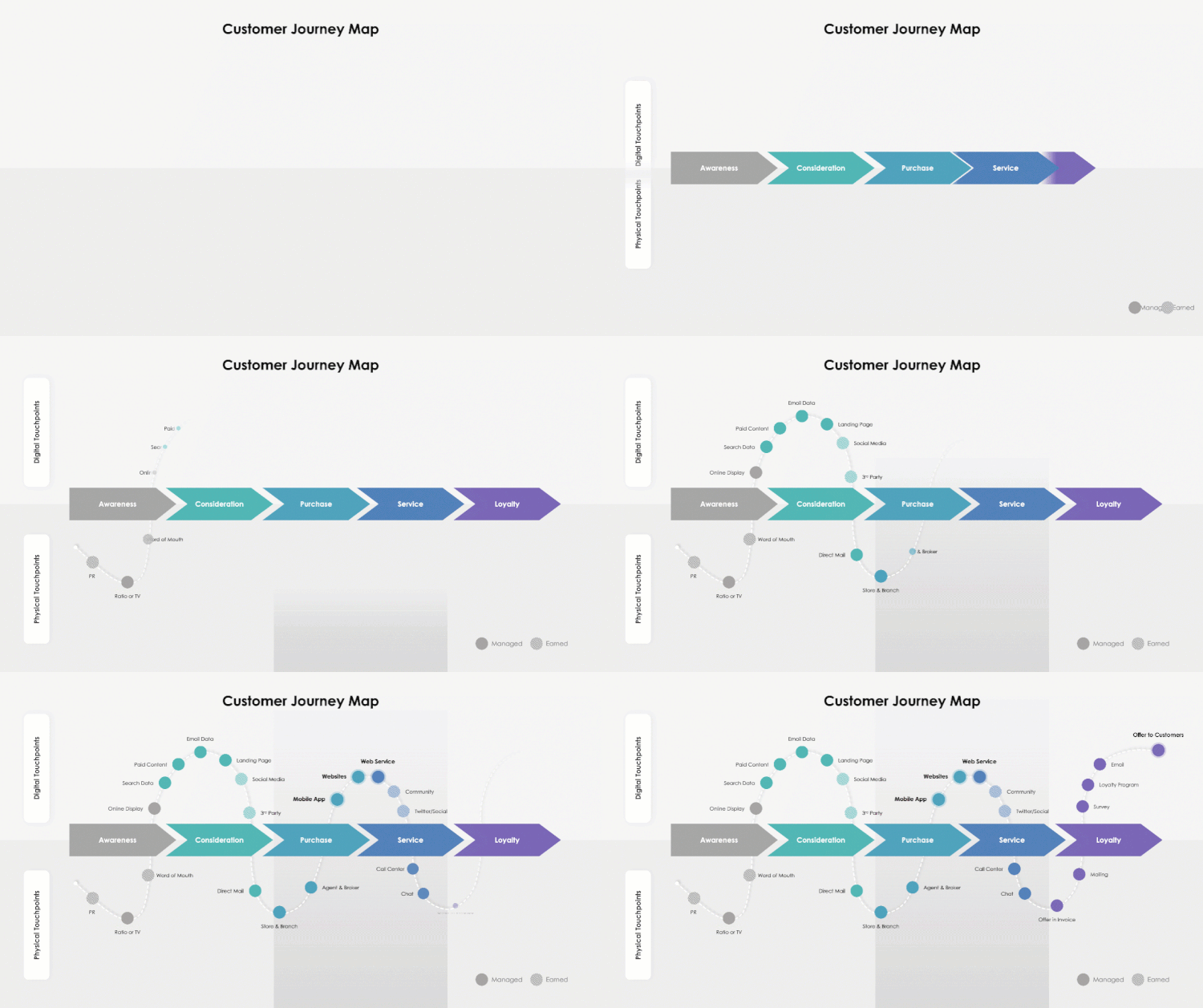
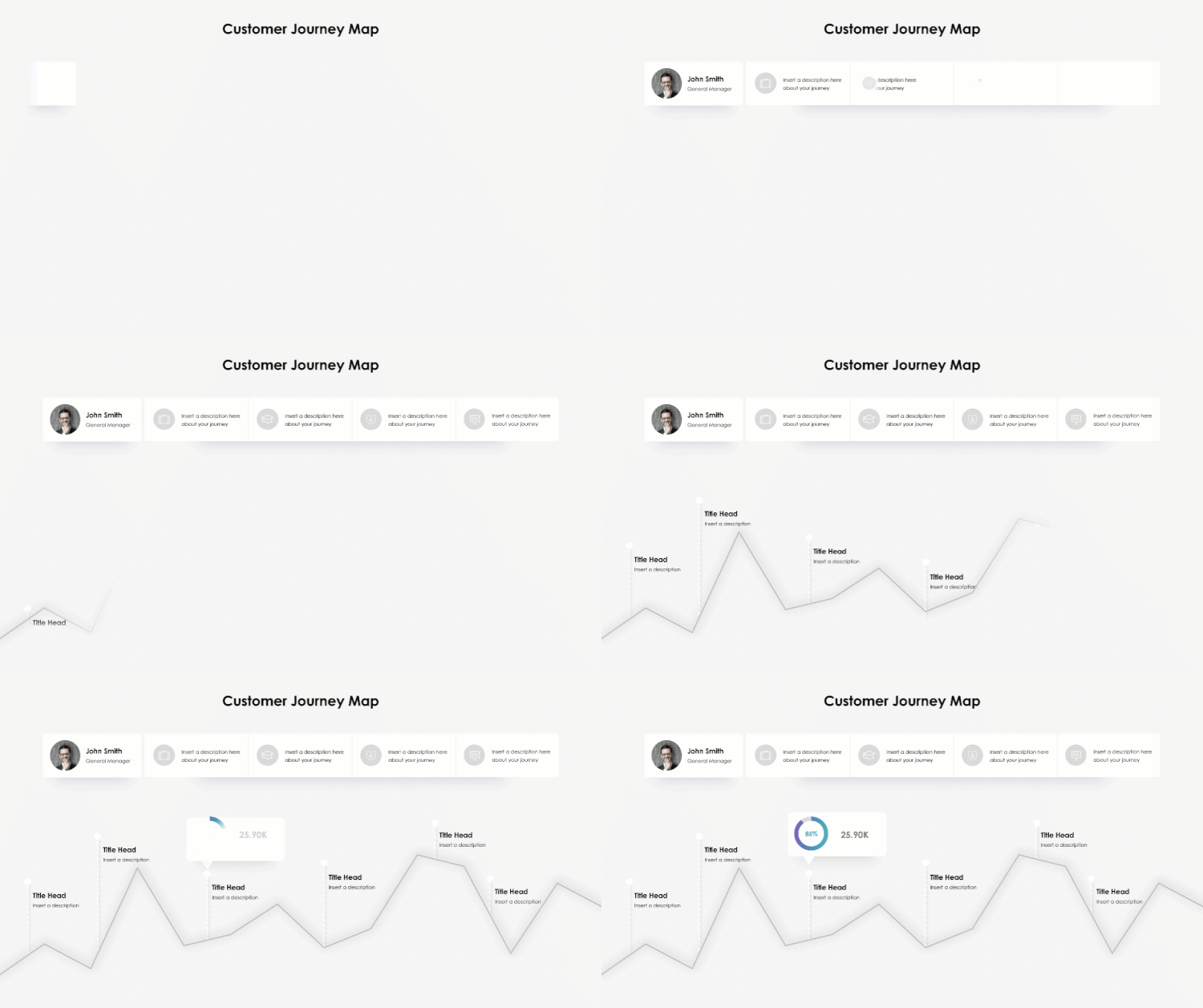
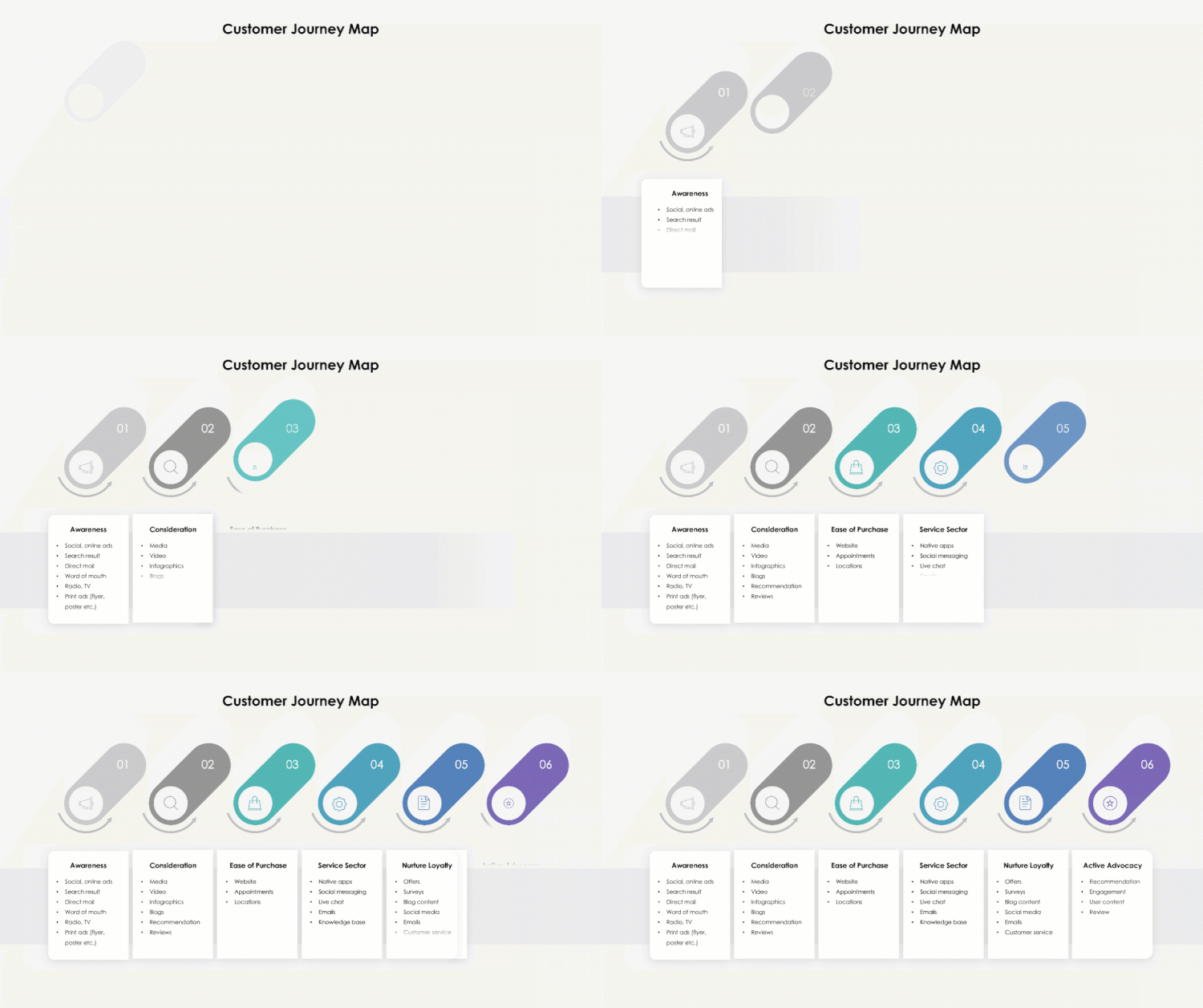
I really like the timeline layout of this example, as the journey highlights what the user is doing and where/when. I particularly like the use of the circle as this may be an area the user will rotate through in their path. It’s a technique the other examples I have selected don’t consider. 
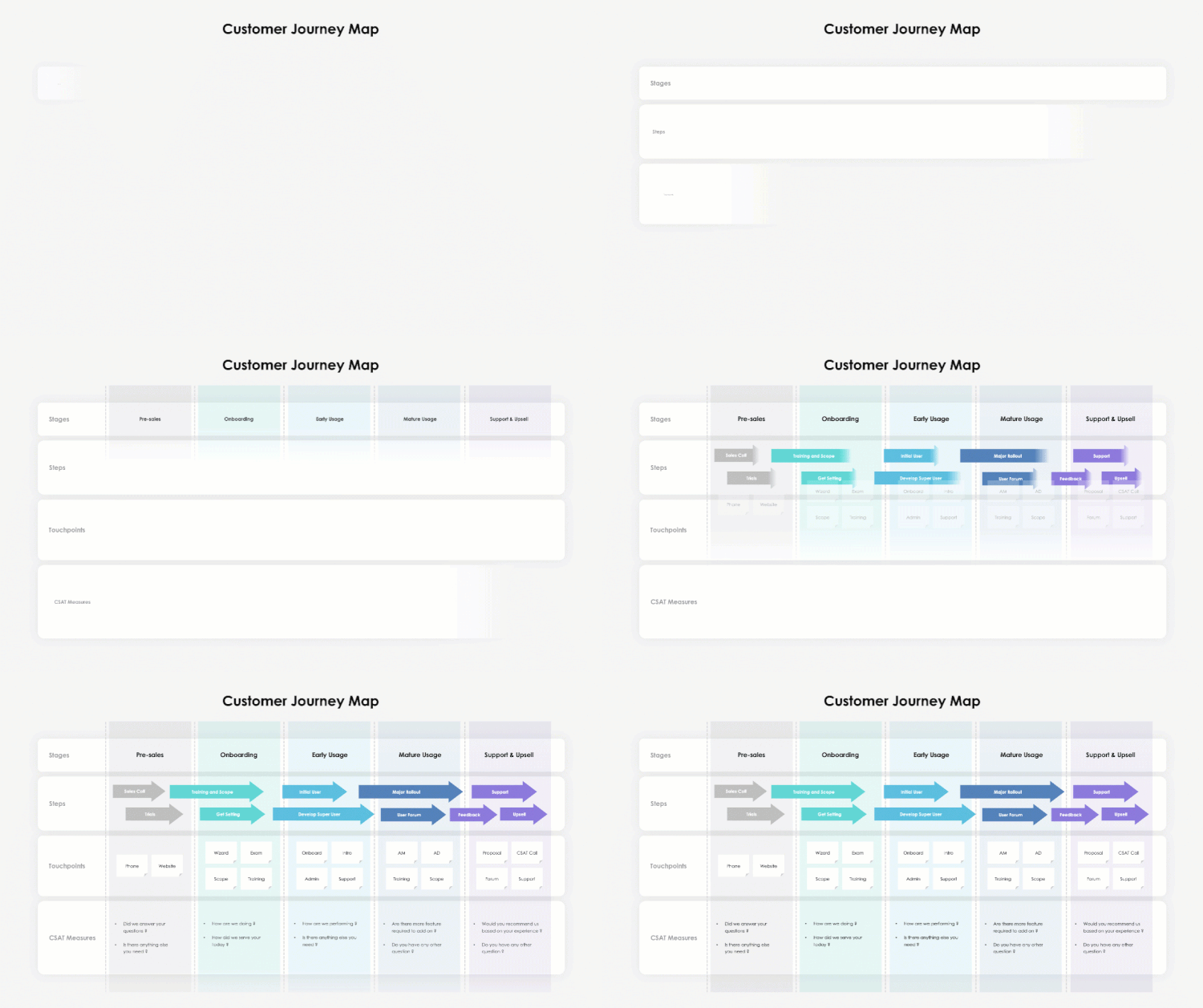
I have highlighted this as another example as it is good to see consideration of a digital system that will keep the user engaged. Identifying the three most important steps early on helps to keep the journey relevant and generate revenue through good customer experiences.
Many businesses with customers will use these to identify the experience of the customer and where the negative areas will be for improvement.
To begin creating a user journey map, consider the following:
- Set a clear objective for the map
- Define your personas and highlight target customers
- Define stages and identify goals for each
- List out touchpoints
- Gather data and customer feedback
- Determine pain points and points of friction
- Identify areas for improvement
2. Starbursting (tool)
I discovered this technique through researching brainstorming, then mind-mapping. I was curious from researching the ‘5 why’s’ method in my reference material so I wanted to see what methods exist:


The reason I have picked starbursting as one of my three examples, is that it is a tool rather than a process. Something that may seem really simple – writing seven questions! – actually could snowball into a really effective way of brainstorming initial ideas, in several areas. I wanted to find a tool that would be easy to use, and also be right at the beginning of the service design process for everyone involved as people are more likely to be optimistic about new ideas if they are involved in the development stages. This method of starbursting would allow clients, designers and stakeholders (wouldn’t need to be tech savvy for instance as this only requires pen and paper!) to all get to the root of the problem by asking questions, and most importantly start to think about how to answer these questions with the “how?”. I also think it’s fundamental to ask lots of questions to see the scope of possibilities, and then eliminate as you develop your project rather than run out of ideas.
3. Wireframing (process)
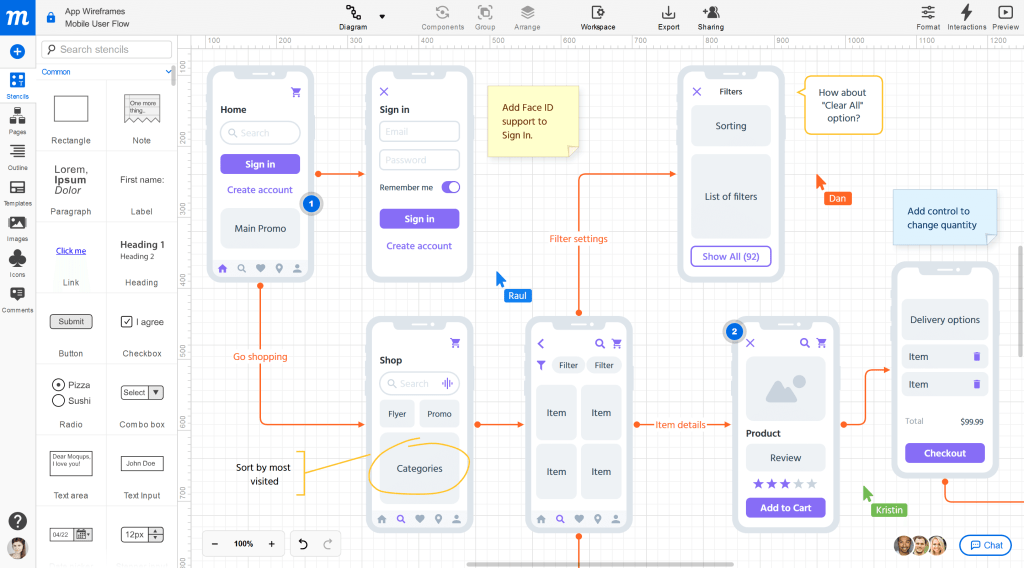
Wireframes enhance usability by identifying in the early stages how a user can get from a to b in simple steps.
There can be four different types:
Basic wireframes
Annotated wireframes
User flow wireframes (above image example!)
Interactive high definition wireframes
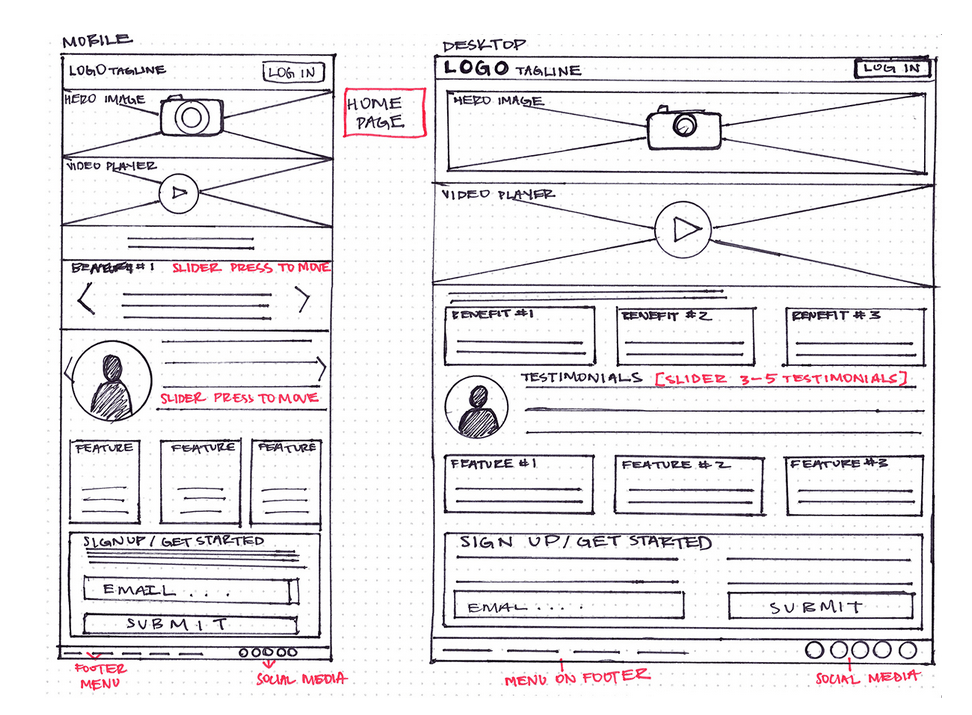
1. Research (audience, trends)
2. Prepare research for reference (requirements, goals)
3. User flow mapped out (how many pages, screens, images etc.)
4. Draft (draw and sketch)
5. Add detail (functionality)
6. Prototype (digitally)
I have decided to pick wireframing in my top three as it’s a more advanced version of creating thumbnails. As designers, thumbnails are really important so I wanted to look at a process that considers the next steps and layout – this is something I personally want to develop in the way I work. For example, when I have created an app design I find myself experimenting at the stage of design… It’s too late at that stage. I want to implement this process in a project going forward.
My 100 words
“Starbursting enables designers, clients and stakeholders to get to the root of problems by asking open-questions. The five w’s kick-start the thinking process, whilst ‘how’ quickly identifies realistic solutions. It’s a fundamental process to ask lots of questions to see the umbrella of possibilities, and then eliminate as the project develops as opposed to running out of ideas. Starbursting explores design boundaries and encourages collaboration between all involved; clients are far more likely to be optimistic about new ideas if they are involved in the rational development stages. This will result in an efficient outcome for all involved.”
 jesswhatley.design.blog