
Legislation
Thinking about the previous page where I mentioned how ‘unless large corporations are forced to think about changing their practice sustainably” I think now is the time where I need to explore legislation.
Globally
According to World Population Review, the top ten most environmentally friendly countries in 2021 are as follows:
- Denmark
- Luxembourg
- Switzerland
- United Kingdom -> this is great. Clearly the UK are making progress and doing something right!
- France
- Austria
- Finland
- Sweden
- Norway
- Germany
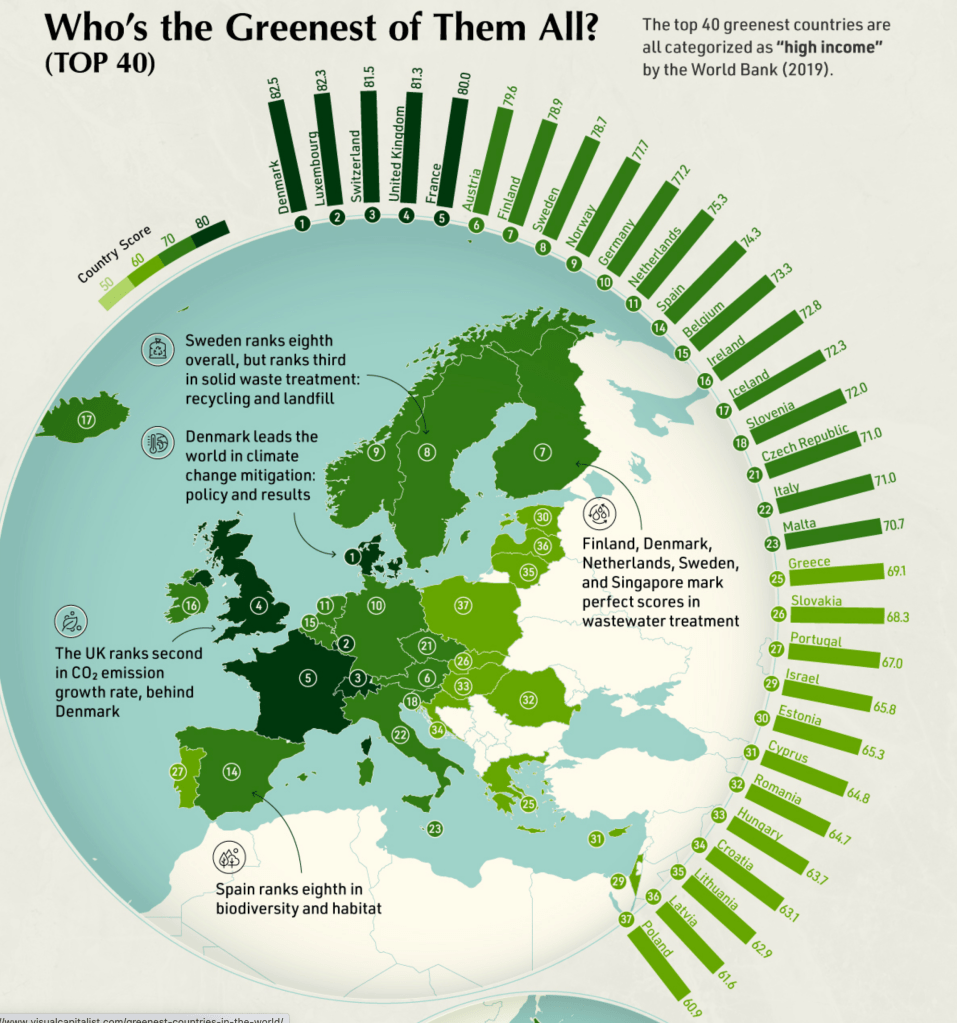
I’m going to explore the top five countries further as to why they may be ranked highly and see what inspiration the UK could take from the top three in the leaderboard:
Denmark
In 2019, Denmark signed a legally binding climate act agreement. This is an agreement to reduce greenhouse gas emissions by 70 percent by 2030 (compared with 1990’s emissions). Denmark were the first country to do this at such a critical level and it was hoped that other countries would ‘follow suit’. However, 2019 wasn’t the start of environmental considerations by Denmark, as in 1991 they had accelerated the ‘green transition’ by generating the world’s first wind farm to create sustainable power within the country. Source
The climate act agreement was also voted for by 8 out of the 10 parties, in the Danish Parliament. This is given me a good insight to who has the power to take critical climate action and begin to introduce new framework which is interesting.
In 2019, Denmark broke records as their “wind turbines produced enough power to cover 46 per cent of Denmark’s electricity consumption”. This is equivalent to the “electricity consumption of 3.75 million households” which is pretty outstanding in terms of scale. The 49 turbines which are located in the sea, go under the name “Horns Rev 3” and began providing power in December 2018. These wind turbines have been able to break records in just one year! Source
It’s also worth noting that this wind farm would not have been installed without money. Horns Rev 3 alone cost over one point three billion dollars. Source What does that tell me? That if your country can afford to spend over one billion dollars on wind turbines then they can be top of the leaderboard…. Not all countries are this fortunate so that’s something to consider.
According to Earth.org, there are some more reasons why Denmark are excelling:
- Denmark was the first country is the world to set a target of becoming independent of fossil fuels by 2050
- Copenhagen is aiming to become the first carbon neutral city by 2025
- Denmark is a leader in low impact transportation, home to almost twice as many bicycles than cars thanks to the extensive network of bicycle infrastructure that allows for easy and sustainable transportation.
- Between 2012 and 2017, green sector employment increased four times as much as private sector employment.
Also Texas Disposal Systems state the following:
- In the city center, they have a trash incinerator plant, Amager Bakke. This plant is incredibly efficient, converting waste to energy, heating the city while cutting CO2 emissions by 99.5%. In order to fit within the city, it’s designed to fit into the cityscape along with being pollution and odor-free.
- All of this is made possible through high taxes. Through establishing a green culture at the micro-level, Copenhagen’s citizens are committed to making their city and country better.
- Middelgrunden Offshore Wind Farm is 50% owned by Denmark citizens, 50% owned by investors. By directly incorporating the average citizen, the Dutch have created a climate-friendly culture that is directly invested in its success.
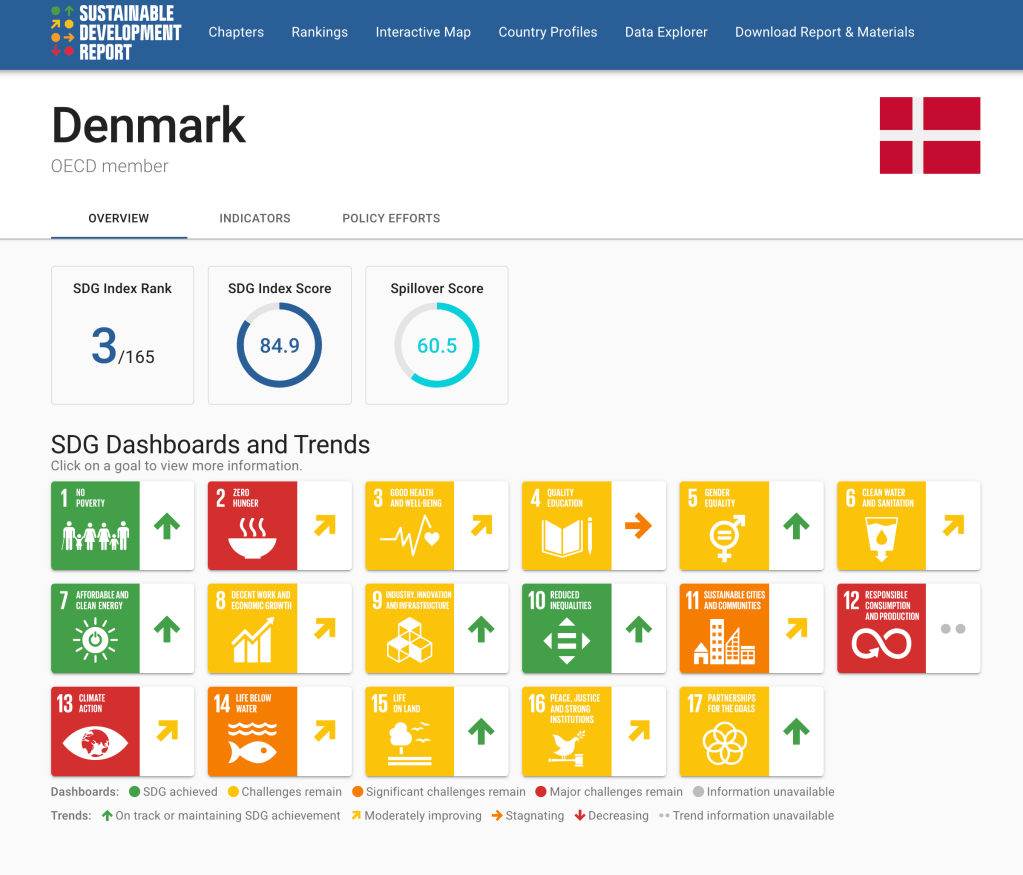
Here is an overview of where Denmark currently sit with their EPI score:
Luxembourg
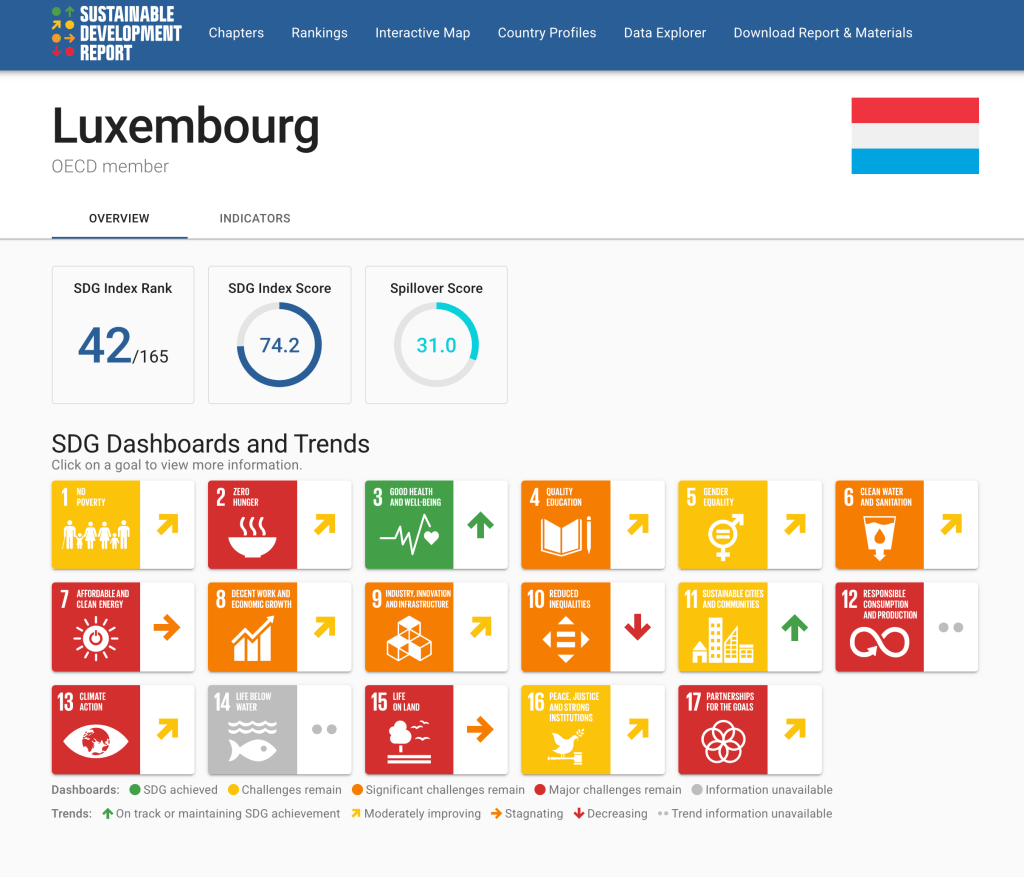
“Thanks to low pollutant emissions, good water management and little pollution from heavy metals, Luxembourg has reached second place in a Yale University ranking of the countries most able to meet environmental challenges.” Source
Switzerland
According to Texas Disposal Systems, these are some of the ways the Swiss are excelling:
- They implemented environmental policies that give priority to the use of renewable energy.
- To protect their countryside, they enacted the Spatial Planning Act in 2013, which aims to help higher-density urban planning by economically using the currently available urban space and limiting the spread of new building zones.
- They focus on reducing their emissions of greenhouse gases and have increased their carbon tax.
- Preserving their world-renowned water quality has long been a priority to the Swiss. In the 1960s/70s they built a network of forward-thinking water purification stations. Today they have moved to improve their treatment of wastewater in more than 100 plants with a target of 2030 for completion.
- Through continual air quality efforts, over the last 25 years, Switzerland’s emission of damaging fine particles has dropped more than 50%. They are continuing these efforts through strict standards for CO2 emissions for the car industry. Car companies are now required to use high-performance filters and catalytic converters in their Swiss models.
- With a forward-thinking initiative to protect its soil, Switzerland provides farmers tools to limit the permanent damage to the land and have trained specialists to advise contractors on major development projects.
UK
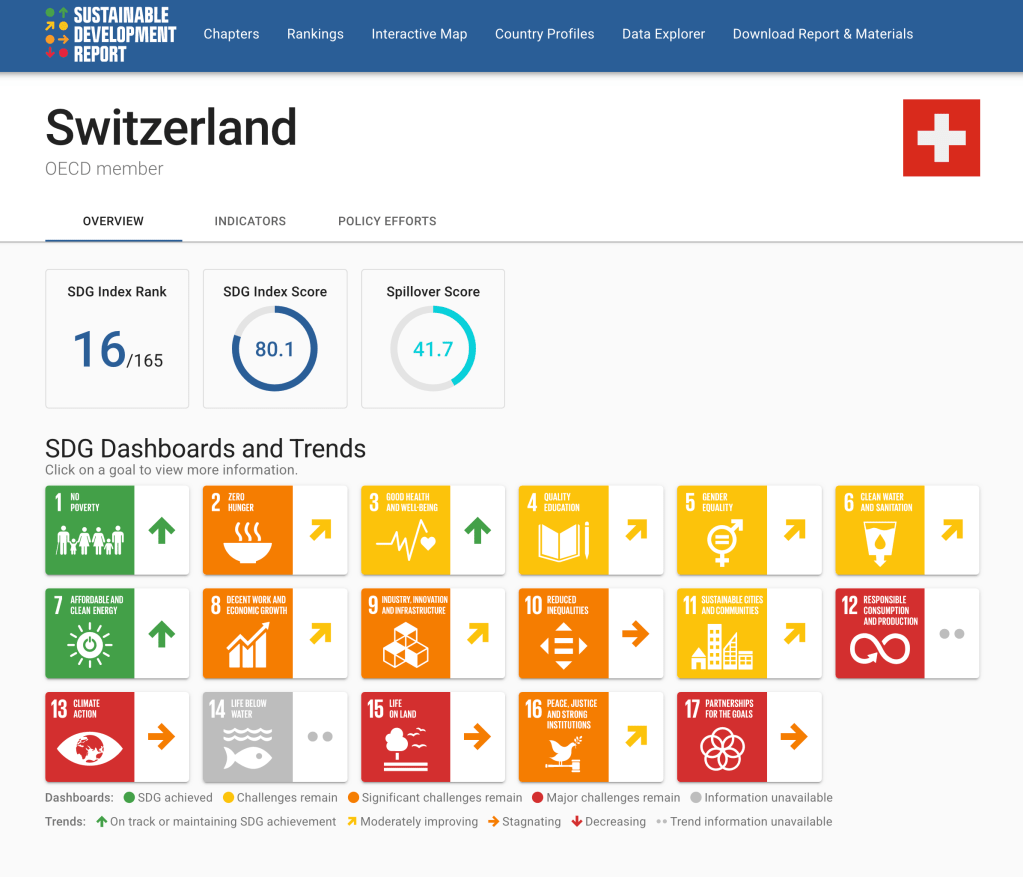
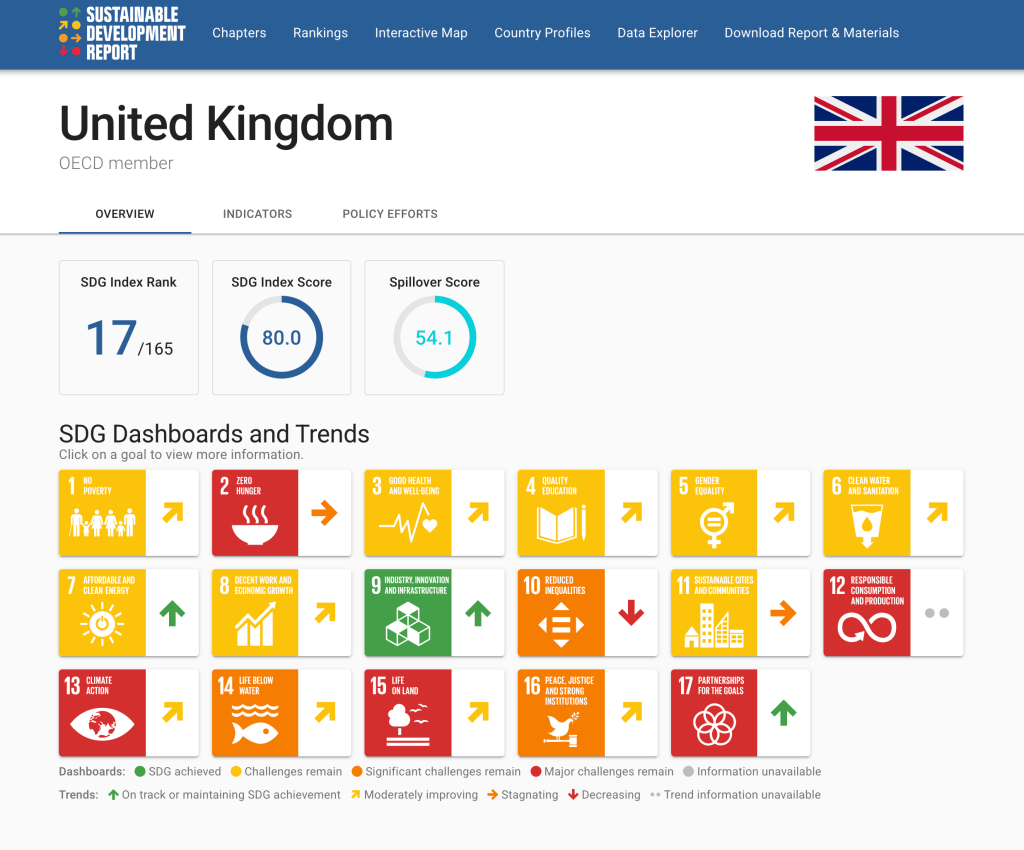
What we do well: Industry, Innovation and Infrastructure. It seems we are really good at supporting trade and transport companies, universities and on average are high users of the internet.
What we need to improve: Poverty, Life on Land, Climate Action, Partnerships. This means we have species declining, obesity, and exports of hazardous pesticides, CO2 emissions from fossil fuels, and financial secrecy are some lower scoring examples.
Plastic Laws Globally
In 2019, the European Parliament agreed to ban single-use plastics which are harming the environment:
“560 MEPs voted in favour of the agreement with EU ministers, 35 against and 28 abstained.
The following products will be banned in the EU by 2021:
- Single-use plastic cutlery (forks, knives, spoons and chopsticks)
- Single-use plastic plates
- Plastic straws
- Cotton bud sticks made of plastic
- Plastic balloon sticks
- Oxo-degradable plastics and food containers and expanded polystyrene cups”
And as of 2018, the legal limits of single-use plastics are recorded in this PDF:
The bottle bill
Why are bottle bills successful?
“There are two main reasons container deposit schemes succeed in increasing recycling rates and reducing plastic waste.
- Financial incentive: Bottle bills provide a financial incentive for consumers to return bottles and cans that might otherwise be littered or thrown in the trash. Giving a financial value to these empty containers means they are viewed and treated not as trash, but as a resource. In fact, deposits reduce beverage container litter by 40% or more. The results of the financial incentive are clear. For example, while the U.S. national recycling rate has stagnated for decades at around 34%, high-performing deposit return systems routinely collect 90% or more of containers for recycling.
- Increased purity: By separating bottles and cans for recycling through reverse vending machines, drink containers are collected without contamination from other types of waste that may be in a household recycling bin. This ensures containers can be recycled into new bottles and cans, rather than used for lower quality applications like landfill cover. This is a process known as closed-loop recycling, which TOMRA calls the Clean Loop. Clean Loop Recycling reduces the reliance on raw materials needed to produce new beverage containers (that is, coming into the loop) and waste ending up in landfills or in nature as litter (going out of the loop).
Many countries around the world operate these programs. Bottle bills can result in nearly 100% of all beverage containers returned for recycling; no other waste collection system comes even close to such high return rates.
- Michigan: Michigan has the highest return rate of any U.S. state with a bottle bill, at around 90%. The $0.10 deposit value is a proven motivator for consumers. In the first 40 years of its history, the bottle bill incentivized Michiganders to collect 96% of the 150 billion containers sold with a deposit.2 And the program remains popular. 94% of voters say they support the deposit law.3
- Norway: Norway has long been recognized as a trailblazer in container deposit return systems, with countries around the world replicating its model. Renowned ocean plastic waste researcher Dr. Jenna Jambeck even pointed to the Norway system as a model deposit program for reducing coastal beverage container litter.4 Starting with TOMRA’s first innovative reverse vending machines in 1972, return rates in Norway today are at 89% for both cans and plastic bottles, with collections managed by program coordinator Infinitum.
- Germany: The German market outperforms the rest of the world in beverage container recycling results, following the introduction of its bottle bill in 2003. Germany’s collection rate is extremely high, with approximately 98% of all plastic bottles returned (and 99% for cans).
- Lithuania: Lithuania introduced its bottle bill in 2016, with the aim of reducing litter, cutting local government costs and boosting recycling rates. Prior to the introduction of the program, only a third of plastic bottles were collected (34%). Two years later, the country’s deposit initiative, which is powered by TOMRA’s reverse vending machines, has seen return rates increase to 92%.”
Policies and framework
What framework is out there that designers can look up to?:
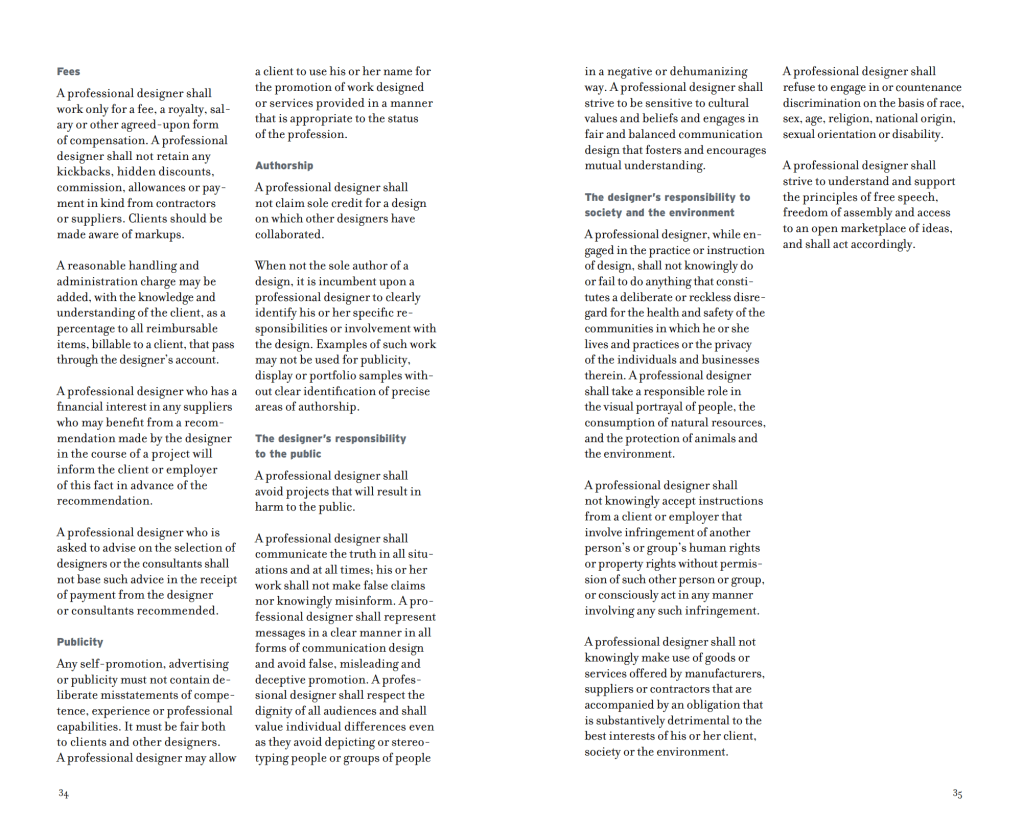
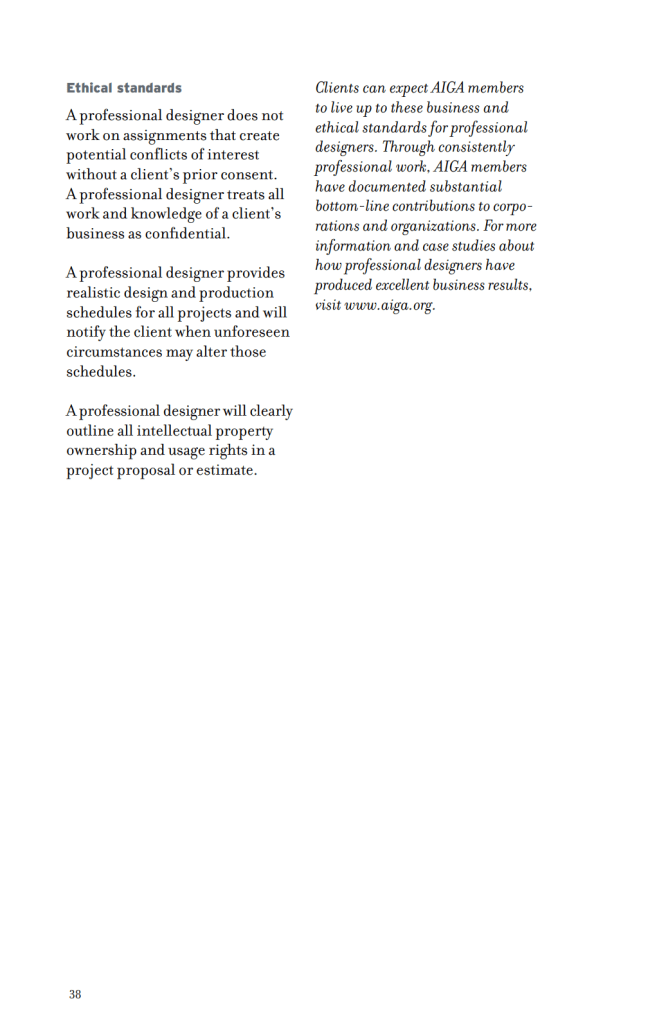
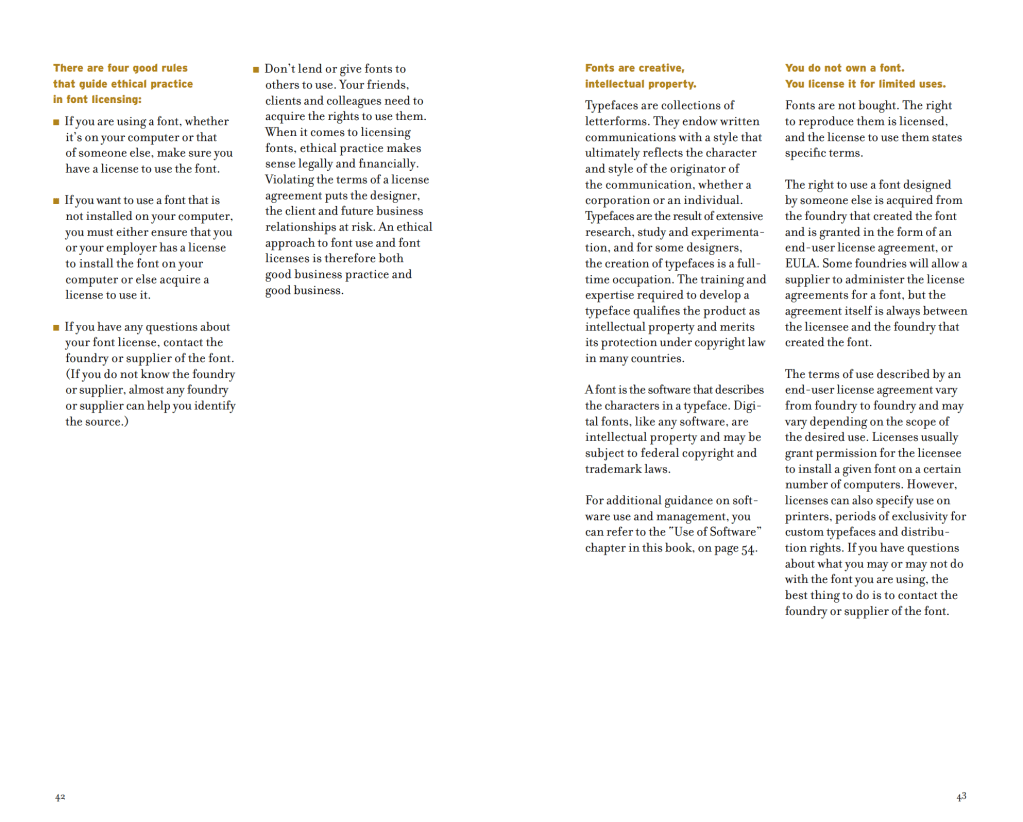
AIGA: American Institute of Graphic Arts
“AIGA is often associated solely with its role in celebrating examples of design that are unforgettable for their creativity, finesse, effect and beauty. Yet AIGA also is committed to advancing professional and ethical standards for the design profession, and to encouraging greater understanding of the fundamental value and relevance of design to business and society.” – Source
Design Business and Ethics –
“The AIGA Design Business and Ethics series was created to establish consistent professional standards and define the relationship among designers, clients and content.”

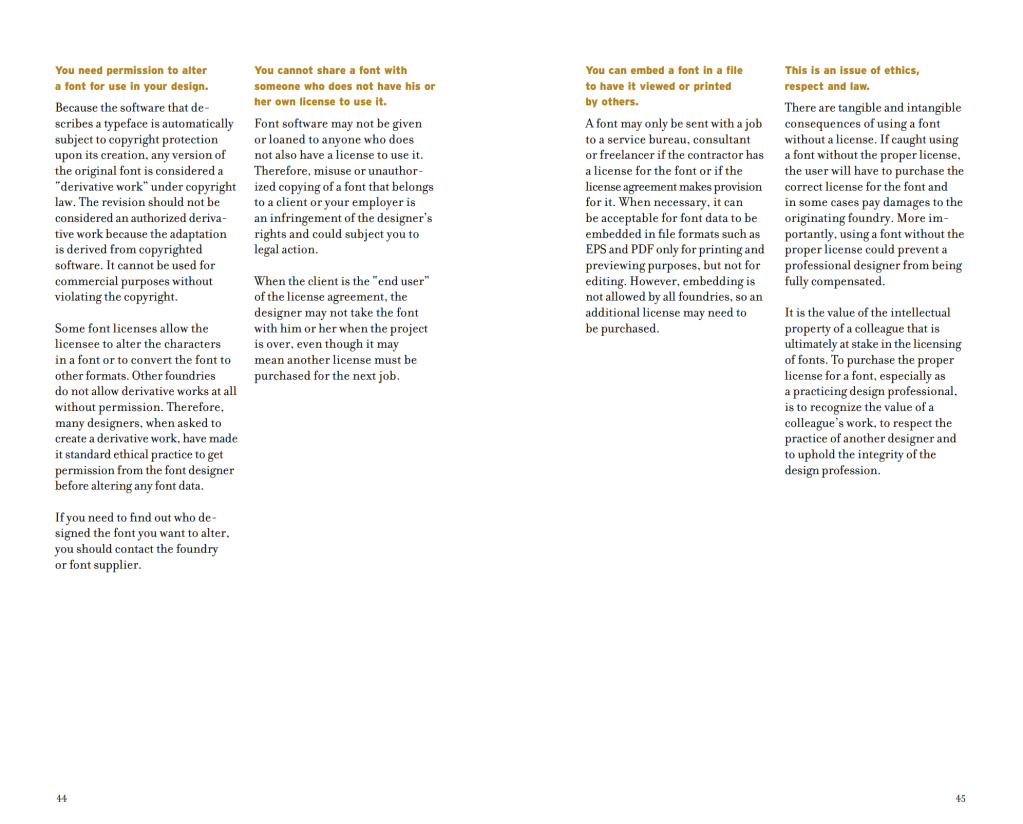
Print Design and Environmental Responsibility –
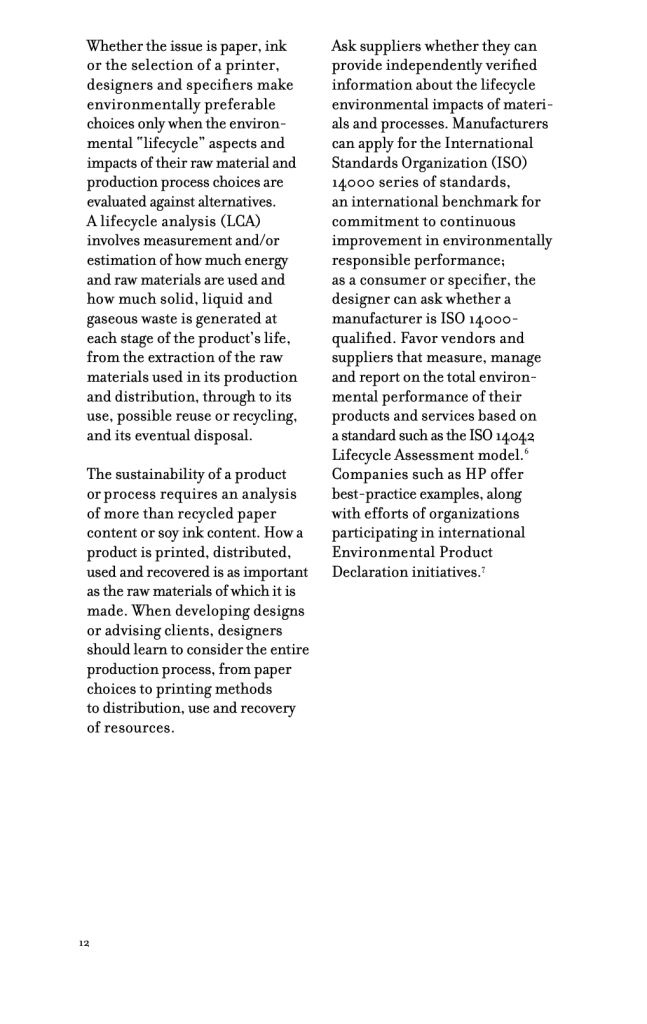
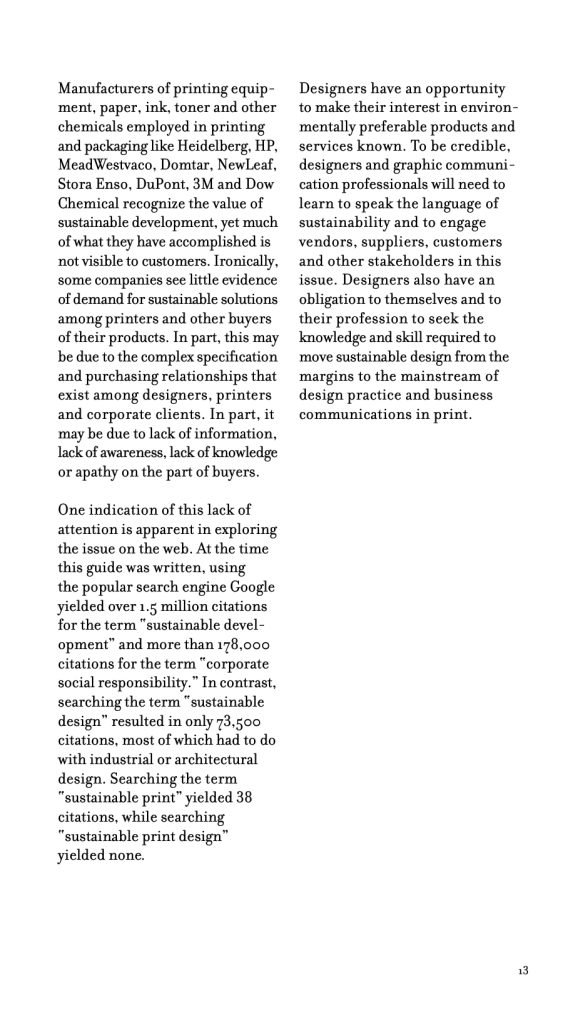
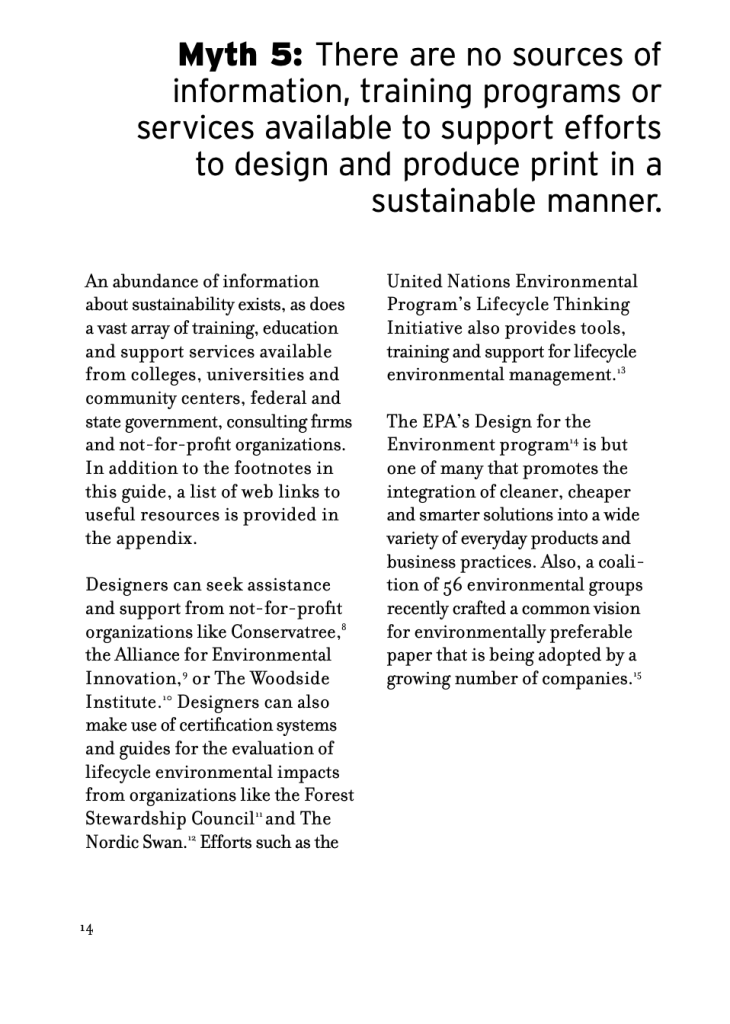
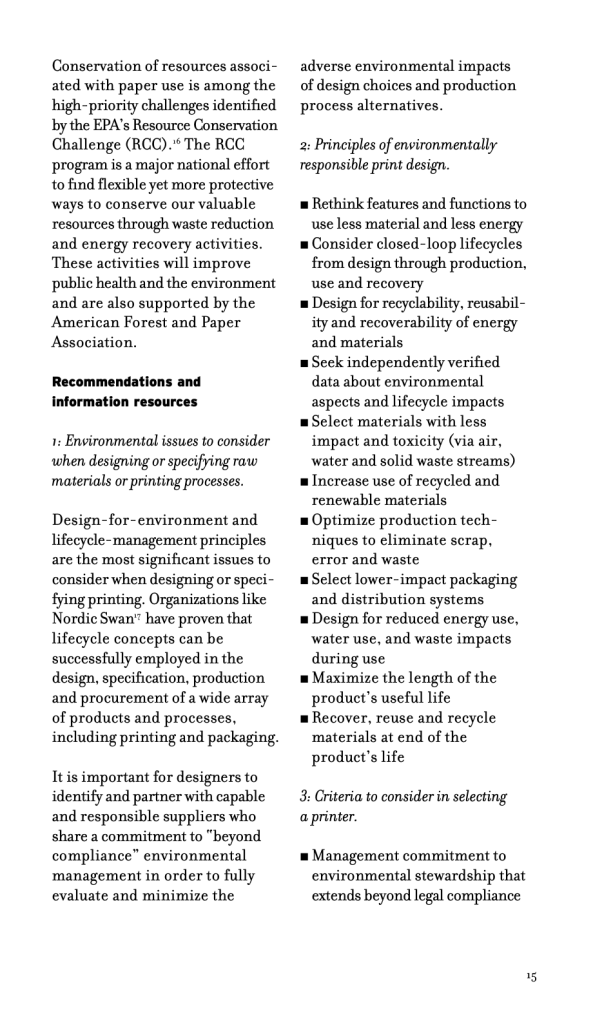
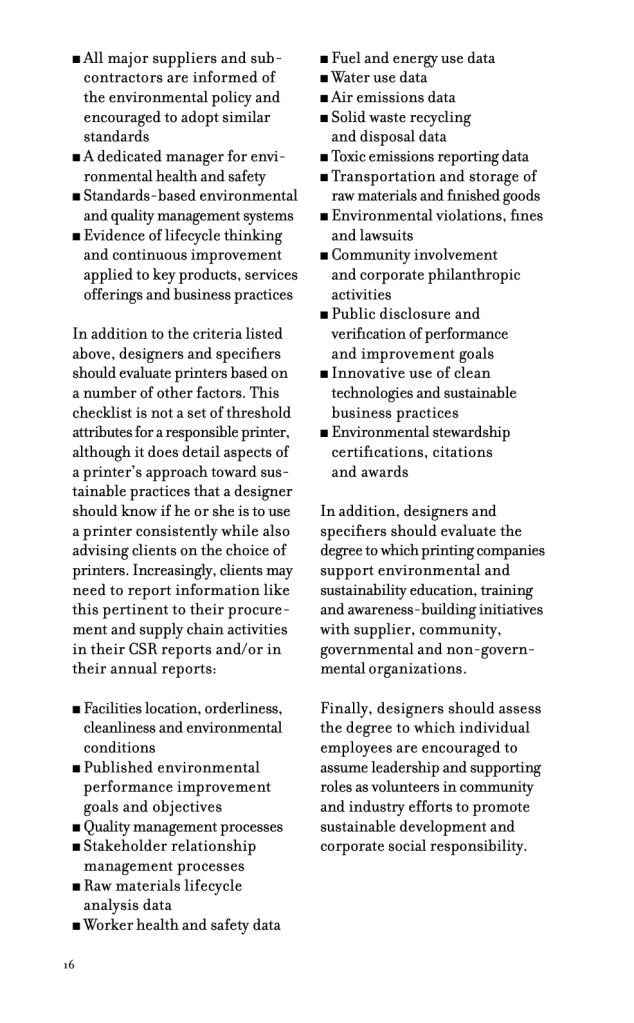
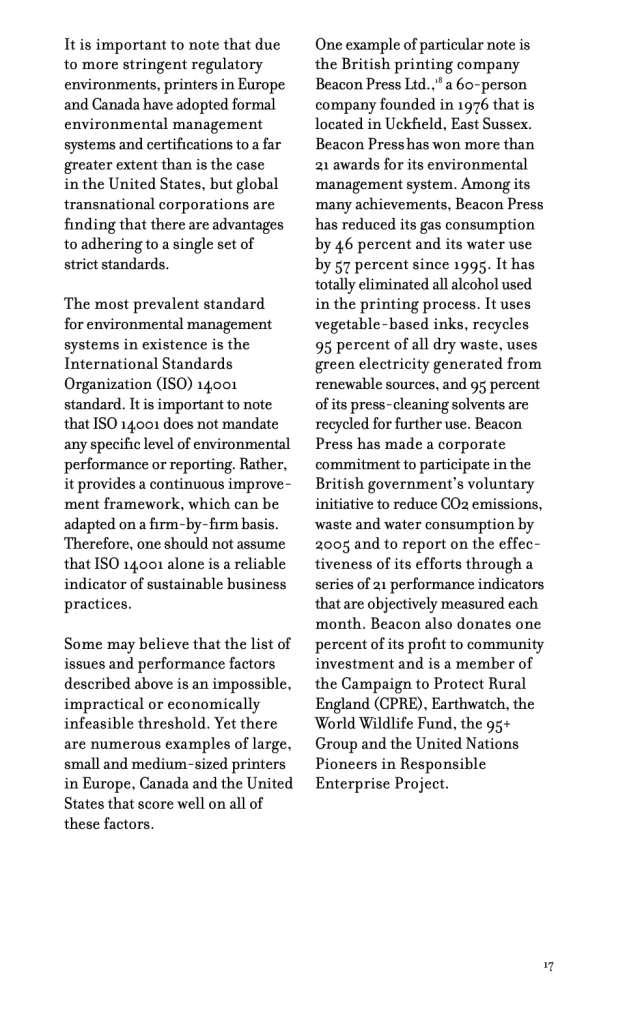
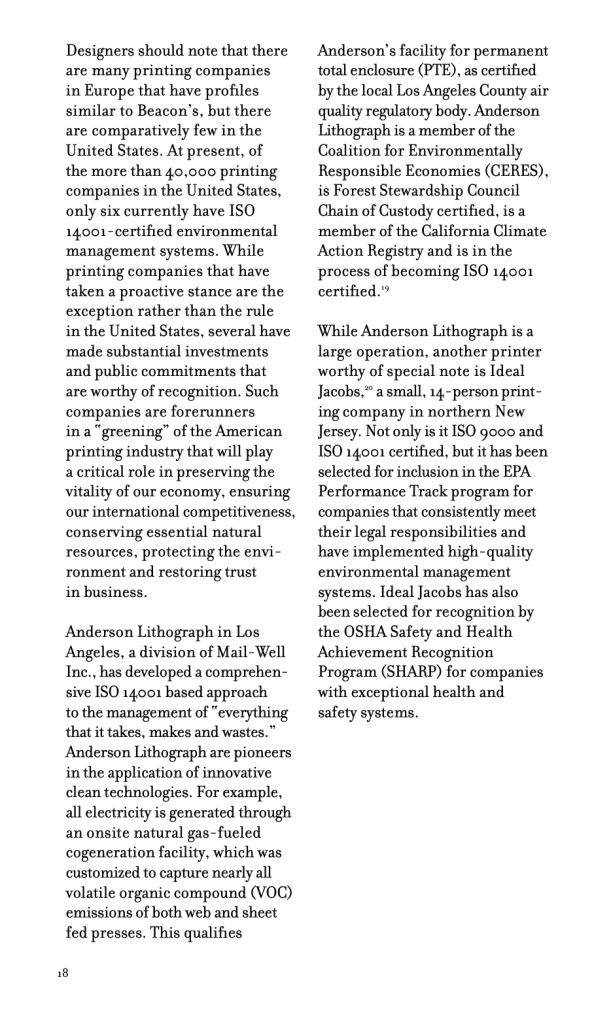
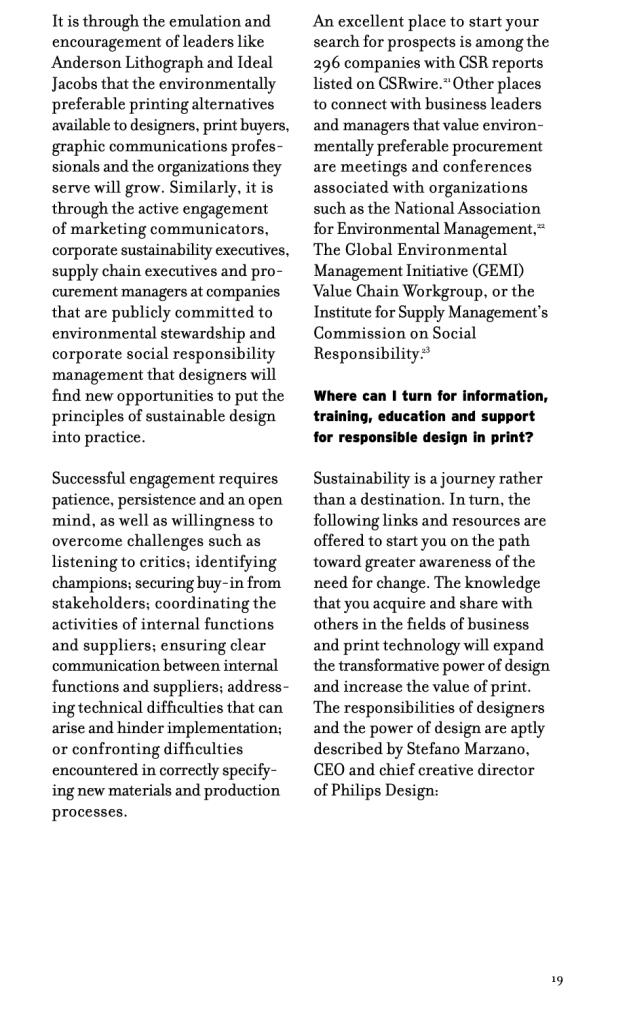
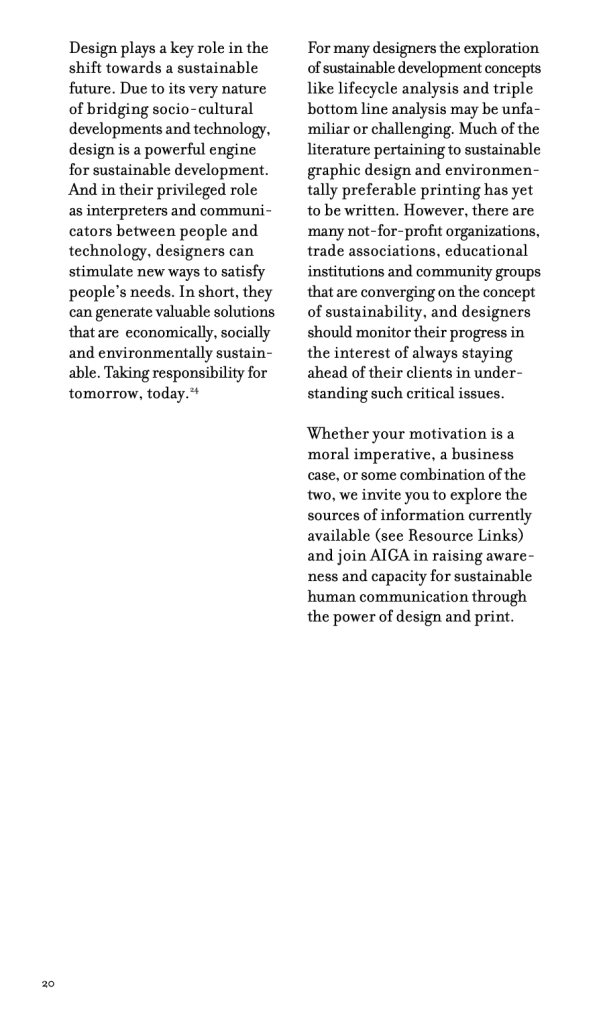
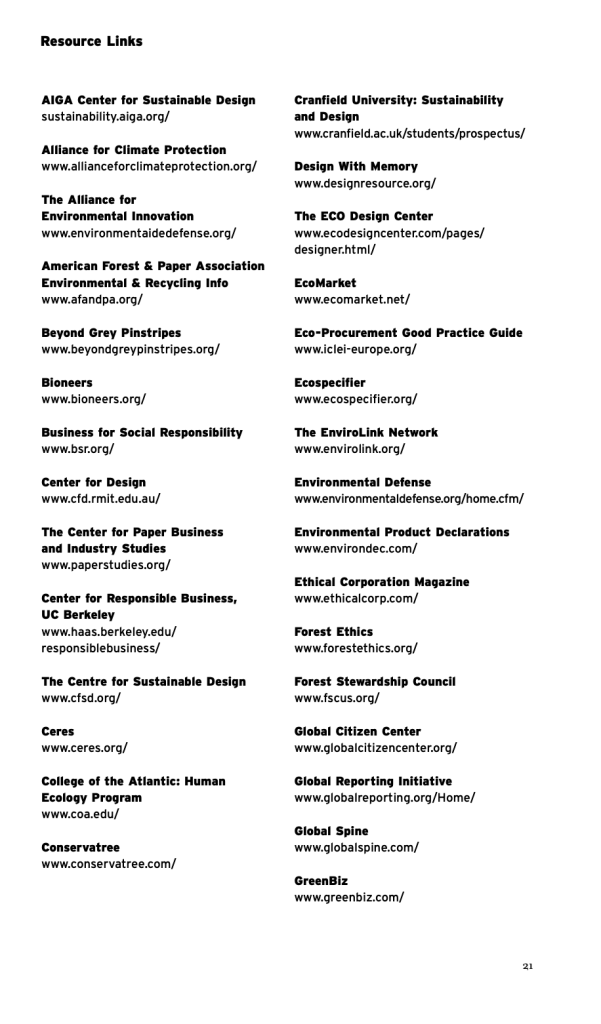
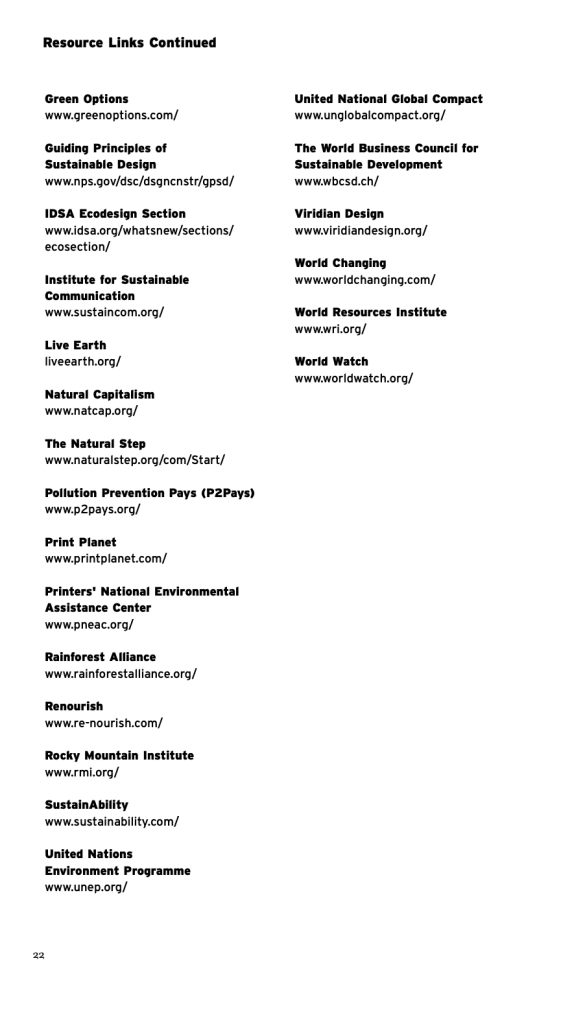
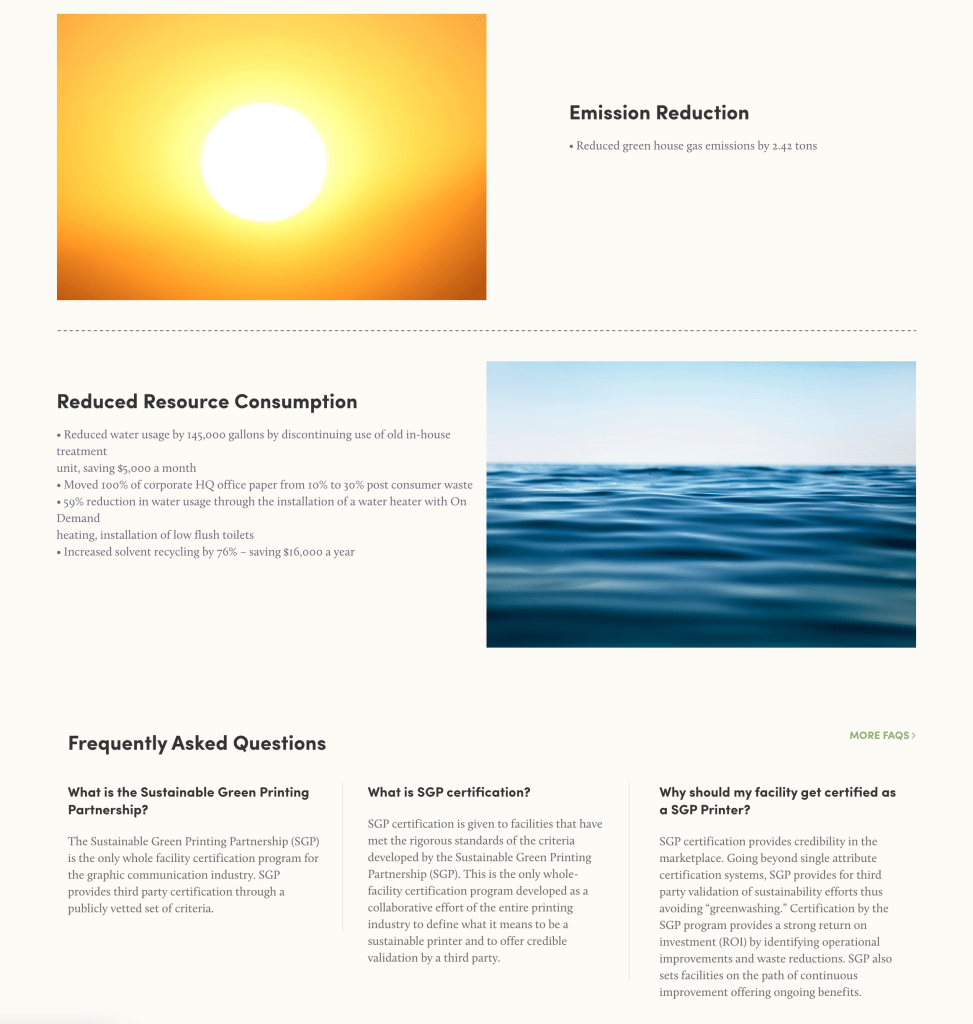
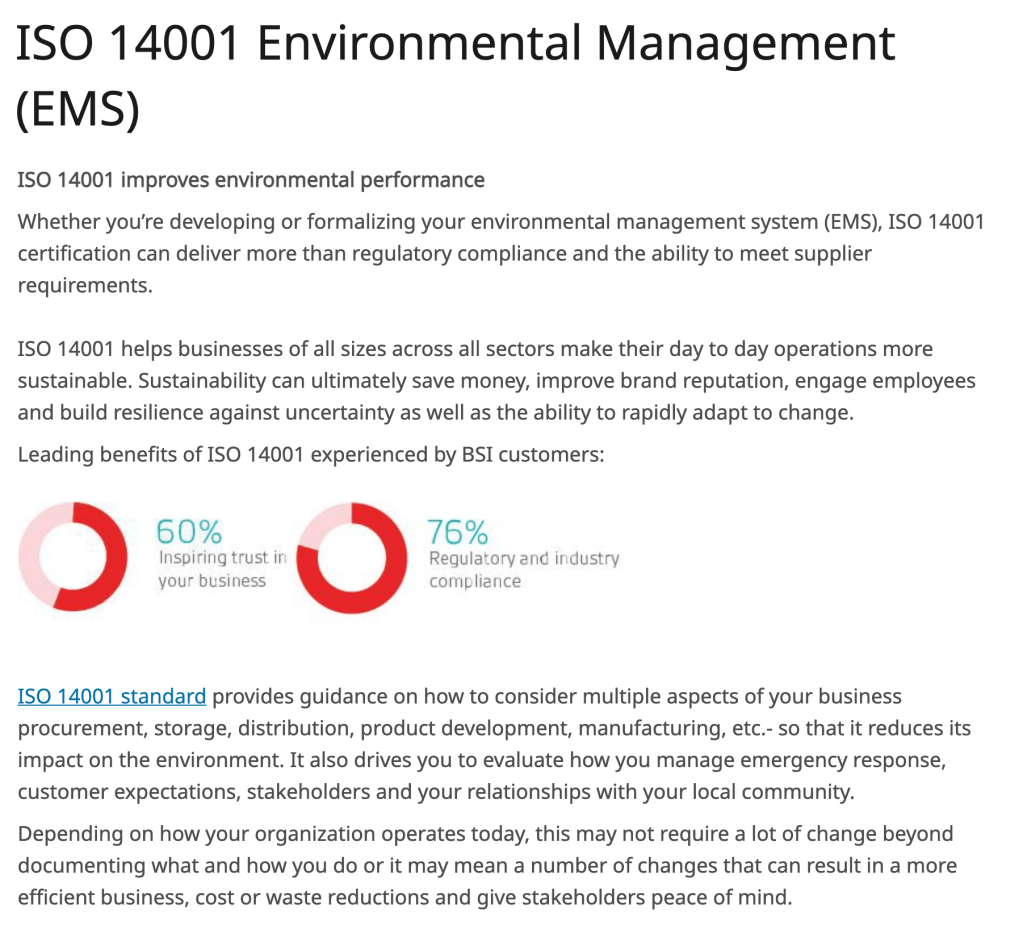
“This brochure in the AIGA Design Business and Ethics series provides designers and other graphic communications professionals with an introduction to design and print production practices that demonstrate respect for the challenges of one of the truly critical issues of our age: the balance between economic gain and environmental degradation. For design to be responsive to a client’s needs, it should be responsible and appropriate. Appropriateness, in the 21st century, will entail respect for resource constraints.” Source
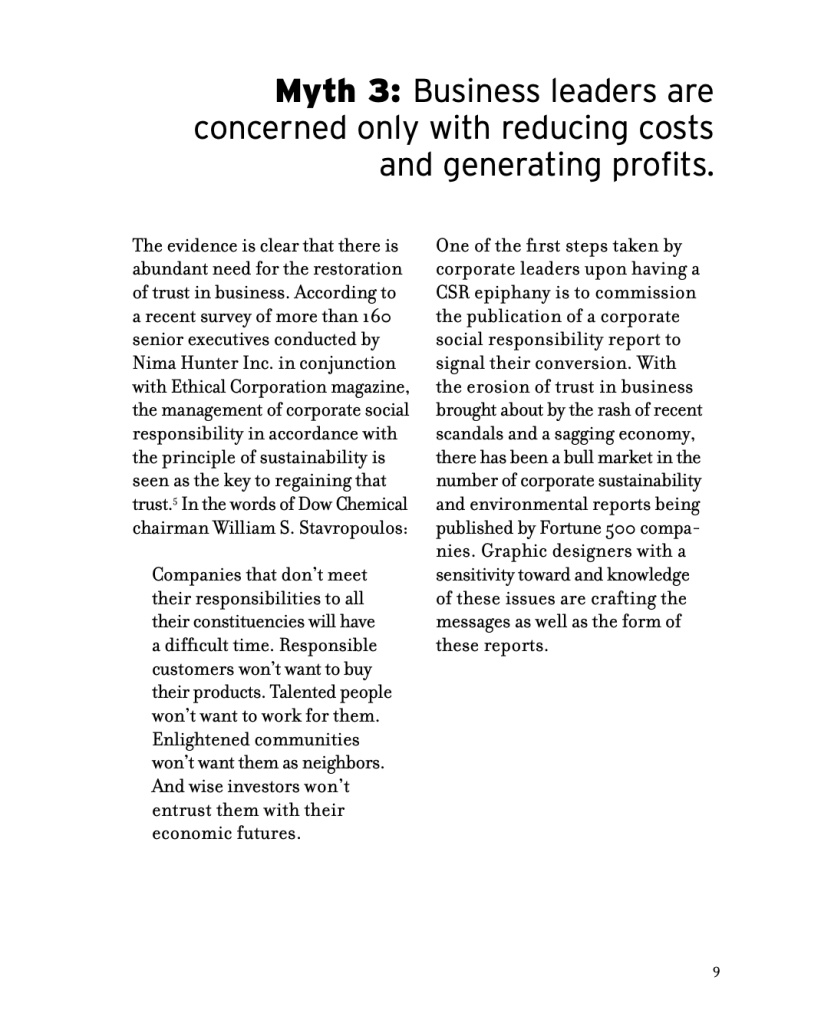
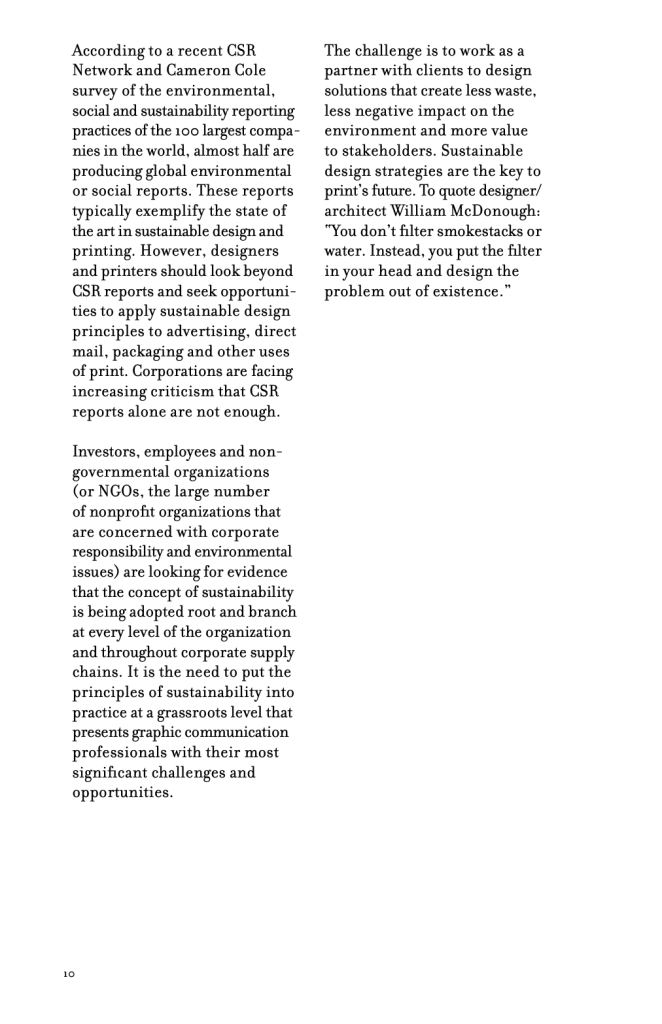
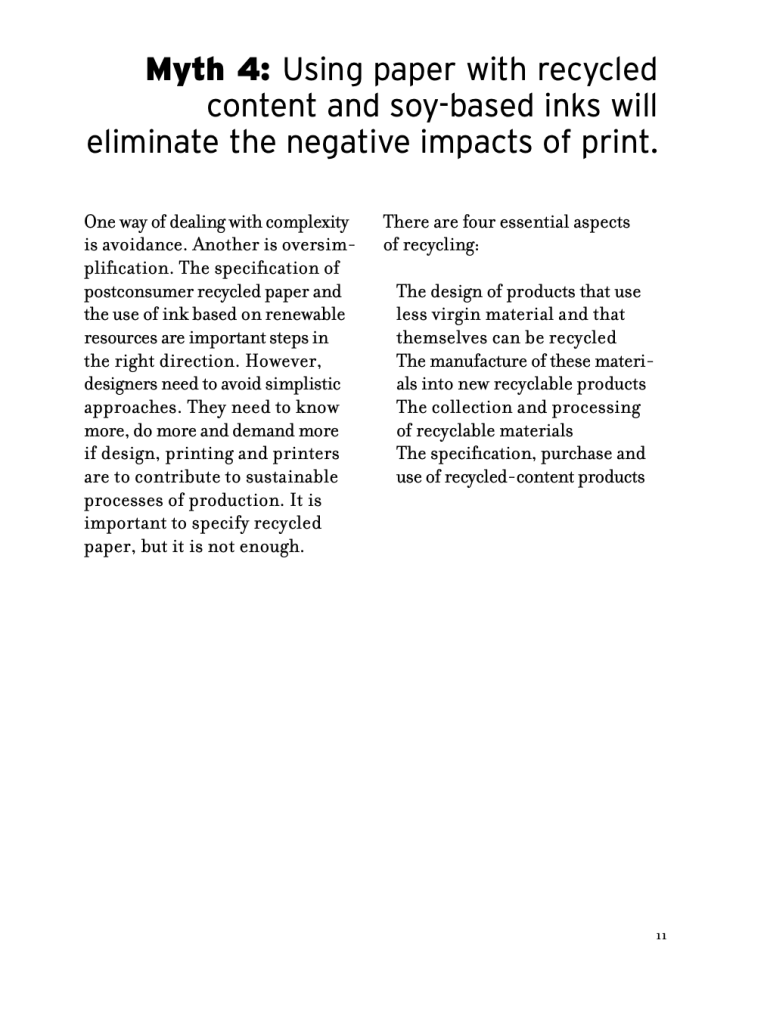
 jesswhatley.design.blog