
Reference Material
The Future Laboratory
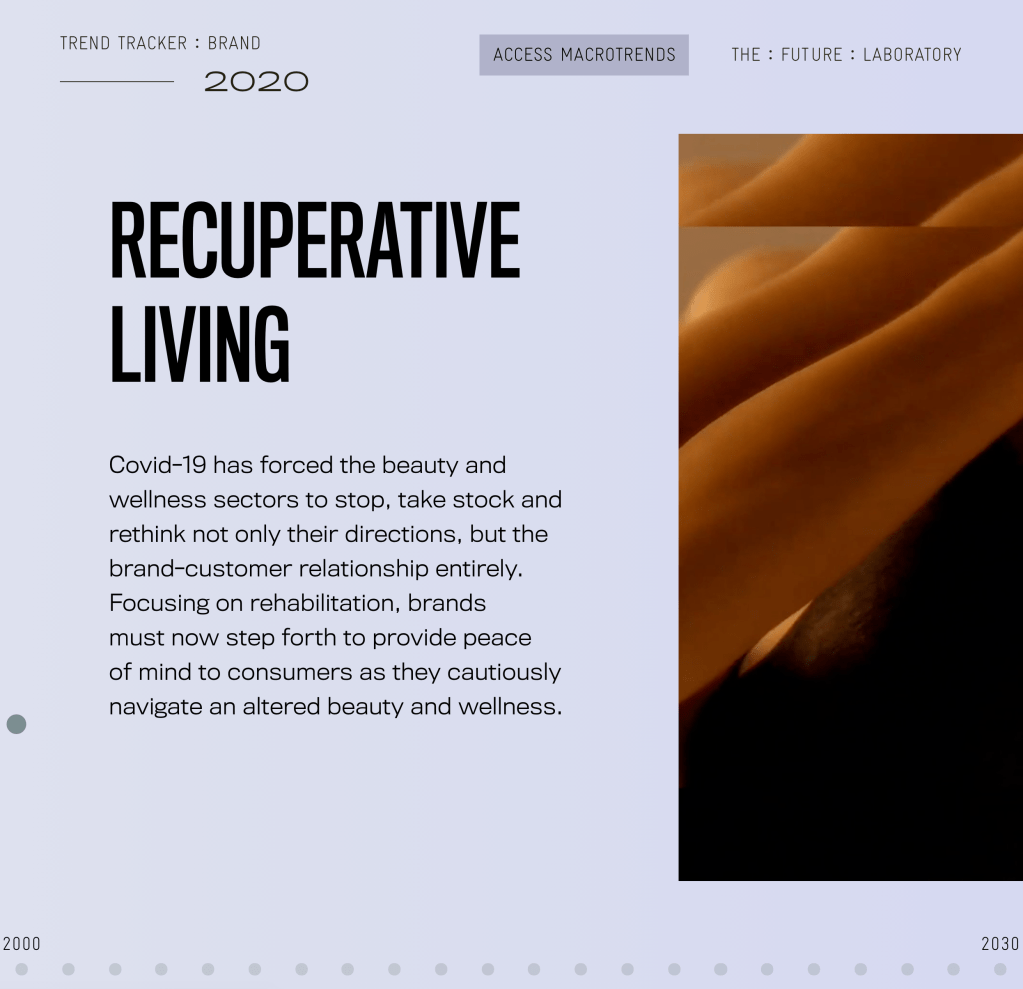
This trend tracker is really insightful to see the trends throughout the 2000’s. I think the ‘Recuperative Living’ trend can connect with my idea really well. From 2020, we have all learnt the pressures and importance of our health and wellbeing due to the pandemic, but also through a radical shift in our lifestyles; the way we live on a day to day basis has had to change. Our working lives have altered and when you do your job day in day out that’s bound to be a cause of concern.
I already know from research so far that mental health issues are a big problem globally and that the pandemic hasn’t helped this. That’s why I feel my idea of a graphic design workshop to help designers of all ages/experience levels would bring positivity back into the world of work for them. Knowing that there is a trend forecast around wellness would also boost my audience and market reach, as people are interested in finding their happiness, now more than ever. People would be able to go outdoors and get fresh air, without feeling imprisoned to the online world.
The Trend Forecaster’s Handbook
1 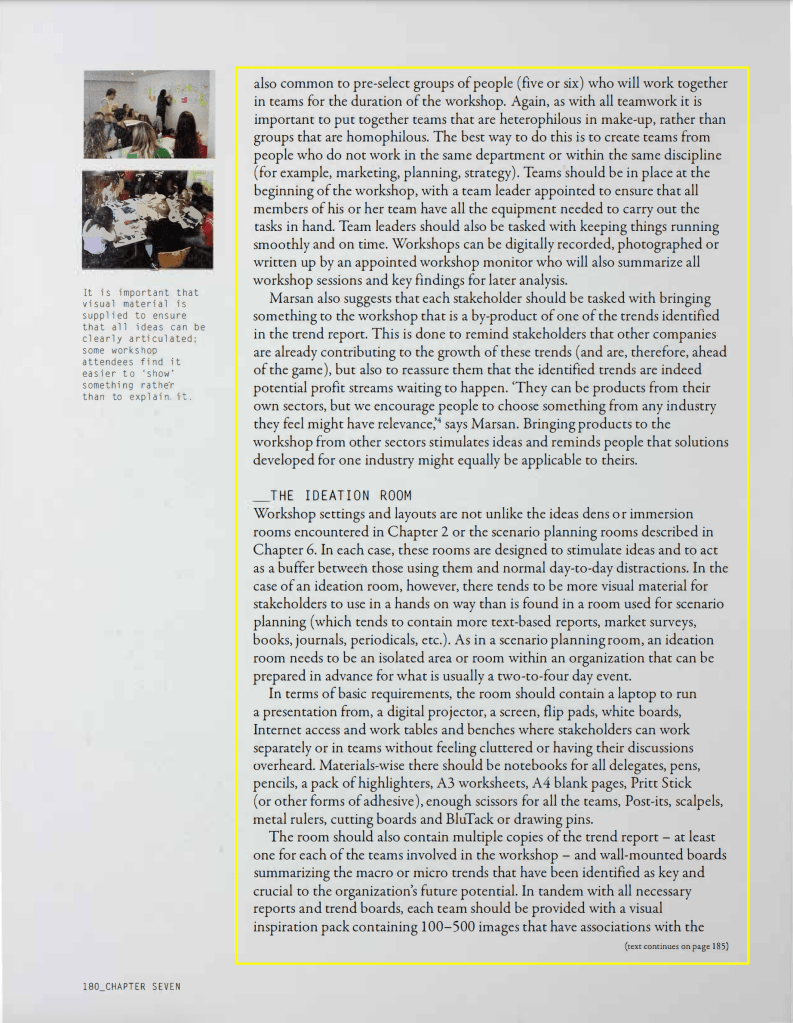
2 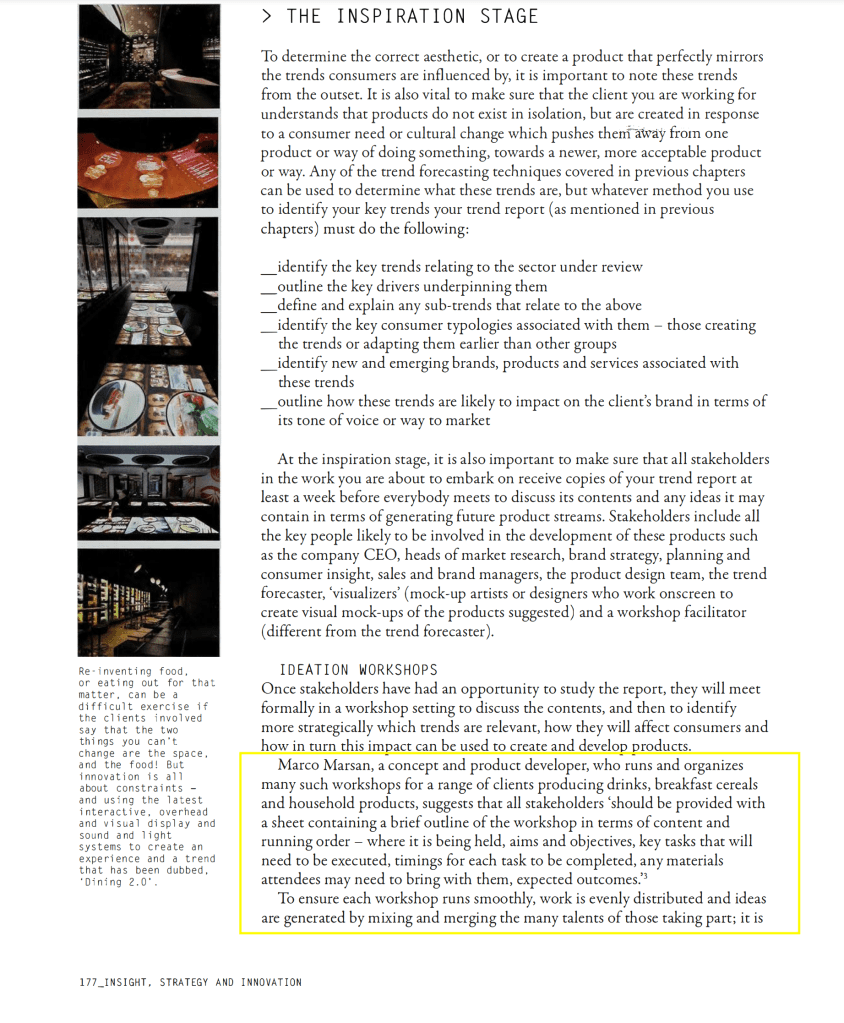
3
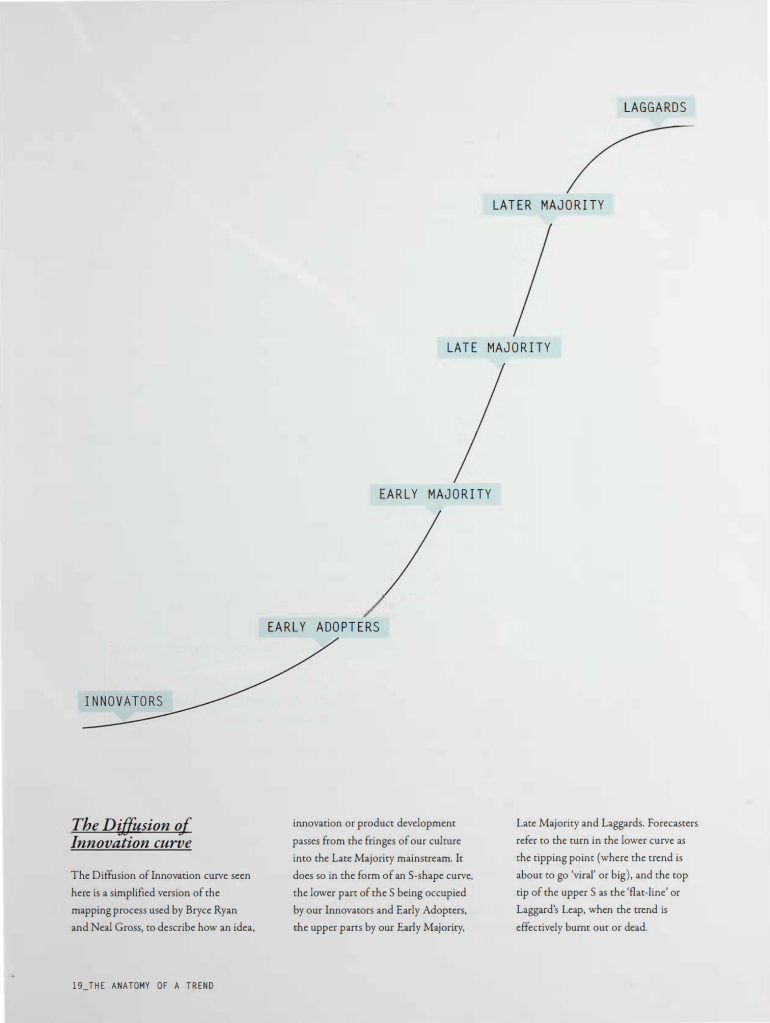
- The diffusion of innovation curve represents the wave of interest of a brand, and the lower curve based by ‘early adopters’ is where the trend really begins to become a success. This is exactly what every brand, company repetitively wants to experience with their products. Even better yet, during this wave of popularity and recognition for their products, the brand will pick up even more customers because it’s the trendy product. Customers that may not initially want to purchase an item will be more likely to buy it if there are good reviews/recommendations from people they know, or see how it can help others and they want that too.
- This extract is really important and is making me consider the way the workshop challenges are structured. For example, the paragraph stating that people who do not work in the same department are best working together as they have different areas of expertise. What if I ensure that the workshop challenges state that for groups, they should have X amount of student designers, junior designers, freelancer designers, senior designers etc. Per group. This would provide a good mix of creative expertise.
Another idea I have had from this extract stems from the second paragraph. There could be a possibility of different rooms where different type of workshop activities are based? Maybe each room could target a different area of mental health, such as mental stimulation (a layout task), physical (going outside and collecting materials), or even getting people in group work to be social. This is definitely an interesting area to consider. - My workshops would contain a brief for every challenge/activity required. The brief will contain aims and objectives, the task, timings, and materials required. The expected outcomes would simply be to bring innovative ideas to the table, and to think of something new that you haven’t explored before. I think the outcomes would be really broad and interesting from all designers that way.
Dezeen (2018) Soft Future talk:
Things I found interesting from the talk:
• Wellbeing is becoming more and more important as time goes on
• How far ahead the trends are predicted – 20 years!
• Talking about inspiration from ancient technology not recent technology; it’s original and holds more insight
• How technology could advance further to become inside us as a part of us; epilepsy scientific experiments have proved this possible to trick the brain into preventing episodes
• Telepathy and seamless design could be the future – what if we don’t need to text and our brain communicates directly to technology (as above with implants for instance) and therefore it changing the way we act/see/do as humans
 jesswhatley.design.blog