
COLOUR AS A THOUGHT PROCESS:
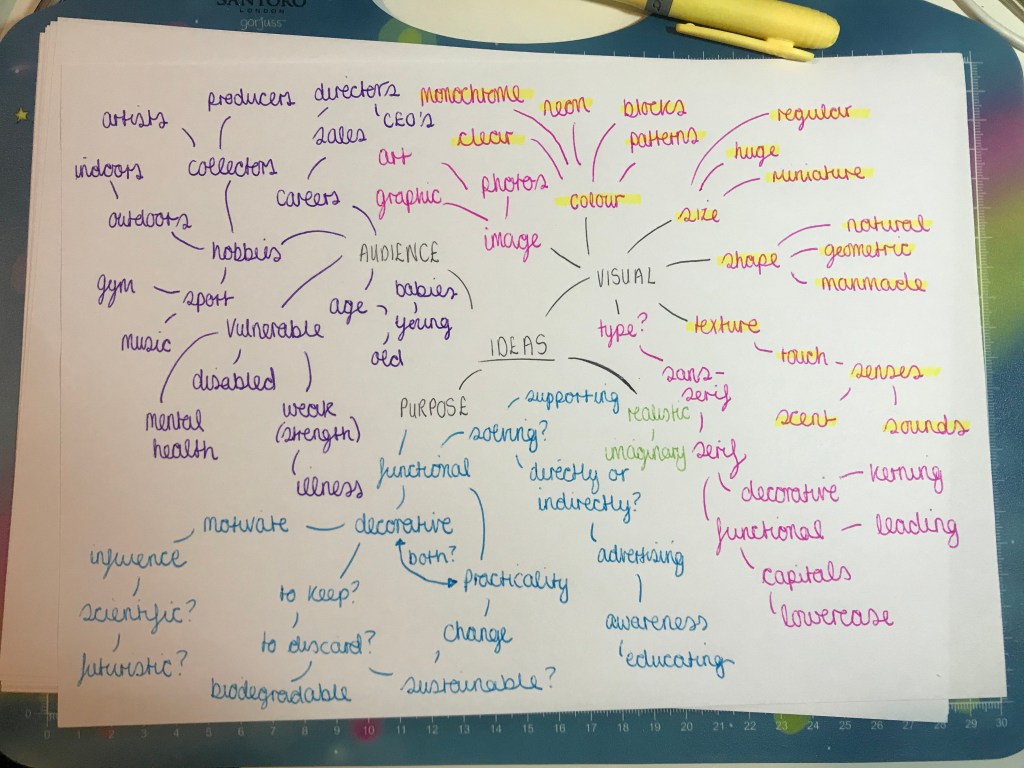
Generic “idea” diagram 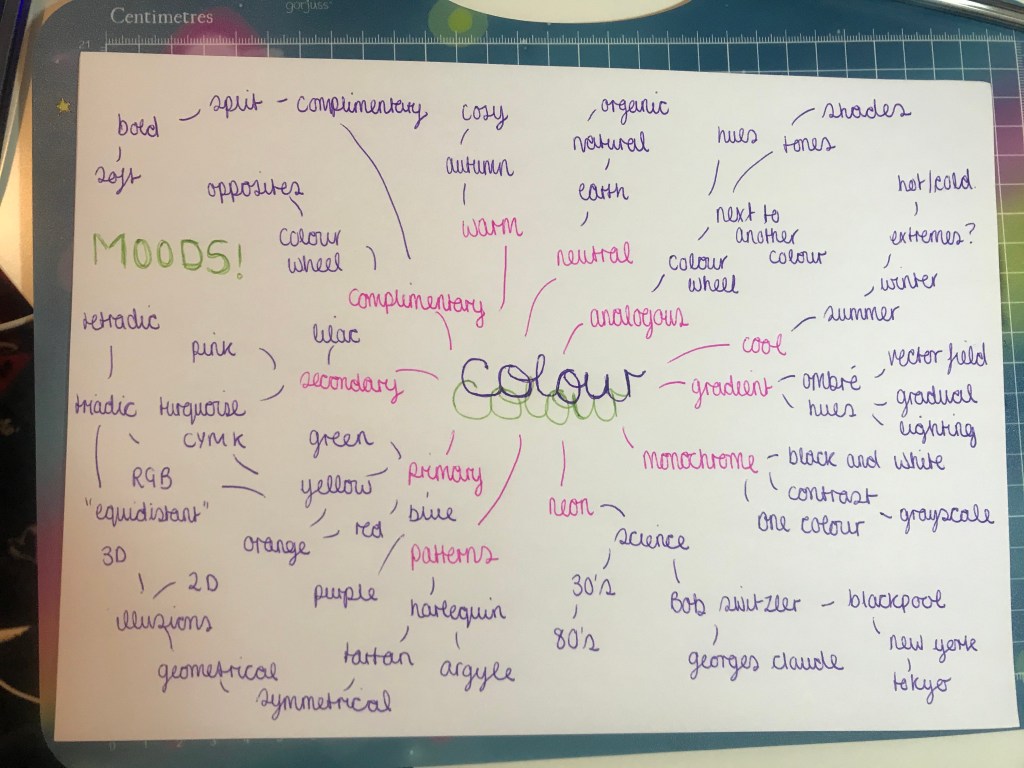
Filtered “colours” diagram 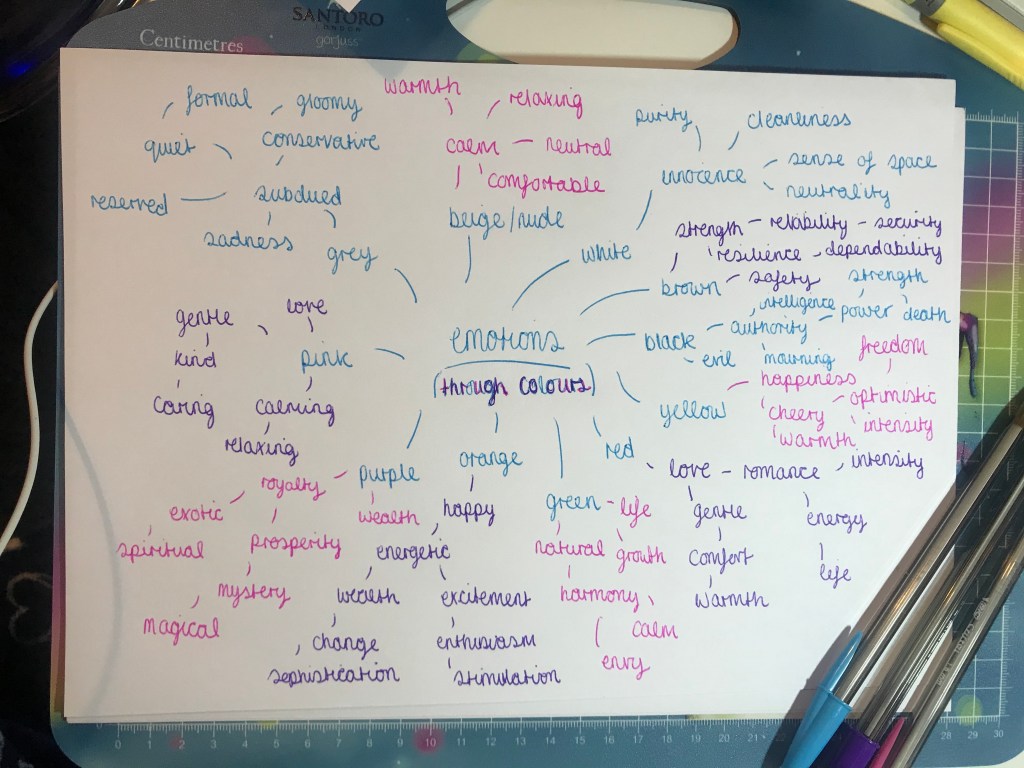
Focused “colour psychology” diagram
How was colour formed?
“The mineral colors include a catchall grouping of “earths” as well as manufactured colors made from such ores as cobalt, copper, manganese, mercury, and lead. The largest subgroup of earths was ochers, colors formed from iron oxides. Red, yellow, and brown colors were typical, but greens and blues derived from copper deposits were also familiar” Source
Here, Lowengard explains how colours were sourced In the 18th century. This is not to say when they were first discovered, after all the Egyptians are well recognised for grinding down Lapis Lazuli to achieve Royal Blue. I have found this article very interesting and have found a lot of useful information in regards to where colour has been sourced.
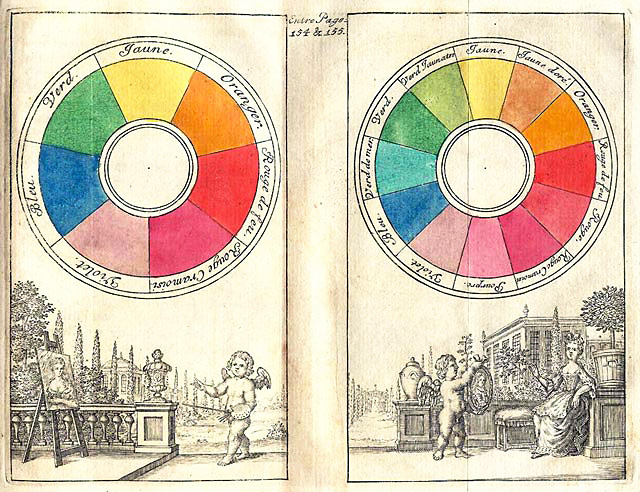
Where did colour theory begin?
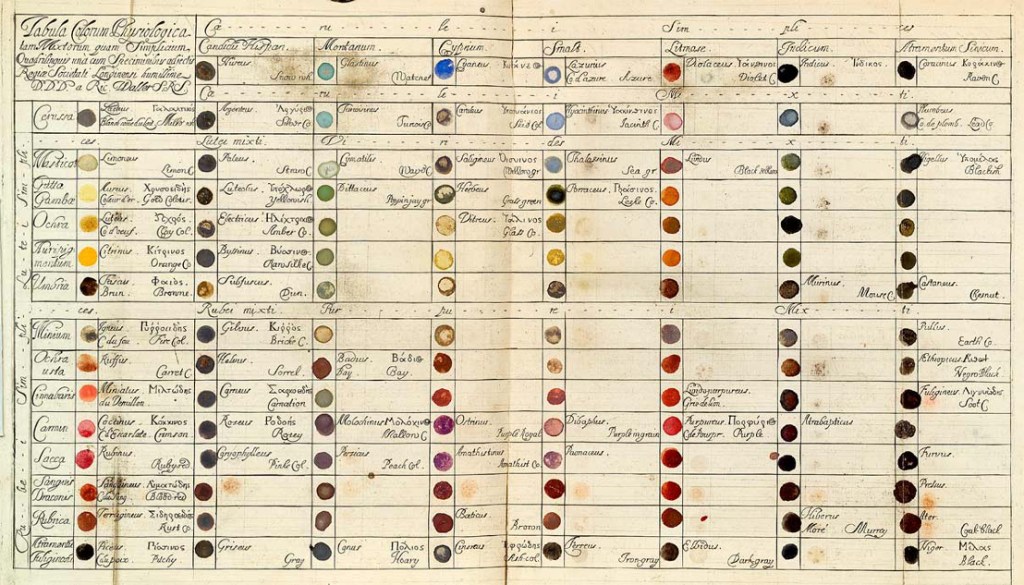
This table is one of the earliest known color charts. Waller created it as a tool for describing plants and animals. Collectors and scientists could compare their specimens to this table and use the names provided to identify the colors of leaves, bark, flowers, feathers, plants, and animals. Source

how do people see colour who are colourblind?


It’s amazing to see how colour can affect someone with colour blindness and I have been intrigued to see how a blind person would associate colour with the world. I have found a video which sheds some light on this:
Tommy mentioning how colours are associated with words really highlights how powerful language can be and how colours have a psychological role in the way we think.
This has got me thinking about my final line process – it seems as a rule that the darker the colour, the more we associate it with bad things. The lighter the colour, the more we associate that with being good.
 jesswhatley.design.blog