
Initial notes for each brief
International Competition (live)
Designing (generically) to overcome negativity.
It could involve:
• Hands on crafting i.e. journalling, origami, querkles, dot-to-dot
• Encouraging people to go outside (this would fit into the “environment and sustainability” impact theme too)
• Encouraging a hobby and creating a series of books i.e. illustration, photography, yoga
• Wellbeing & mental health mail box subscription (fits into the “health, wellbeing and disability” impact theme)
International Competition (concluded)
An innovative adidas product, service, brand experience or campaign for 17-25 year olds in a key city.
It could involve:
• A social weekly event bringing together a community (like youth club)
• Sports village building raised through donations, encouraging 17-25 year olds to partake in sports to raise money and ultimately resulting in a sporting event venue
Live Collaboration
Collaborate with an existing contact, client, industry partner or professional body and develop a brief that you will deliver over the coming eight weeks.
It could involve:
• Magazines
• Artists
• Scientists
• Medical
Unfortunately, I would struggle with this one as unless I collaborated with BSI (my job) and I would find it hard to get excited about this brief.
Research and Development
Creating a visual tool that displays and guides users to an entire collection of museum archives
It could involve:
• Wayfinding
• Images
• Interactive
• Filtering systems
The two briefs I am considering are:
“International competition (live)” and “Research and Development“.
Three creative examples of projects for “International competition (live)” – Mental health and wellbeing
There’s two reasons why this brief stuck out to me:
1) I visited the “Can Graphic Design Save Your Life?” at Wellcome collection, 2017, and found the exhibition really insightful. Branding explored the subliminal messages on the impacts of smoking and medicinal packaging, and how carefully considered hospital environments are with colours and space.
2) I have researched some really fun projects since starting this course in regards to spatial/environment design, such as Morag Myerscough’s Sheffield Children’s hospital. This relates really well to the mental health and wellbeing brief, so I’m excited to learn more about it.
I want to explore beyond what I’ve seen already, and think about the physical wellbeing of someone who is living their life day to day, at work, on their commute, in their home. These three projects I think would really help someone’s mental health and overall wellbeing when they are potentially at their most vulnerable – undistracted, relaxed and left with their thoughts.
Morrama’s “smarter phone”
200 word strengths and weaknesses synopsis:
There are several strengths to these concepts.
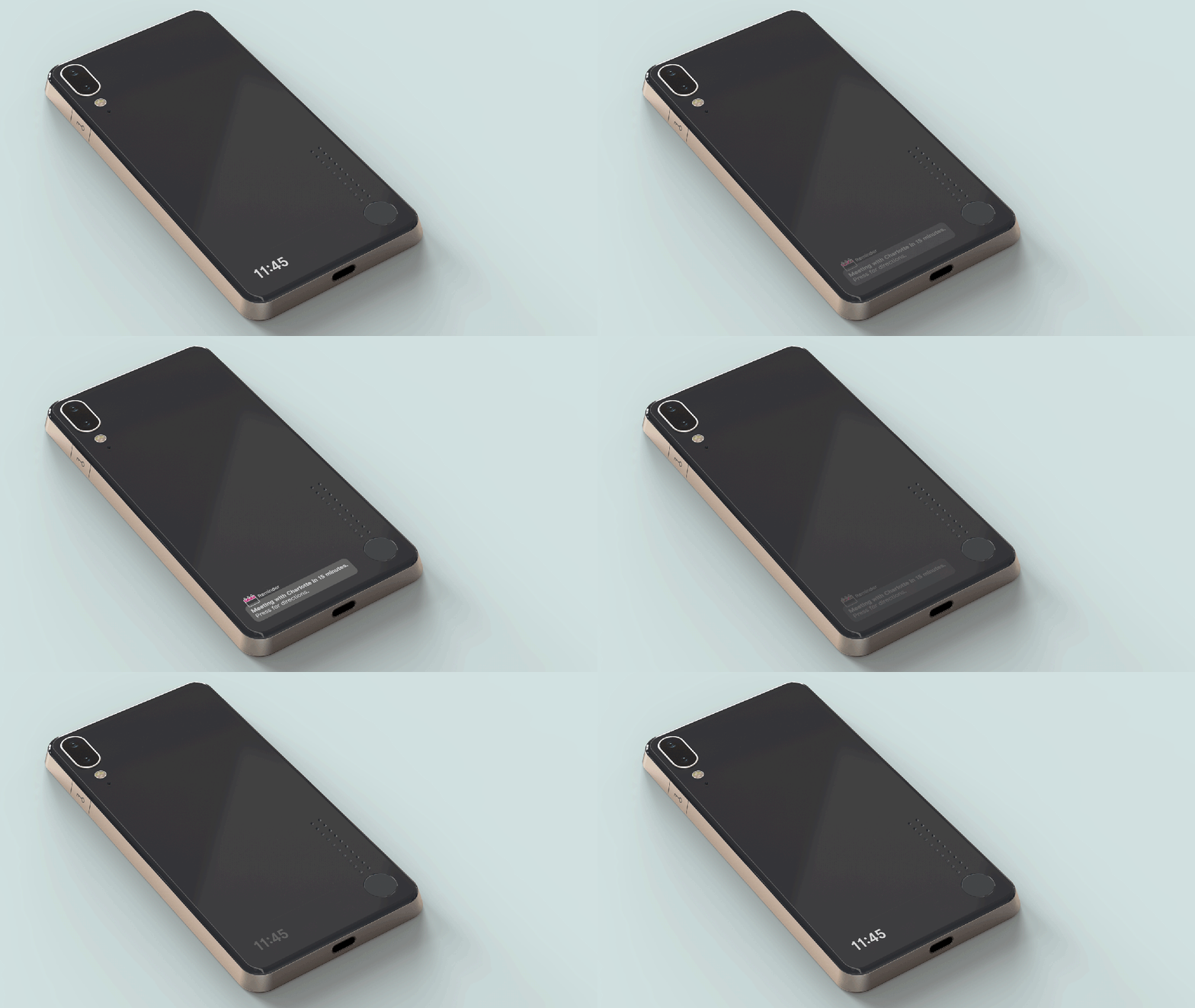
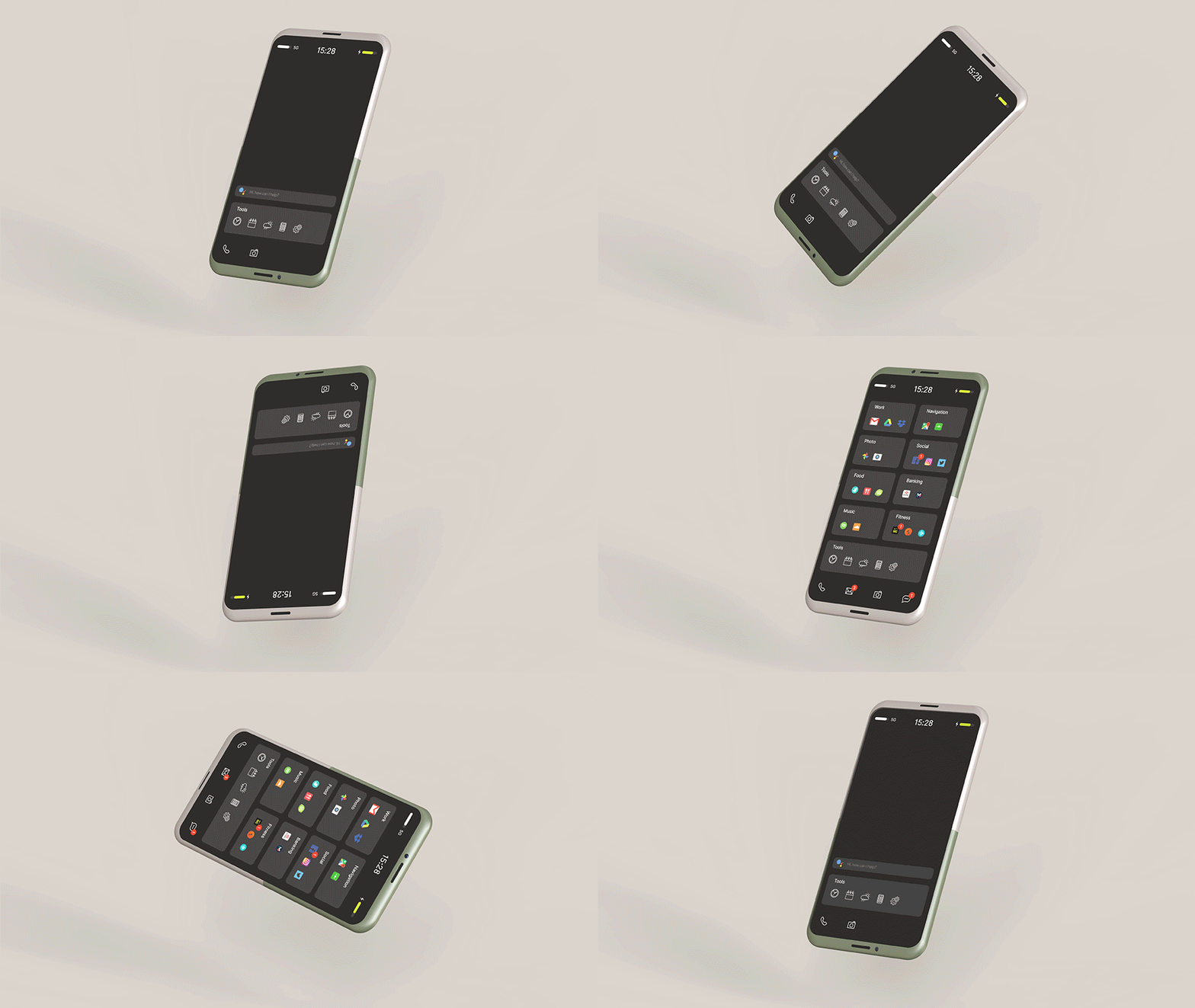
Morrama’s smarter phone is an innovative idea in an increasingly high technology market. These are a range of phones that are modern, stylish, and can appeal to all ages. Generating three different phones to suit different needs reaches a wider audience in different scenarios.
The first phone design targets the issue of users being easily distracted during private time with friends, family and colleagues, and only displays urgent notifications on the back of the phone i.e. a meeting in 15 minutes, or a doctor’s appointment.
The second design involves turning the phone upside down, which activates ‘mindful’ mode and gets rid of most applications, keeping all apps basic for someone who needs to just switch off.
The third design of the phone is developed with the user’s movement considered, therefore only activates notifications when tilted and therefore prompted by the user. It simply doesn’t distract.
However, there are weaknesses.
Users would need to be familiar with Morrama’s technology and take the time to adapt to something new, prior to any distressing situations. My question is how can it shield users from potentially distressing content i.e. social media, on the phone itself?
2. Nest by John Lewis
200 word strengths and weaknesses synopsis:
Nest focuses on senses such as touch, sight, hearing, and scent in a user’s homely surroundings. What makes this concept so strong is that it’s applicable to anybody; it’s customisable and therefore personal. It encourages time out in a comfortable, relaxing space.
Another strength is that Nest works in conjunction with retail store John Lewis; it’s a promotion tool. Not only does Nest work solely to address mental health and wellbeing, it’s also effective marketing and branding for John Lewis products.
What I like most about this concept is that there are several outputs; an exhibition, a social media handle, a website, a publication and advertising for the brand. The strength here is the variation of advertising and therefore the brand is targeting a large audience.
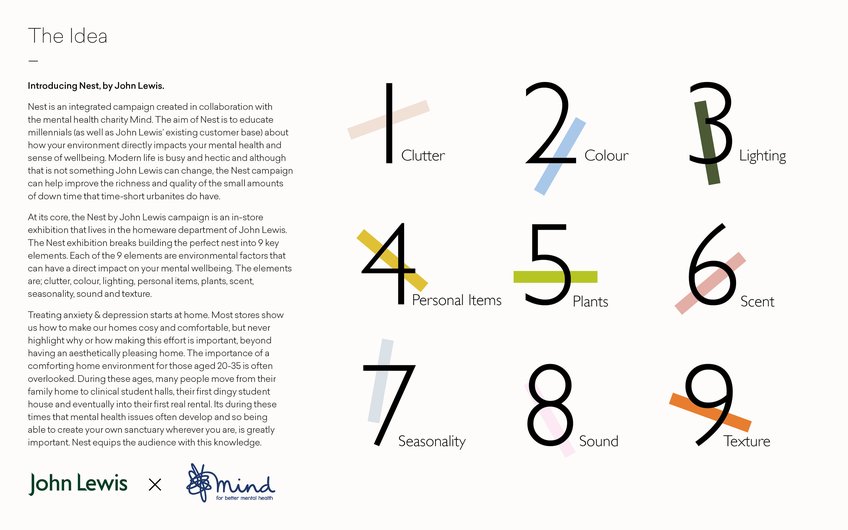
Personally, I can see how there would be two weaknesses in the Nest concept. The first being the total number of elements required to elevate symptoms of mental health. If someone is in a state of distress, how efficiently would they be able to source all of these nine products? Secondly, limiting Nest to link only with John Lewis products minimises reach to the target audience. Do 20 year olds shop in John Lewis?
3. Mindnosis
200 word strengths and weaknesses synopsis:
Mindnosis is a convenient, easy to use concept requiring very little tools, time or space. It’s compact, meaning it’s also great for travelling or for using in small spaces i.e. study desk, and it doesn’t require ‘setting up’ as opposed to many technology items these days. Mindnosis is simple and I think that’s a huge strength considering the target audience of people with mental health or wellbeing issues. Things are best left simple, as complicated tasks can be triggering in themselves. Another positive strength from this concept is the social aspect; to reach out to others could be potentially saving a life. Giving the user the option to communicate any results, create an ‘action plan’ and discuss options going forward identifies any problems early to prevent issues.
A weakness that I need to consider is that Mindnosis does not prompt a user in any way, and ultimately relies on users sitting down, and taking the time to complete the pack. Unlike technology where you can get alerts or reminders to do something, you would need to have the time put aside to complete this project. The project would also need to be completed frequently to monitor health and wellbeing.
4. Tools for Therapy by Nicolette Bodewes (an additional design project I found that I really loved and wanted to mention, but I won’t need to write 200 word synopsis)
Strengths:
• Innovation combines the tool platform with a notepad to benefit both client and therapist
• Compact, easy to store and set-up/put away
• Clean, tidy, minimal
• Great for children
Weaknesses:
• It would only work in certain therapy scenarios and may not work with everyone/could the objects be harmful? Therefore targets a specific audience
Summary
All concepts I have chosen explore preemptively preventing upcoming distress which I find really important. The earlier the signs are detected, the more time there is to change anything that is identified as problematic.
Rough idea for a brief:
• How can graphic designers fall back in love with design through craft?
 jesswhatley.design.blog