
referenceS:
Freud’s iceberg model of the psyche:
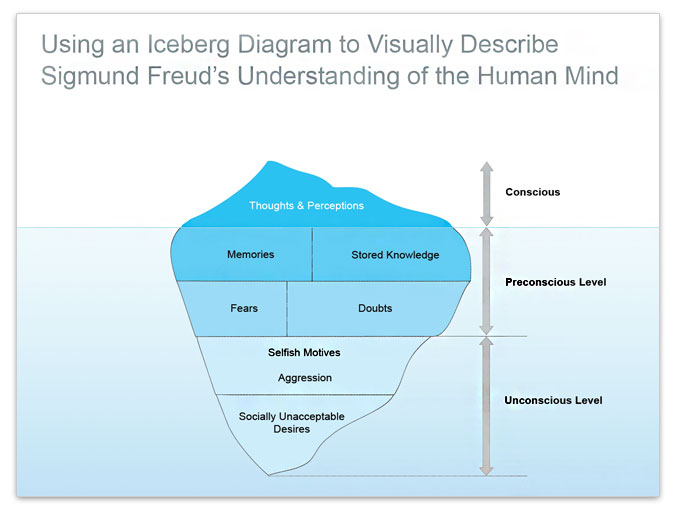
- The preconscious consists of anything that could potentially be brought into the conscious mind.
- The conscious mind contains all of the thoughts, memories, feelings, and wishes of which we are aware at any given moment. This is the aspect of our mental processing that we can think and talk about rationally. This also includes our memory, which is not always part of consciousness but can be retrieved easily and brought into awareness.
- The unconscious mind is a reservoir of feelings, thoughts, urges, and memories that are outside of our conscious awareness. The unconscious contains contents that are unacceptable or unpleasant, such as feelings of pain, anxiety, or conflict.
Brand Archetypes theorised by Carl Jung.
There are twelve brand archetypes:
The Innocent – Optimism
Everyman – Faithful
Hero – Inspirational
Outlaw – Rebellion
Explorer – Discovery
Creator – Imaginative
Ruler – Responsible
Magician – Spiritual
Lover – Commitment
Caregiver – Compassionate
Jester – Irreverence
Sage – Wisdom
I find the above brand archetypes really intellectually stimulating – when reading about brands that encompass these traits it really makes sense. The magician archetype would create a ‘spiritual’ connection with the consumer and brands such as disney, dreamworks and pixar are great examples. Explorer would encourage ‘discovery’ and adventure, brands such as Natural Geographic, NASA, Jeep etc. would want to showcase this.
The Trajectory of the Self
Anthony Giddens suggests in the reference material that “people who fear the future attempt to ‘secure’ themselves – with money, property, health insurance, personal relationships, marriage contracts” and if they do so, will be discouraging personal growth. Giddens goes on to say that doing the opposite – “making no rules” means you will be “happier in relationships”. Essentially, he is arguing the age old quote of “money doesn’t bring you happiness”.
From a contemporary perspective, I am inclined to disagree with him. I think happiness comes from knowing that you have earned where you are in life, whether that be a job, a relationship (not necessarily romantically) or where you live. To be content is to have something to make your day to day life worth living. Money does not make everything wonderful, but it certainly gets you a roof over your head, warmth and food.
I’ve noticed this article was published in 1991 – is it because we have become career focused in the last 30 years that this statement seems out of place? I have posted this on the ideas wall for debate. Hannah raised an interesting point – we as human beings can survive off very little money than we think as a lot of our lives are luxurious. Maybe this links it back to nature vs nurture that Martin talks about – going back to when humans had very little, happiness came from within. However, even then there would still be desire for more, i.e. more food, more shelter, more warmth, more space.
 jesswhatley.design.blog