Multidisciplinary team of architects, filmmakers, coders and activists who investigate human rights violations through spatial design.
They repurpose architectural tools to investigate cases where human rights have been breached.
Counter forensics as opposed to forensics, where political and social issues are explored. How the world and media can be presented as aesthetics that allow people to interact in a different way.
Changing the way you see the world and how you engage with it.
Nicer Tuesdays: Offshore Studio
Isabelle and Christopher, together they are Offshore studio,
Self-initiated, publishing, editorial and typography projects.
Politics, economics, social projects. Commission, research, self-initiated and publishing are the four areas they explore.
Identities, websites, publications etc.
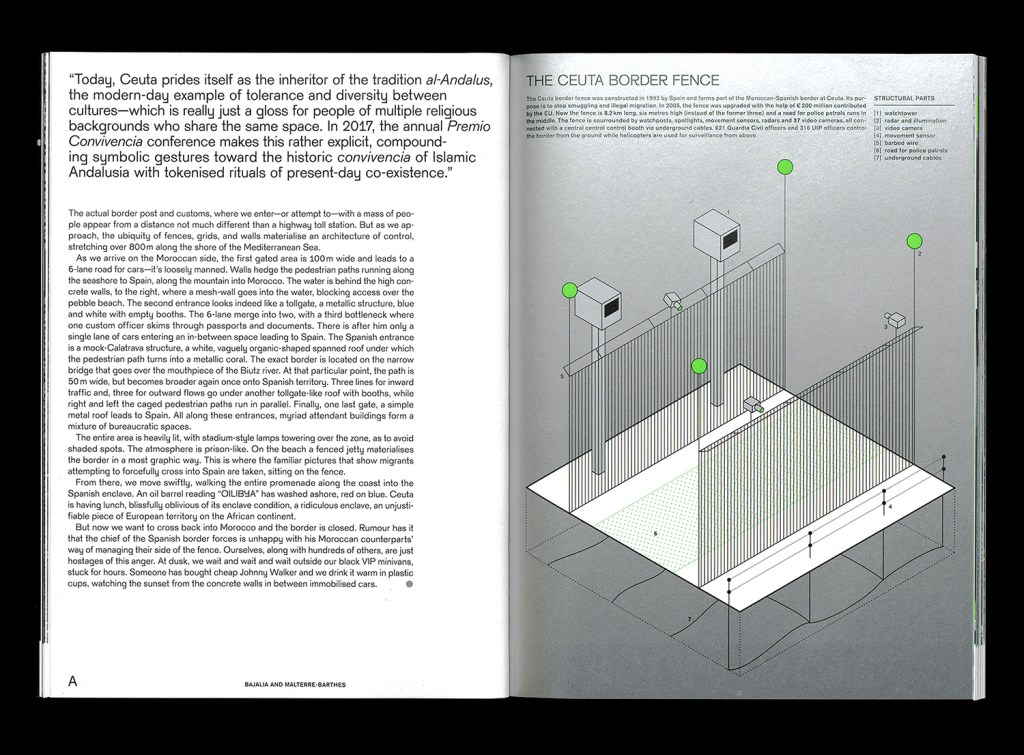
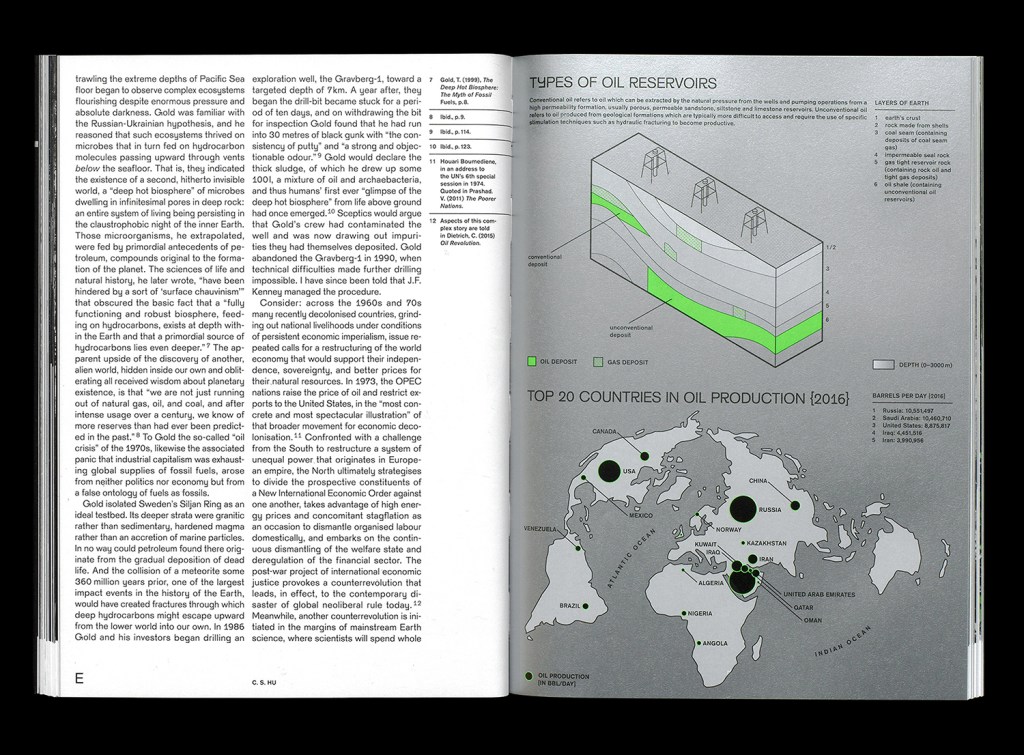
Migrant journal; one issue is focusing on the countryside as a space of migration. Another focused on movement of information, money and resources such as marble and gold.
Newest issue explores migration and illegal trades such as smuggling of drugs.
Instead of working on design, image and text separately they work combined so each process informs the other as they develop the journals. Using maps, infographics and photographs, data too.
Using an Atlas as main inspiration for the journal.
Breaking up the text to enable an easier, visual focus for the reader.
Migrant journal grotesque is a custom typeface can be seen below. The headers are a good example of how the letter ‘R’ has a curved leg and the letter ‘C’ is wider – just enough to give the publication a personalised feel:
Image source – Migrant journal also displays the use of image combined with design and text to link together.
Such a variation of the media they incorporate into their designs, such as photography, 3D and textured inks.
Adversial Design
Robots aren’t limited to one sector; they are complex engineered systems designed to connect software and hardware – interface, interaction, mechanical engineering, computer science and industrial design.
When computers and artefacts are combined, we have robots. All robots serve different purposes and all have strengths and weaknesses.
Designers are developing new forms and modes of interaction for social robots; even politically. The ways in which we design the character of our relationships with social robots reflect and reinforce beliefs about what it means to be social and set trajectories for how we might live together with them in an intimate manner.
PARO – the baby seal therapy robot, designed for physical interaction with humans. AI is able to make this seal robot appear realistic with functions such as sleeping when it’s dark:
Interestingly, PARO uses memory functions to repeat actions. For instance, it remembers what it did when it was last stroked to repeat it, and get stroked again. It becomes trained just like the human/pet mind.
By labelling objects as robots, there becomes a certain set of expectations and standards when purchasing – just like there are with children’s toys.


 jesswhatley.design.blog