
Research: Part 1
I have decided to further develop a project that I began in Module 2 Studio and Entrepreneurship – Week 4. We were tasked to create a 3000 word business plan; this was the original brief:
“To support London’s sustainable city pledge, the Design Museum is seeking to encourage environmentally friendly behaviours through material design. The aim of the exhibition is to educate visitors on the importance of sustainable materials, and provide insight in to a future without pollution. Targeted at all ages, the exhibit with combine scientific design with interactive elements. The exhibit will explore using biodegradable materials from various natural sources, alongside using sustainable materials in the exhibit itself.”
Feedback from my peers I received has made me inspired to further develop this idea as my final MA project:
- Really exciting and interesting proposal. Making sustainability a clear focus is really strong but ensure you cover all aspects of the sustainable agenda — ensure this permeates through all aspects of the business. The qualified status of the ISO cert is great research and does prove creditable. The budgeting is good strategy – good to differentiate gold / silver / bronze options. Great project management.
“How could you go on from the initial concept exhibition to offer this as a broader service for other clients. You also look at service design to work with businesses to make their practices more environmentally sustainable and reduce their impact.“
The following two websites were part of my research for this but I need to consider answering these questions now for developing my project in this final module:
BUSINESS.COM – HOW I CAN USE SUSTAINABILITY TO ATTRACT MY CLIENT:
- Which manufacturing processes are the most wasteful? How can you mitigate the negative effects of these processes?
- For physical materials, is it possible to source locally?
- How are you packaging your products? (Sustainable, biodegradable packaging can reduce the amount of trash stuck in landfills.)
- Which materials on your list are the riskiest or least sustainable? How might you replace them? Could you replace them now?
- What are the end products of these processes? How can you reuse waste material? Does it have to be thrown away?
- Can the produced waste be used as a resource or fed into a different process to be used again? How can you reduce the unusable waste?
- Where can you reduce? How can you stretch your raw materials? Can you lower the amount of resources needed to create a specific product while maintaining its quality?
- What are the labor conditions like? Are your laborers being paid fairly? Is their quality of life improving or worsening because of your business processes? Is their time being respected?
GREEN FOR ALL – THINK OF HOW A BUSINESS IMPACTS ON ENVIRONMENT AND PEOPLE:
“Think through how your business will contribute to the green economy. Before you begin writing, spend some time brainstorming all of the ways that your business will contribute to the green economy. Consider your product, service, internal operations, and the local economy. Compile a list of the environmental and social impacts of your business. (This list will likely grow as you continue to write your plan.) This brainstorming exercise will help you communicate the green aspects of your business within each section of your plan”
Research: Part 2
Although the business plan above is a great starting point, I need to tweak a few things as my brief is slightly different. The foundations are there in sustainable practice, but I will not be creating an exhibition for the Design Museum. Here is the adjusted brief that will be my MA project:
The aim is to create a multi-faceted, sustainable, design service by the name of Eco-Collective. The objective is to transform the way design is created and highlight how simple switching to sustainable practice is. The purpose? As designers, there is not enough being done to promote sustainable design practice; designers are responsible for resources such as inks, paper, packaging and devices that use high amounts of energy. I want to flip that and show it is possible to keep clients, designers and the environment happy if all these elements are carefully considered and swapped for ethical alternatives. The audience will be graphic designers (small/large companies, or freelancers) who want to create honest, sustainable design to benefit themselves and clients. The outcome for this project will be a 5000 word business plan for Eco-Collective.
Research question: How can eco-collective transform the design industry through sustainability?
How might I…? By offering multiple services that specialise in sustainable practice ranging from organic materials such as paper and inks, how to reduce carbon footprint through excessive packaging, and reducing energy consumption/switching to solar power.
Who is this for? Designers, clients and the environment.
What ethical considerations might I have to make?
For Eco-Collective:
Q. How will Eco-Collective run as a sustainable company themselves, whilst providing sustainable solutions for our clients?
A. Consider solar power, a laboratory, in-house products such as printing inks.

For clients:
Q. Clients will all have different needs and budgets. How do I keep this sustainable service, suitable for all?
A. Introduce packages: bronze, silver, and gold. These will offer different price brackets and tailored solutions to clients.
What experts can I connect with?
• I could connect with a lady from my allotment who makes her own sustainable homeware through leaves i.e. attend a workshop?
Botanical Inks
I have purchased the Bristol based company’s book and I find it really inspiring. I could use this as inspiration as it details some fantastic natural recipes for dying materials.
Vegetable based inks
“Common oils used in vegetable-based inks are soy, linseed (flax), canola, and safflower. Soybean and linseed oil are the two most prominent. Each type of oil comes with its own advantages; for example, soybean oil is relatively clear so it can provide more vivid colors than petroleum-based oils. Vegetable-based inks often employ a blend of oils to maximize quality and minimize drying times.”
• If I were to propose using vegetable inks in my services within Eco-Collective, I would have to address the above so this research is really helpful and could even be the basis in which I expand on this in further research.
My perspective – what is really the problem?
Weekly food shop… I took this opportunity to pause and take photos of all the snack packaging. Reason being, I take all the snacks out of their packaging and put in organised places for ease of access. I always notice how excessive the waste packaging is. I’ll be honest – I’m guilty of throwing the packaging in the recycle bin without checking the labels! Why? I guess I assume because it’s cardboard, it’s recyclable… But is this the case?
I took pictures of the recycling information on the packaging to see:
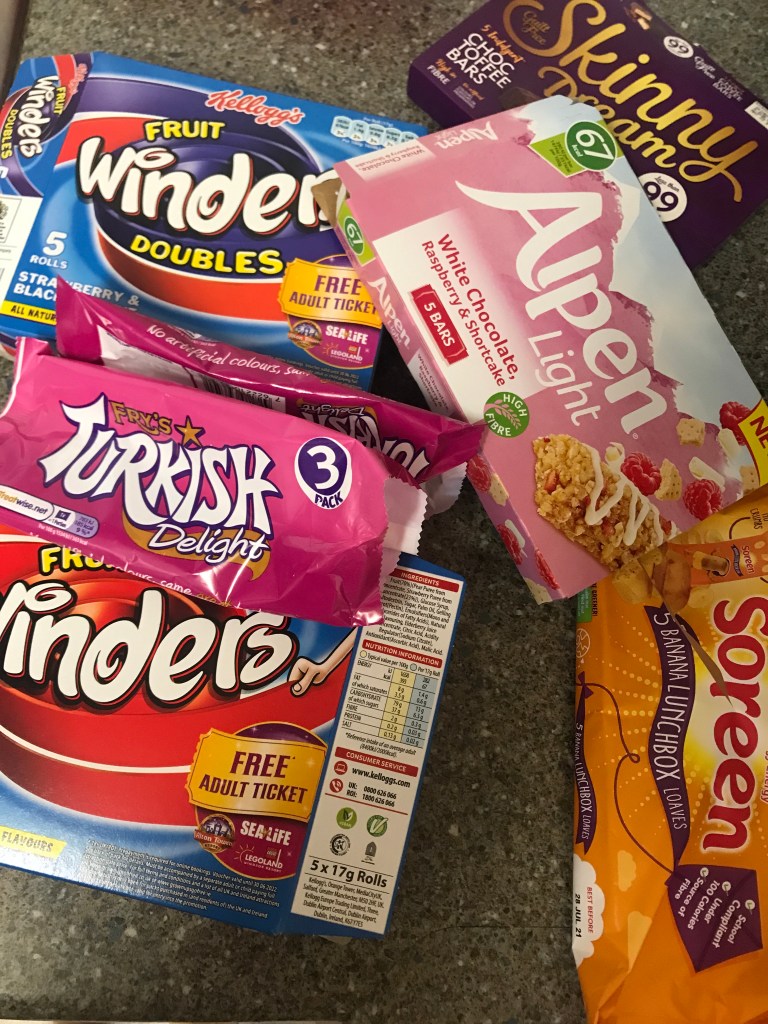

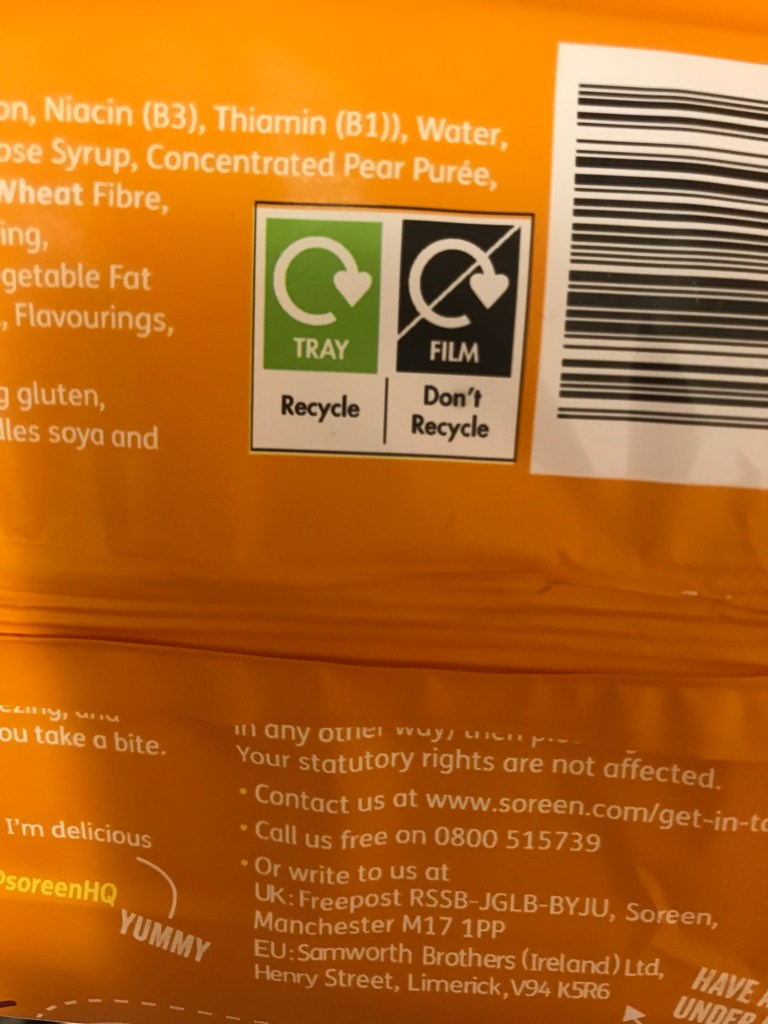
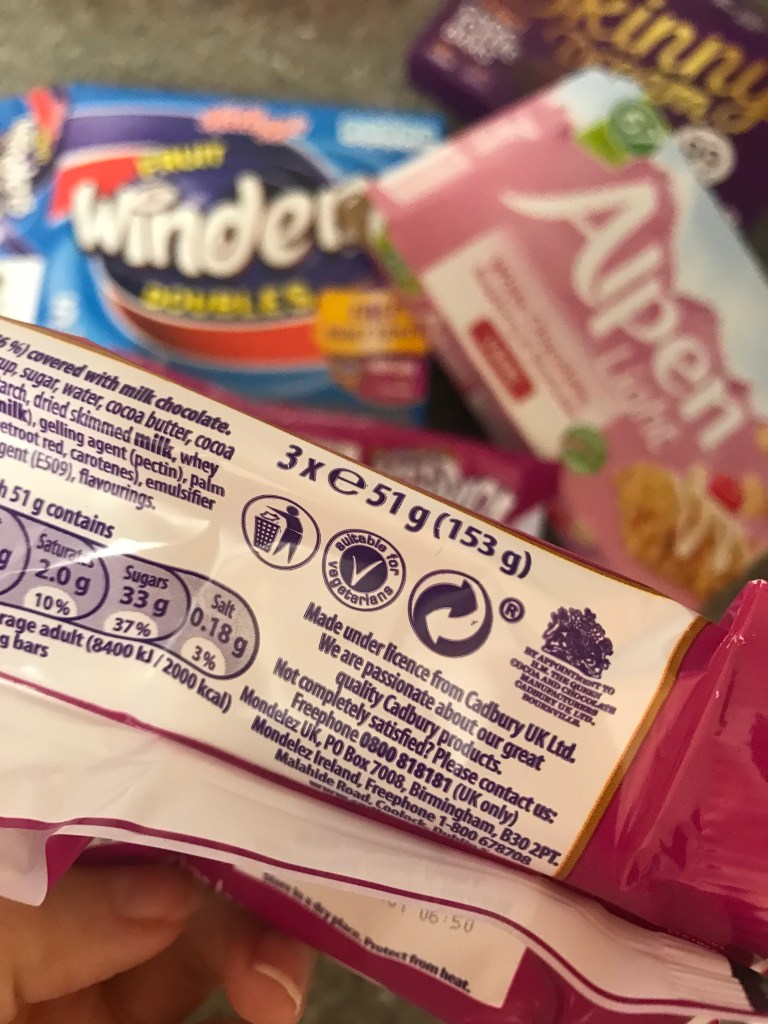
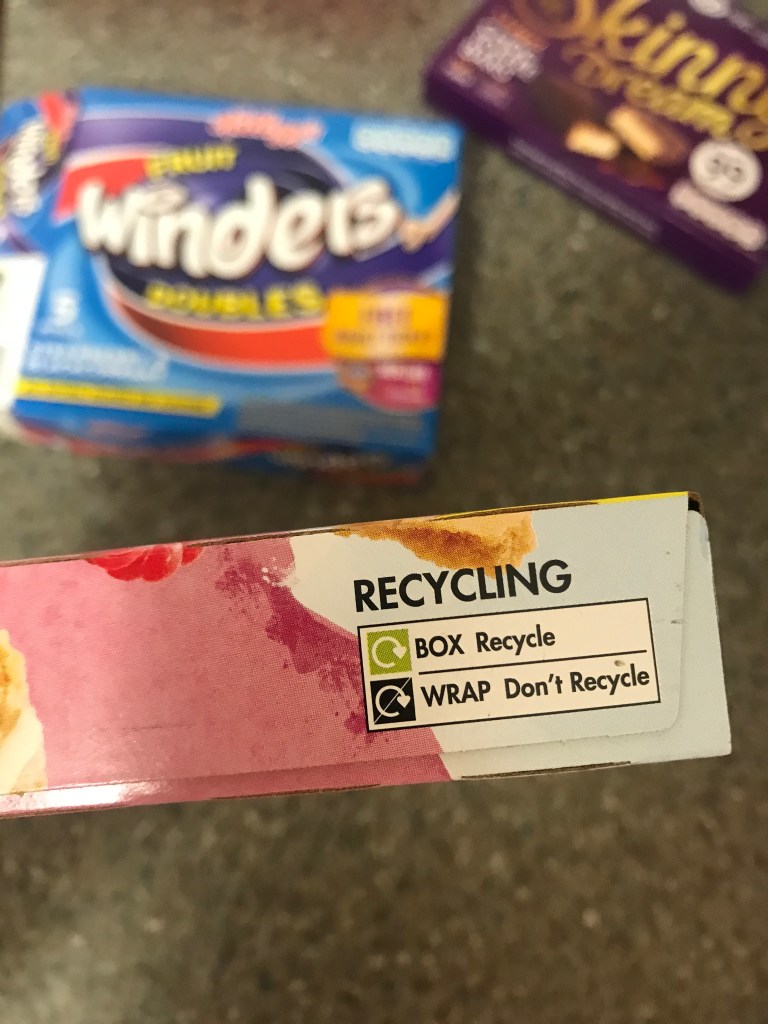
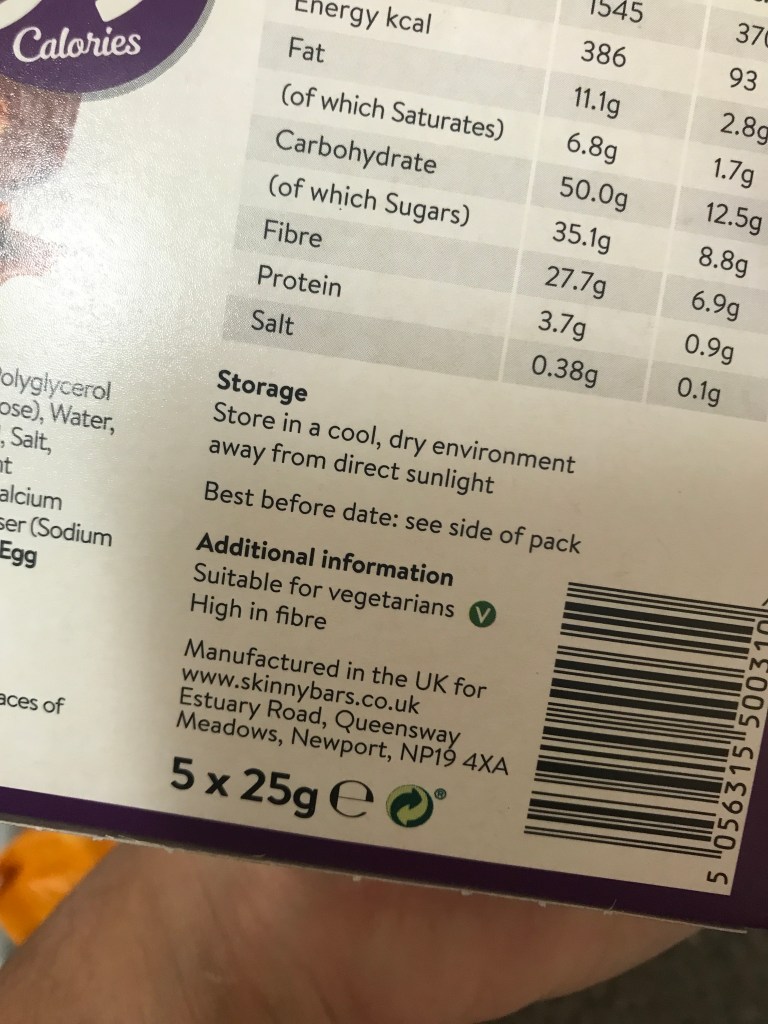
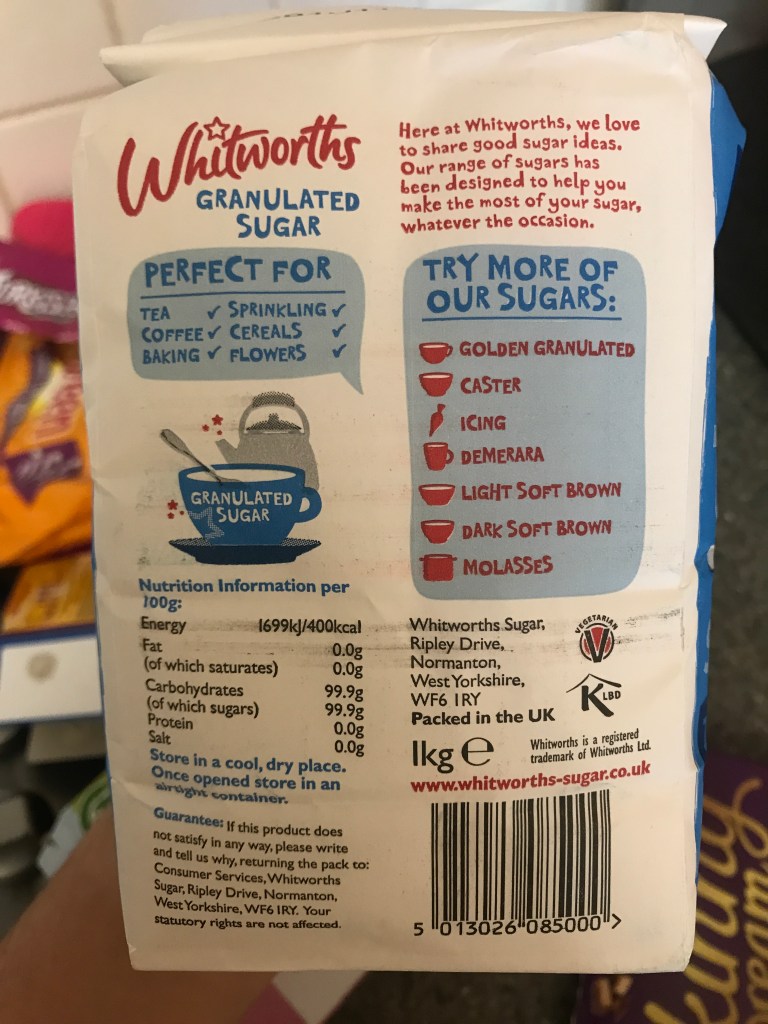
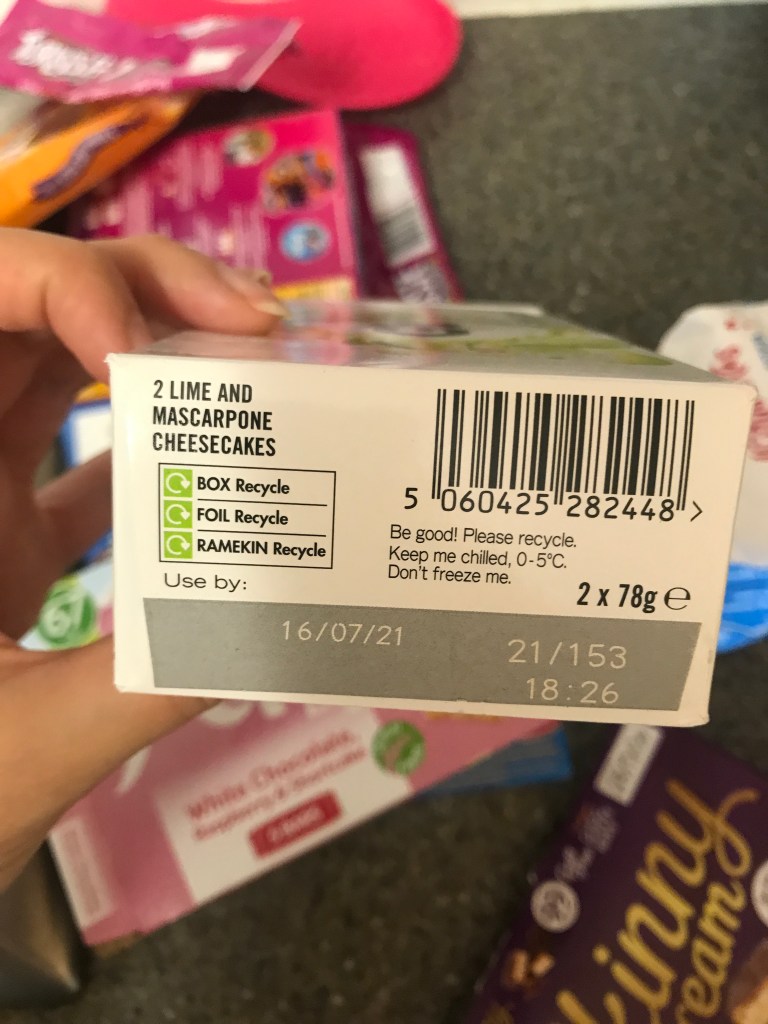
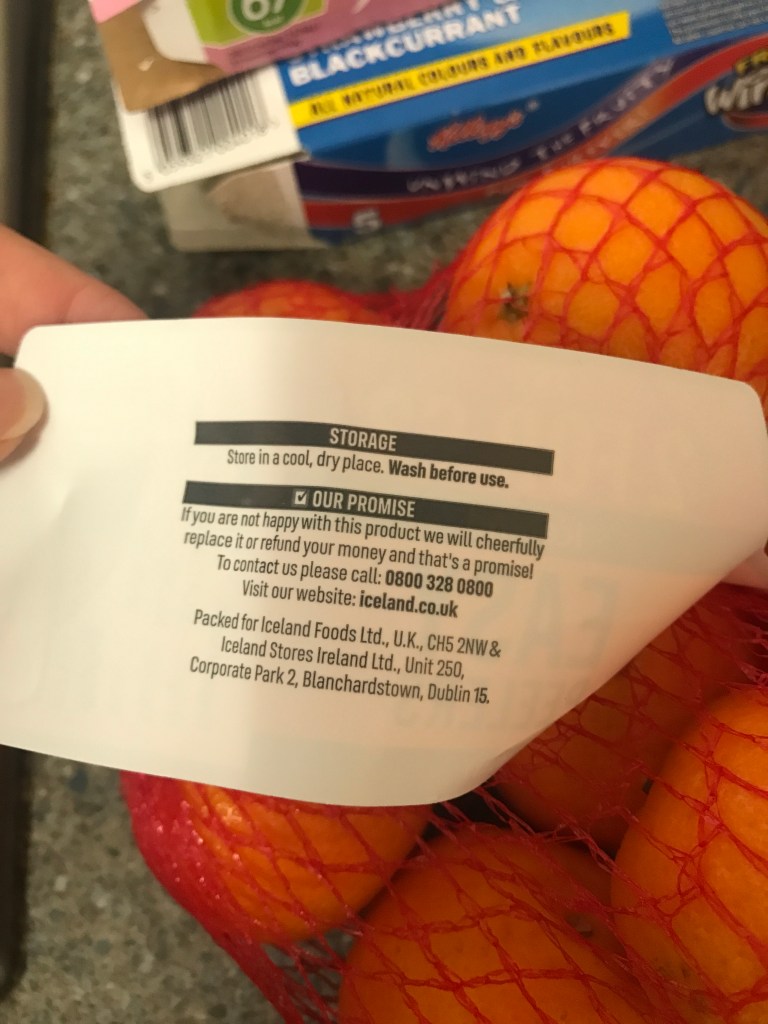
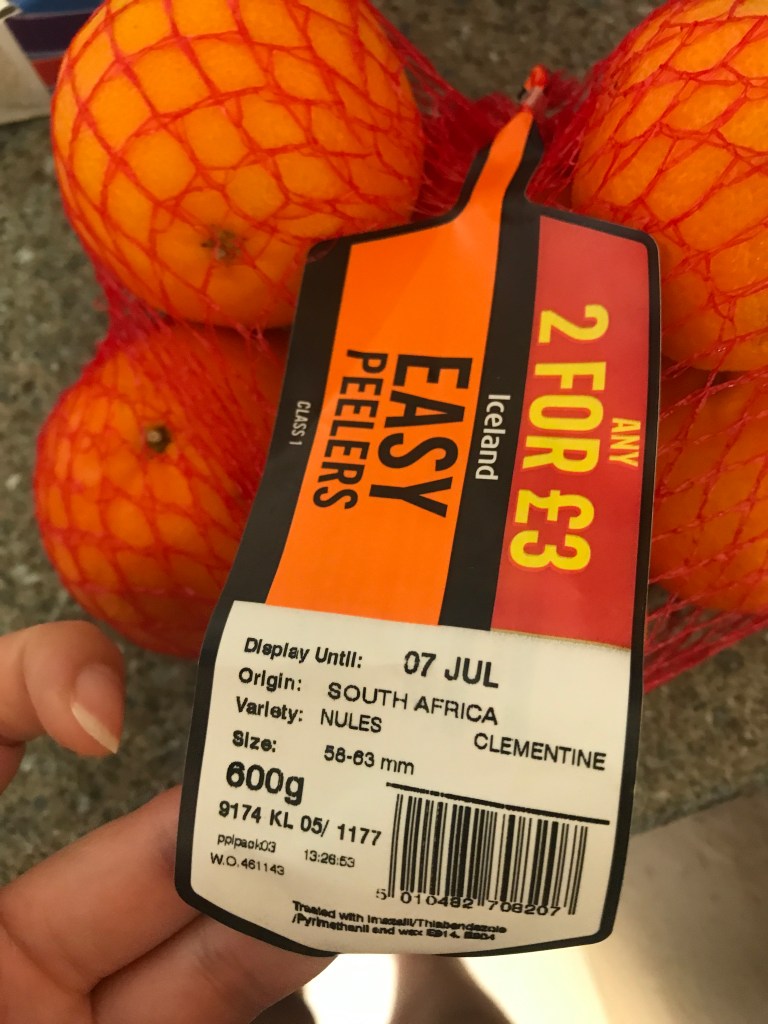
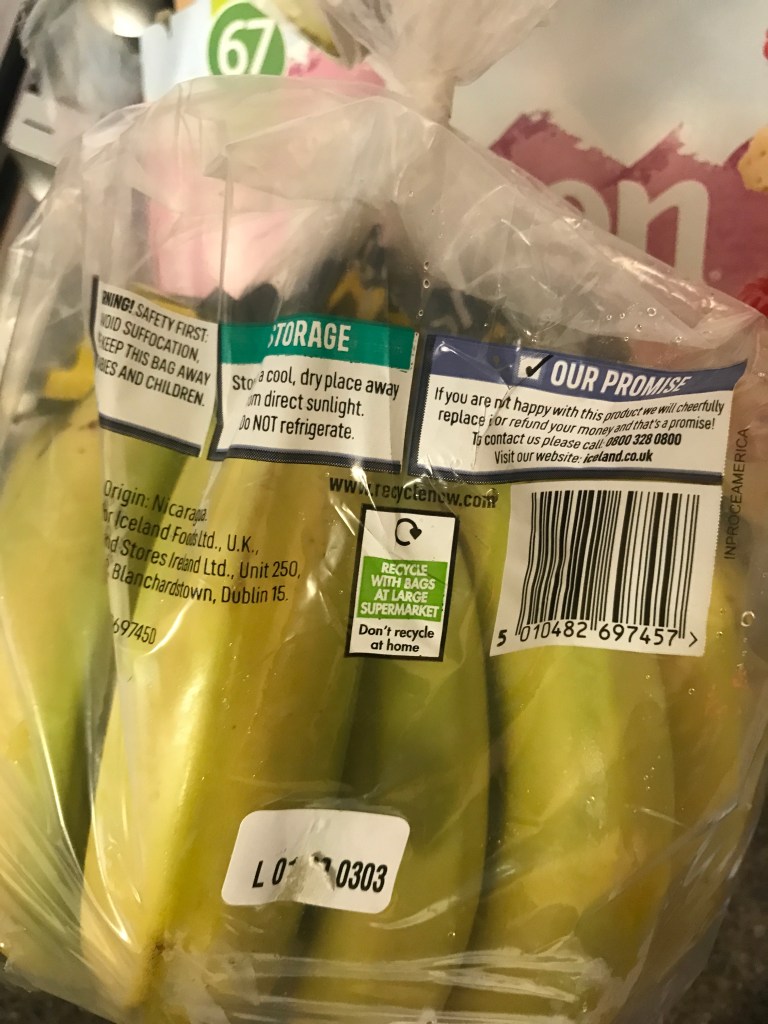
So what have I learnt? For starters how varied the recycling symbol/messaging is, and that actually most things are recyclable but not in “at home” recycling bins. This is interesting… I wonder how many people will travel to dispose of these correctly, or throw it in the rubbish bins? I was very surprised to discover that the easy peeler satsumas had no mention of recycling at all! Netting is one of the worst contributors to pollution and wildlife harm. I’m really shocked by this. Why can’t it just be sold as loose fruit or put in the same wrapper as bananas?
Is recycling really working?
From looking at recycling symbols and whether it really makes a difference, I’ve decided to explore this further on a global scale. This article from politico is really striking and shows the Netherlands, Denmark, Sweden, Finland and Germany in the top five most eco-friendly when it comes to recycling/composting and converting waste to energy:
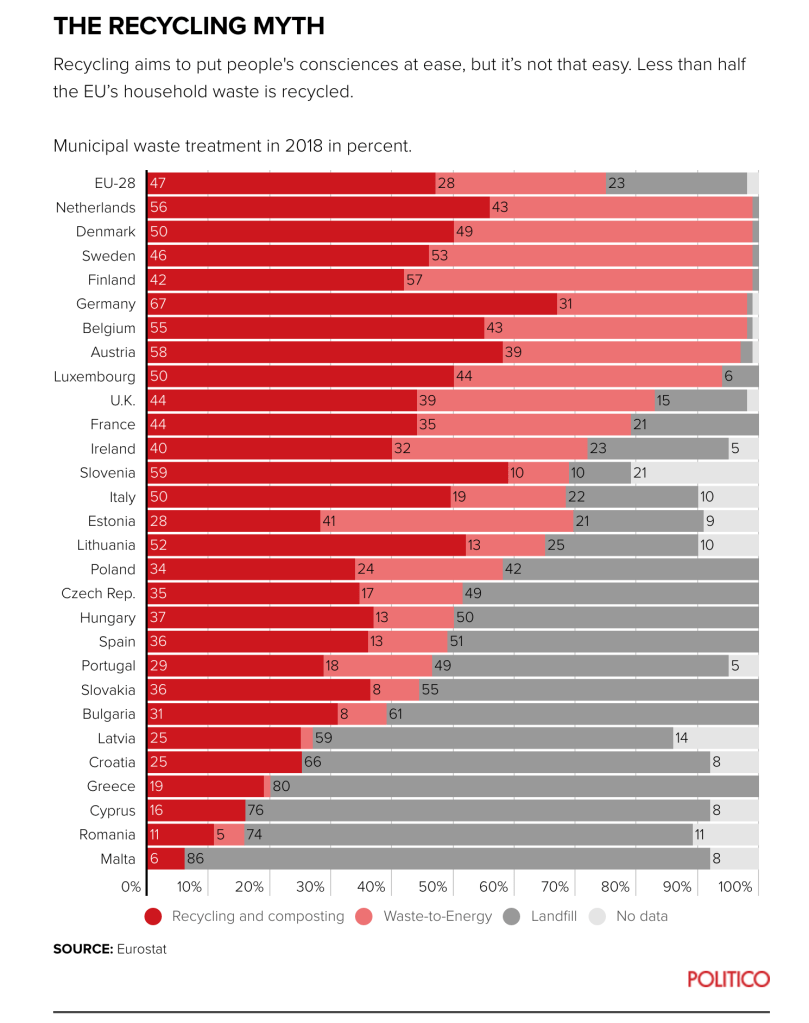
Recycling only makes up for less than half of the waste schemes globally. That’s eye opening – maybe the issue is not recycling, but how to encourage people to differentiate waste from recycling in the first place… Or perhaps it’s the responsibility of designers to recommend and advise clients to make the switch to sustainable materials.
What about composting?
What a waste 2.0: A global snapshot of waste management to 2050

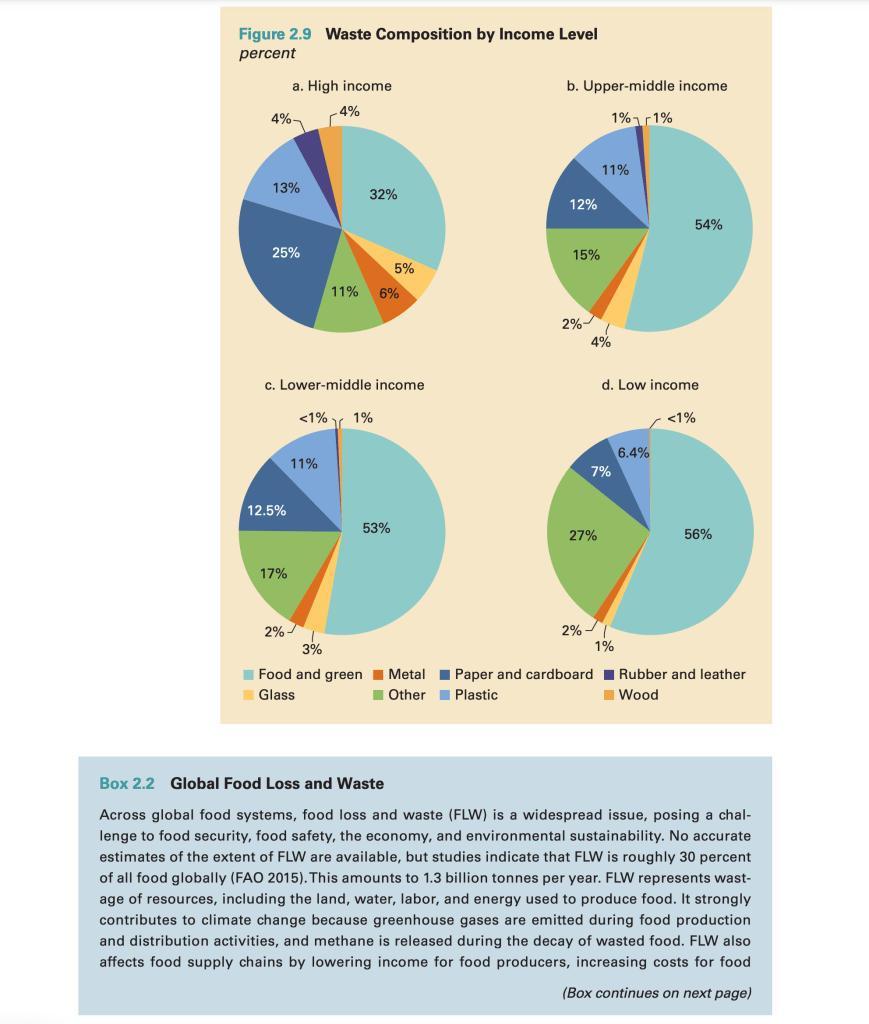
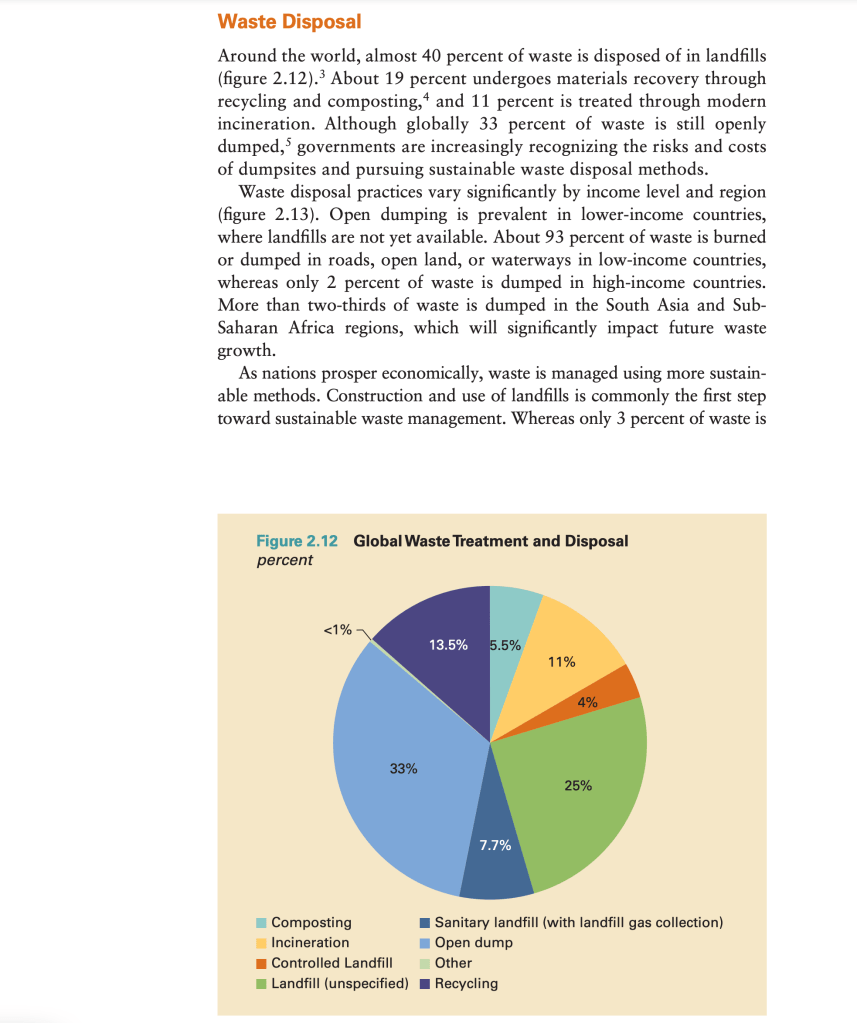
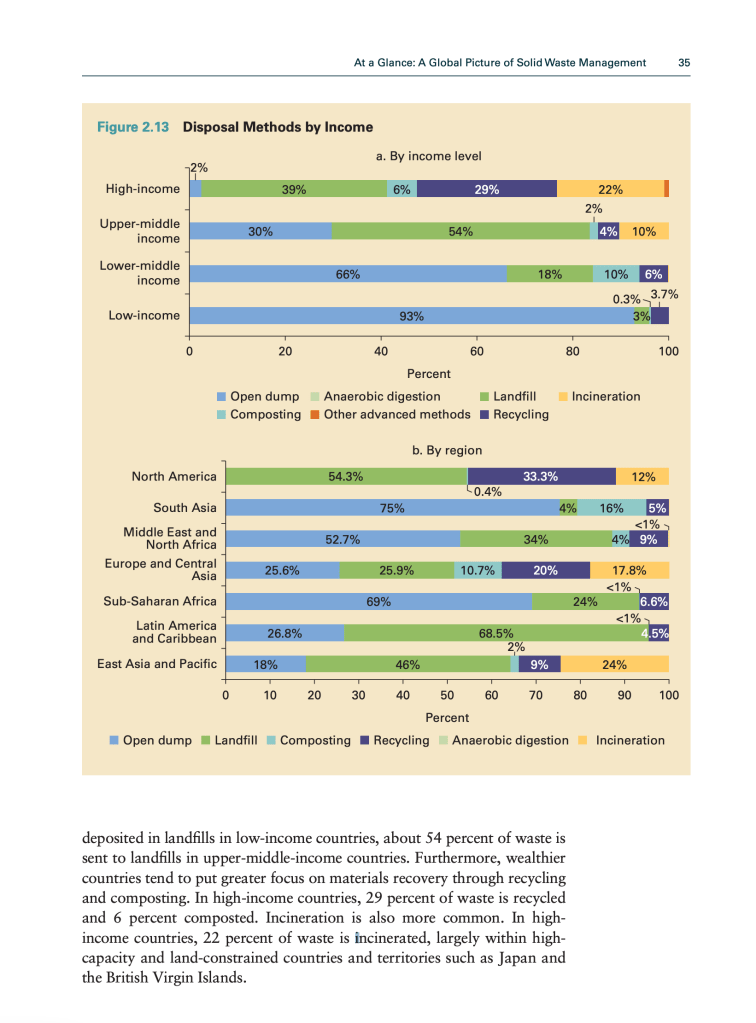
This research has highlighted to me the issue with composting our food waste. This article has loads of really interesting facts:
- “The average UK household throws away 20% of all food purchased.
- It is estimated that over 8 million people in the UK are struggling to afford to eat, yet UK households throw away around 7 million tonnes food every year.
- This equates to around £700 per household in food waste – an annual utility bill.
- Of the 7 million tonnes thrown away, 250,000 tonnes is perfectly edible and could be used to make up to 650 million meals for those in need.
- The average person throws away 74kg of food waste each year, the weight of over 1000 banana skins.
- Most of the food that ends up in landfills could be recycled to make animal feed, or even energy by converting the gas it releases into electricity and heat.
- At least 50% of food waste could be composted.
- Waste cooking oil is one of the most common causes of water pollution.
- 1 litre of used cooking oil can pollute up to 1 million litres of water drinking water.
- We throw away 1.4 million untouched bananas every day.
- 3 million unopened yoghurts each day.
- 600,000 whole uncooked eggs every day (that’s 300,000 omelettes!).
- 2 million untouched sausages.
- 20 million slices of bread every day – in the UK.
- In the landfill, food waste releases methane, a damaging greenhouse gas.
- We can cut our CO2 emissions and reduce our carbon footprint by up to 25% by simply recycling or composting our food waste.
- We could feed over a billion hungry people with less than a quarter of the food wasted in the UK, the United States, and Europe.
- It is estimated that we waste more than 30% of all food produced globally.
- We use 25% of the worlds fresh water supply to grow food that we will send to the landfill.“
WRAP: Life under Covid-19: Food waste attitudes and behaviours in 2020:

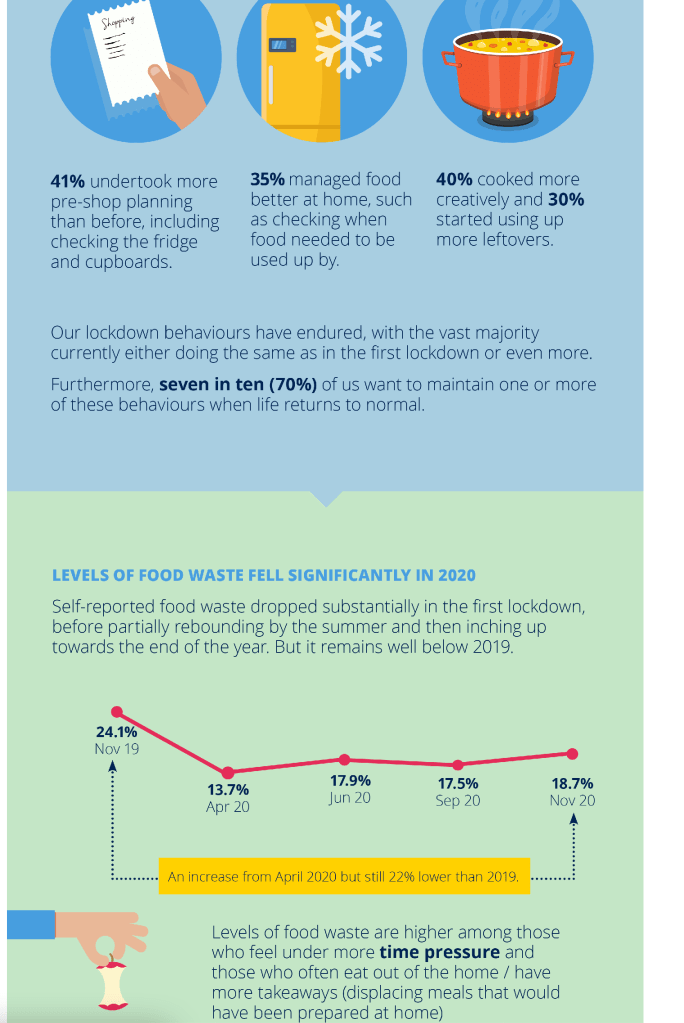
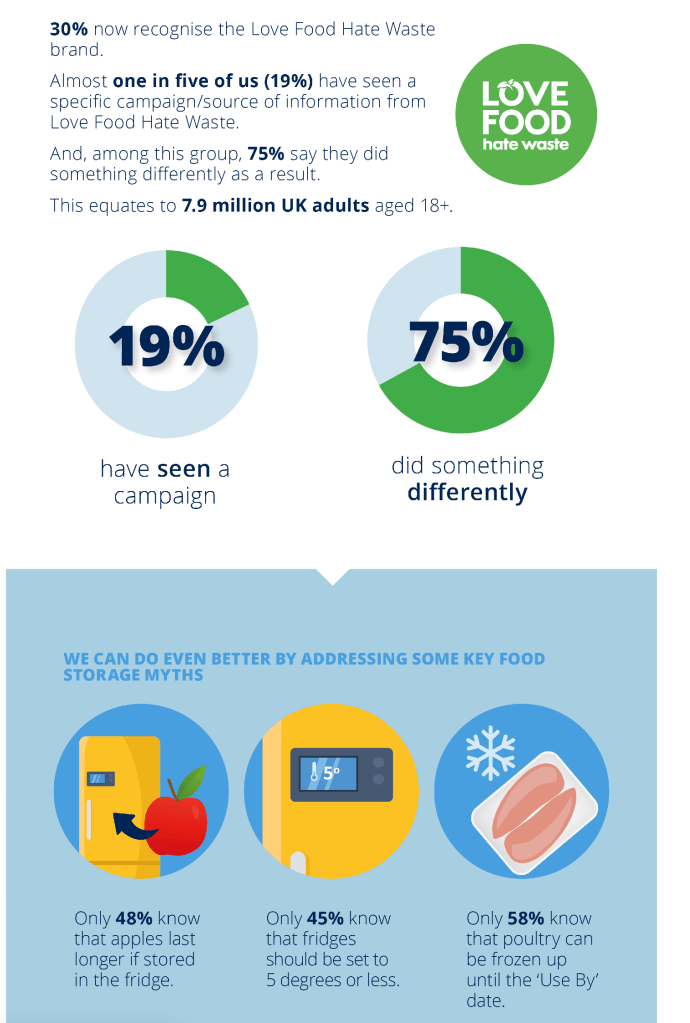
Detailed statistics on the breakdown of food waste:
“Proportions of wasted food & drink (‘edible parts’) by food group:
• Fresh vegetables & salad – 28%
• Drinks – 15%
• Bakery – 11%
• Meals – 9%
• Dairy & eggs – 9%
• Fresh fruit – 6%
• Meat & fish – 6%
[The remaining 16% is made up of other foods such as sauces, pasta, rice, cakes &
desserts, oils & fats and confectionery]
Top 10 most wasted food and drink items in UK homes (that could have been eaten):
• Potato (fresh)
• Bread
• Milk
• Meals (home-made and pre-prepared)
• Fizzy drinks
• Fruit juice and smoothies
• Pork / ham / bacon
• Poultry (chicken, turkey, duck)
• Carrots (fresh)
• Potato (processed)
Every day in UK homes we throw away approximately:
• 20 million whole slices of bread (equivalent to 1,000,000 loaves at 20 slices per
loaf; but more than a third less than in 2007)
• 4.4 million whole potatoes
• 920,000 (0.9 million) whole bananas
• 1.2 million whole tomatoes
• 720,000 (0.7 million) whole oranges
• 800,000 (0.8 million) whole apples
• 2.7 million whole carrots
• 970,000 (1.0 million) whole onions
• 86,000 whole lettuce
• 3.1 million glasses’ worth of milk
• 2.2 million slices’ worth of ham” Source
Cookedbest has some fascinating food waste facts including these below, from Which:

 jesswhatley.design.blog