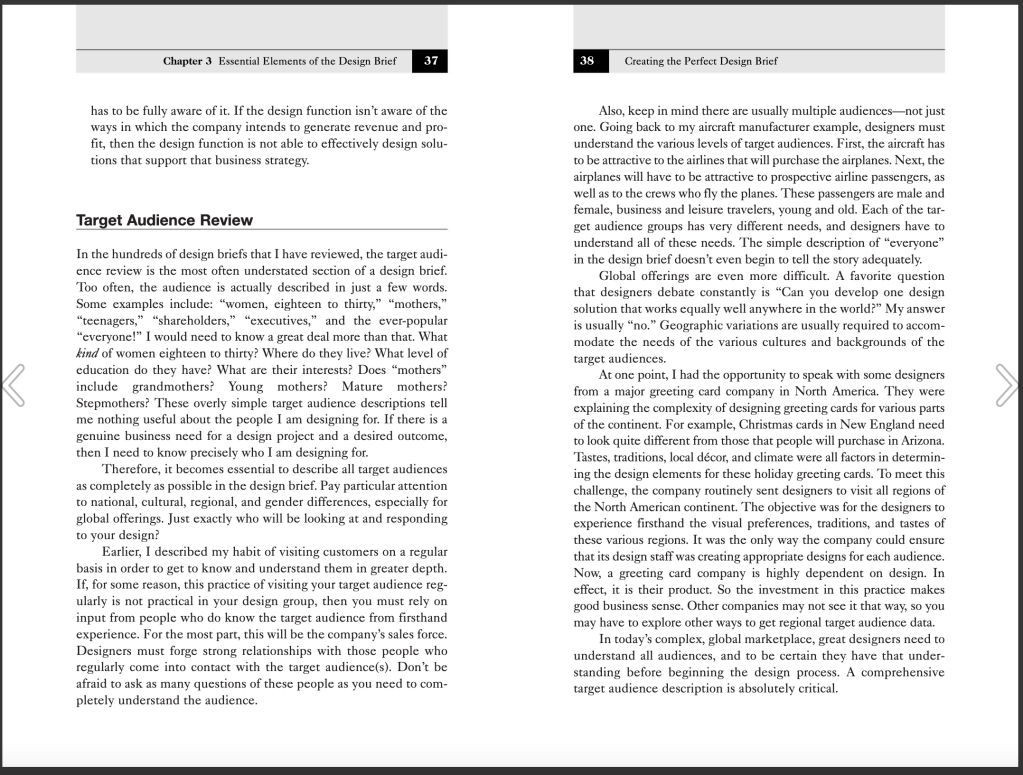
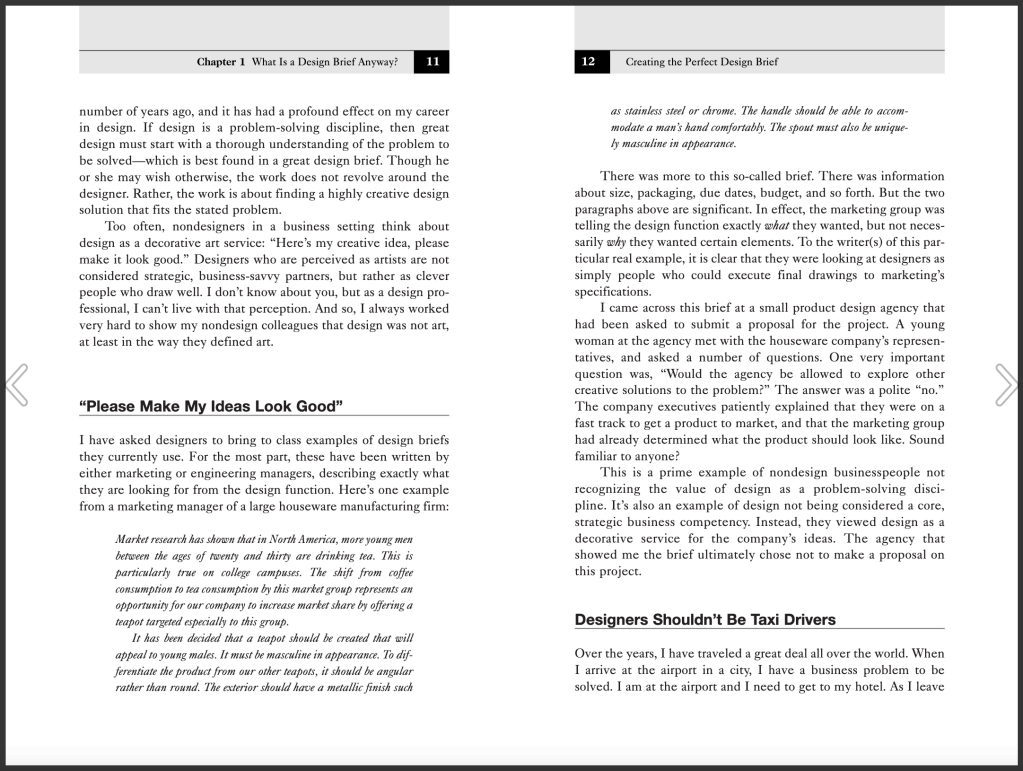
When I create my project brief, I need to refine my audience and make sure I am targeting specific people. Factors like age, gender and what their hobbies or interests might be, and why they are going to be my target audience can help me in the long run with development of my project. If possible, speak to people who relate to your target audience as this will gain insight and fundamental basics for research.“A design brief is written, not verbal” – never make excuses to not have a design brief. Even though this project is only four weeks and a small project, there needs to be a design brief and project plan outlining each week. I also found the paragraph ‘Art versus Design’ really interesting. Although design is visual (especially design that I create as I feel most comfortable with illustration and the visual aesthetics, colour, shape, textures etc.) the principle is that design is problem solving. If it looks good, then yes that is a huge part of design but as long as the issue is addressed and meets its criteria then the visual elements can be a bonus. I could argue however that design is more than problem solving – the visual arty side of design is just as important as meeting the brief. Colours, shape, layout are all subtle nods to subliminal messaging, and could be the difference between making the consumer ignore it, or look twice. I also appreciate that from a clients perspective they should not see design as an arty service, it should be the solution to a problem they have but in a creative way. The difficulty is how we explain as designers what that difference is – if we tells clients to think of us not as creatives but as problem solvers, they may question why we have designers as our title and not problem solvers? I’m not sure.
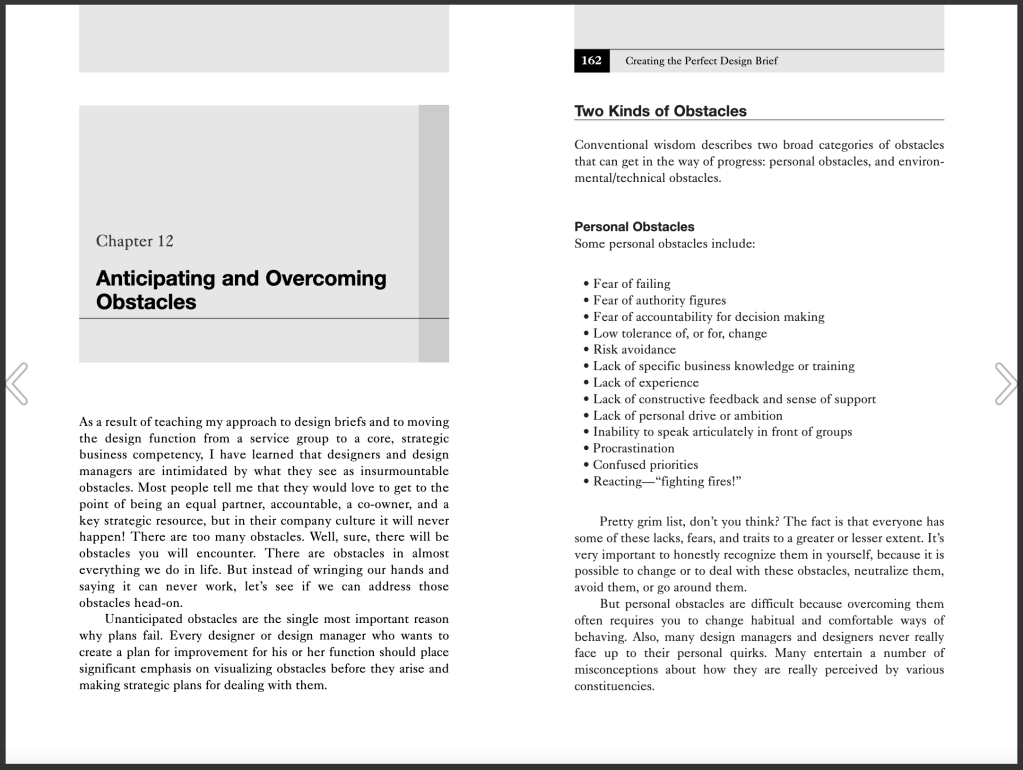
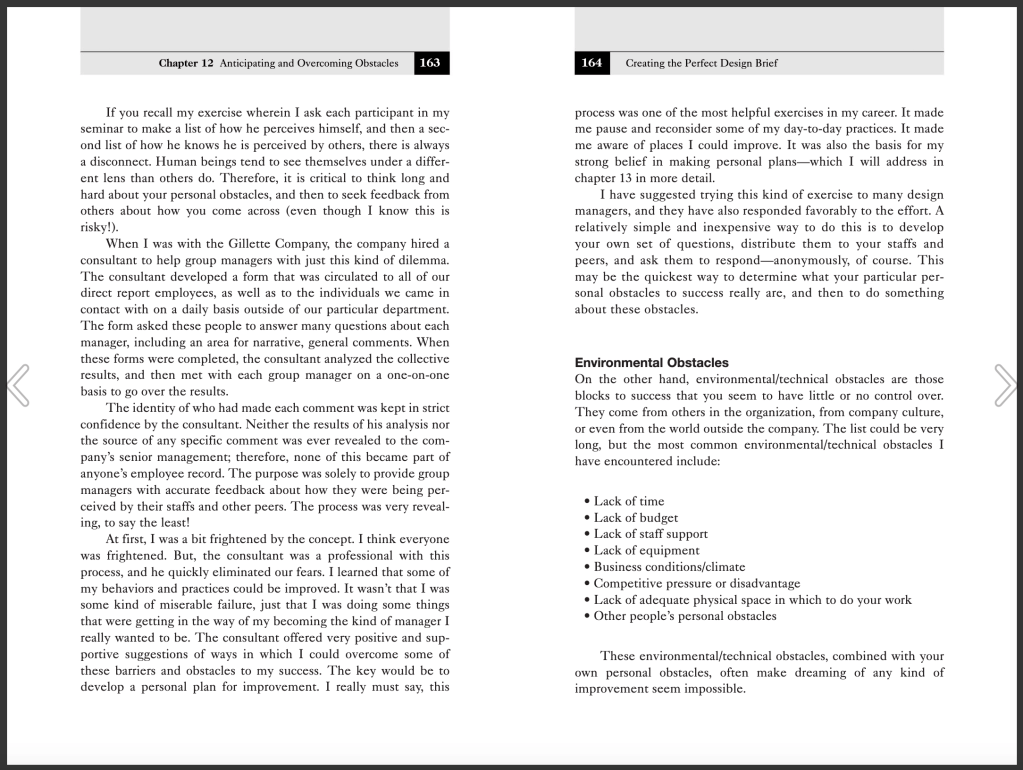
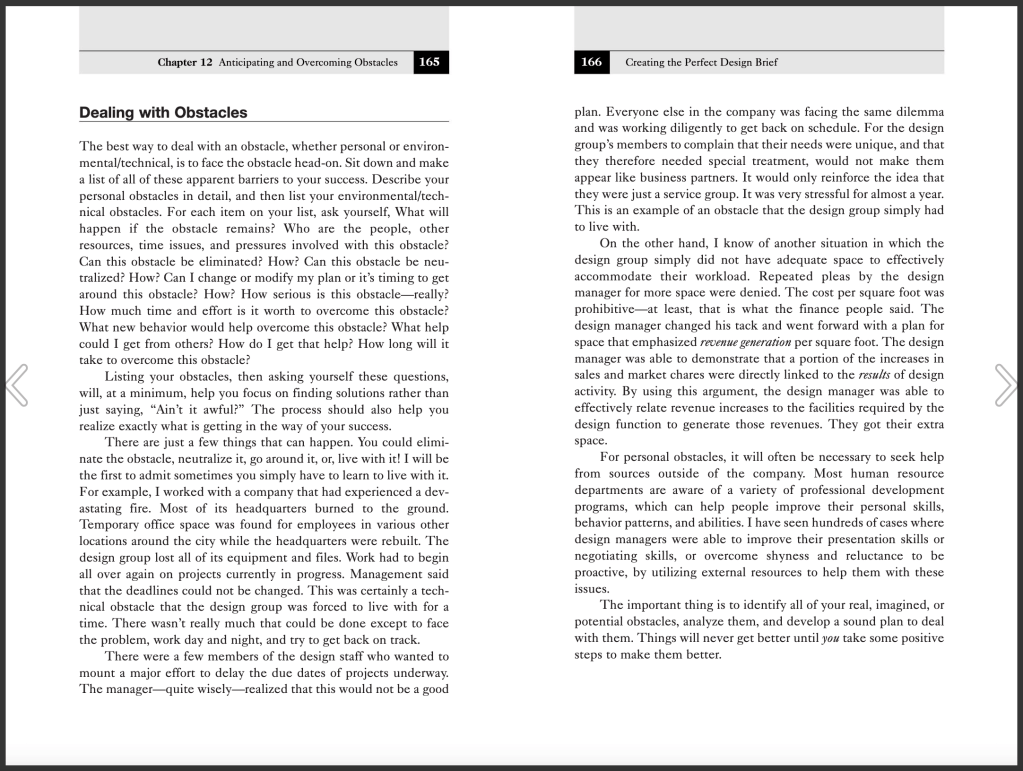
Overcoming obstacles: Personal and Environmental
I think the personal obstacles list above is probably a list of the traits when someone starts out as a graphic designer – it’s certainly how I feel as a student and having no full-time experience in the design world yet. I agree with the statement of being taken out of my comfort zone and needing to push boundaries before I can grow with my confidence, experience etc. and I have tried to with this course, and explore the various things I enjoy. I want to choose a project that I am really interested in, and something that I feel I could really push my boundaries with.
This is a process of elimination, particularly where obstacles are concerned. Switching to an alternative is usually an option, talking to the client, staff, measuring your own individual boundaries and performance as you go along can be some ways to help overcome obstacles. I really like the suggestion of taking courses to help with building your skills outside of the company you work with/own.

 jesswhatley.design.blog