
Feedback from my proposal
Research Question: This is a broad question and needs refining. It is too broad to test – the design industry is huge. You need to identify the problem/ s – Is it awareness of impact of production on environment? Is it awareness to alternatives? Is it access to alternatives? How does this research bring new knowledge to the subject area? Who says so? Do you know what is currently published in this area? Find academics and practitioners leading in this area.
• I will need to reach out to designers/printers and collate their feedback to refine my project idea.
Aim / Objective / Purpose: Your aim of setting up a multi-faceted design service is admirable. However, you really need to get this right and the 24 weeks would be well spent in a thorough research and development phase to scope out the need, to find experts and alternatives create interesting case studies and fieldwork and to test / scope out your business idea. You can publish this R&D. For example, by telling stories in engaging ways, to compare process’ in production. To present this to stakeholders or a panel of experts to feedback would be of great value and broaden the voice and input in your research and evaluation. You could capture and present the negatives and positive alternatives. How might you do this- what design processes might you use? Audio? Typography, Film? There is a danger this could look amateur and visually communicate a ‘craft fair’ aesthetic. The design of your proposal does not visually communicate your intentions. Do not be obvious – collect interesting content. And work on developing the visual communication of your work so it looks professional. You can write and research and reflect and organise well. Become an expert about designers making ethical considerations, what is published in this field? Who could you connect with as a mentor/s?
• Step back from craft and botanical dyes and think outside the box; how do I tell a story within my project?
Perhaps start to create an archive of your research. Collect – collate – play- design – present. Play – discuss- reflect – play. Create innovative professional engaging thought-provoking design experiments and see where it goes. Define your own approach to creating design and work out tasks for designing / responding to/ telling the story of your research.
- I have started a brand archive, and begun researching brands that have fallen down sustainability gaps and thus resulted in damage to the brand/company. This helps me to understand sustainability as a whole, and that it’s much more involved than just using recyclable/biodegradable products.
Refine your fundamental design skills- especially your relationship between image and type this needs attention. Perhaps look at choosing a typeface for this project investigate interesting foundries. Get excited about type. How might you set / organise your research finds; might you start creating beautifully typeset quotes and extracts? Explore other brands/ movements/ institutions/ businesses/ architects who work in this area- how do they visually communicate what they do? How might you gather image led content? How might you treat image? How might you combine text and image? – You must evolve this. Gather facts, test out your own ideas, make connections. If you focus on gathering knowledge/ documentation testing it through constant reflection and iteration throughout; this will lead to a clear reporting of the need, the alternatives, and a plan for the solution. Design your research at every stage. Create a system an d experiment within that. Make a plan.
You say you want to create a cost-effective sustainable alternative to graphic design practice – this needs a huge amount of research and development which could be fascinating. Be careful of making broad statements without backing them up with unambiguous evidence. You need to test your research question to get the solution. Do not assume that there are not people already doing this- Find them! You should be undertaking both qualitative and quantitative research and reflecting upon the results.
• Researching sustainable designers / innovative sustainable brands this week.
Target Audience: Find out what your target audience wants, their gaps in awareness and knowledge of alternatives, ask them do not tell them.
Written submission: Great that you are now thinking about this as a report and not a business plan this will allow you to complete the R&D needed and use your design skills along the way. Leading to a solid foundation of knowledge, relevant connections, and a clear idea of how you can develop a service after graduation.
Research and critical path: Your critical path stays close to the stages we have built into the module. Now you need to flesh these out. What methods will you use to gather your research? Surveys, interviews /talking heads, filming of processes and published statistics in this area…… define the tools and methods you will use. Will you then respond to this collection of information by further editing and designing it? You need to make some good connections now. Find experts in this field across disciplines perhaps… Create a panel of experts who you present your research to to gather feedback. This is crucial to your development of this project. Do not define your outputs yet.
Ethical Considerations: Keep on visiting these considering who you will be communicating with/ what you expect from them and any issues that might occur are scoped out in advance with full consent given. Why are you making a book? Consider fully the ethical implications in your own design practice and production.
Research into the wider problem
Dezeen awards:
Supublic
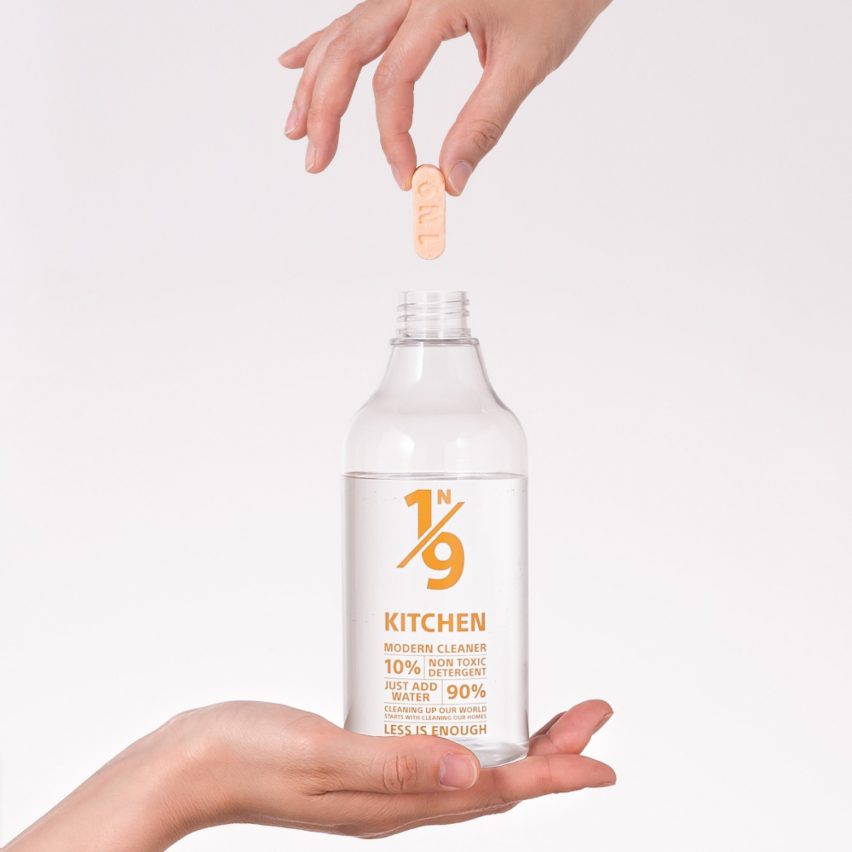
1N9 creates everyday eco-friendly cleaning products with natural, toxin-free ingredients without any plastic waste. Refillable eco-tablets dissolves in water, which create 430ml of cleaning solution.
The cleaner includes three reusable bottles and wrapped non-toxic tablets.”
D&AD Design awards:
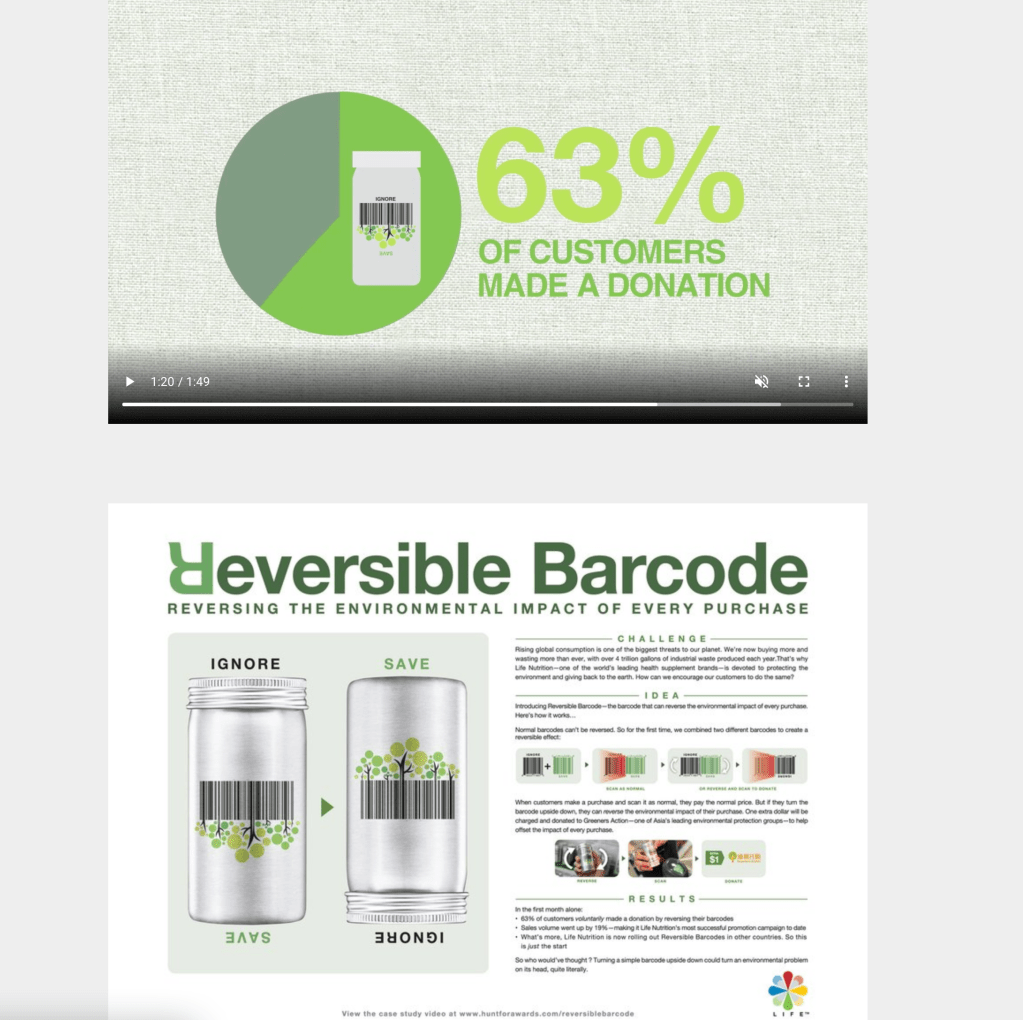
Reversible Barcode’s concept is interesting as it allows the consumer to ‘opt in’ or ‘opt out’ very easily. My only concern with this project is: if we are still giving the consumer the option to help our environment, will they? Or does it need to be a matter of giving consumers no choice at this point? This has sparked my questions regarding ‘choice’ and I definitely want to explore this further in this project.
 jesswhatley.design.blog